Biotech Job Market 2025: Skill Gaps for 15% Salary Growth

To achieve 15% salary growth in the 2025 biotech job market, professionals must proactively address critical skill gaps in areas like artificial intelligence, machine learning, advanced bioinformatics, and evolving regulatory compliance.
The pace of innovation in biotechnology is accelerating, reshaping career landscapes and demanding new competencies from professionals. For those aiming to thrive and secure significant salary growth, understanding and proactively addressing emerging skill gaps is not just an advantage—it’s a necessity. This article delves into how to navigate the 2025 biotech job market, identifying crucial areas for development to achieve up to 15% salary growth.
The Evolving Landscape of Biotech Employment
The biotechnology sector in the United States is experiencing unprecedented growth, driven by advancements in genomics, personalized medicine, and synthetic biology. This expansion isn’t just creating more jobs; it’s fundamentally altering the nature of required expertise. Traditional roles are being augmented, and entirely new positions are emerging, particularly at the intersection of biology and data science.
Companies are no longer just seeking foundational scientific knowledge; they require individuals who can translate complex biological data into actionable insights, manage intricate regulatory frameworks, and leverage cutting-edge computational tools. The demand for interdisciplinary talent is at an all-time high, pushing professionals to expand their skill sets beyond their core specializations. This shift directly impacts earning potential, with specialized skills commanding higher premiums.
Impact of Digital Transformation on Biotech Roles
- Automation in Labs: Routine tasks are increasingly automated, freeing up scientists for more complex analytical work.
- Data-Driven Discovery: Big data analytics and AI are central to drug discovery, development, and patient stratification.
- Personalized Medicine: Requires expertise in genomics, bioinformatics, and ethical data handling.
The biotech employment landscape is rapidly evolving, demanding a proactive approach to skill development. Professionals who adapt to these changes and acquire sought-after competencies will be best positioned for career advancement and substantial salary increases in the coming years. Understanding these shifts is the first step toward strategic career planning.
Skill Gap 1: Artificial Intelligence and Machine Learning in Biotech
The integration of Artificial Intelligence (AI) and Machine Learning (ML) into biotechnology is no longer a futuristic concept; it’s a current reality and a significant driver of innovation. From accelerating drug discovery to optimizing clinical trials and personalizing treatment plans, AI/ML skills are becoming indispensable. Professionals proficient in these areas can command significantly higher salaries due to their ability to unlock efficiencies and novel insights that traditional methods cannot.
This skill gap represents a critical area for investment for anyone looking to boost their career in biotech. It’s not just about understanding the algorithms, but also about knowing how to apply them effectively to complex biological datasets. This requires a unique blend of computational expertise and deep biological understanding, creating a high-value niche.
Key AI/ML Applications in Biotechnology
- Drug Target Identification: AI algorithms can analyze vast biological datasets to pinpoint potential drug targets more efficiently.
- Biomarker Discovery: Machine learning helps identify disease biomarkers for early diagnosis and personalized treatment.
- Predictive Modeling: AI/ML is used to predict drug efficacy, toxicity, and patient response, reducing development costs and time.
Acquiring proficiency in AI and ML, particularly as applied to biological problems, is paramount for securing a competitive edge in the 2025 biotech job market. This skill set transforms a biologist into a data-driven scientist, capable of contributing to groundbreaking discoveries and commanding a premium salary.
Skill Gap 2: Advanced Bioinformatics and Computational Biology
As the volume of biological data explodes, driven by next-generation sequencing and high-throughput screening, the need for advanced bioinformatics and computational biology skills has become acute. This isn’t merely about using existing software; it involves developing new algorithms, managing large-scale biological databases, and interpreting complex genetic, proteomic, and metabolomic information. Professionals with these capabilities bridge the gap between raw data and meaningful biological insights.
The ability to design and implement sophisticated bioinformatics pipelines, perform statistical analyses on genomic data, and visualize complex molecular interactions is highly valued. This specialization is crucial for understanding disease mechanisms, developing new therapies, and advancing personalized medicine. Without these skills, the vast potential of biological data remains untapped.
Computational biology goes beyond simple data analysis, requiring a deep understanding of biological processes to frame relevant questions and interpret computational results accurately. It’s a field that demands both rigorous scientific training and robust programming skills, making it a lucrative area for career development.
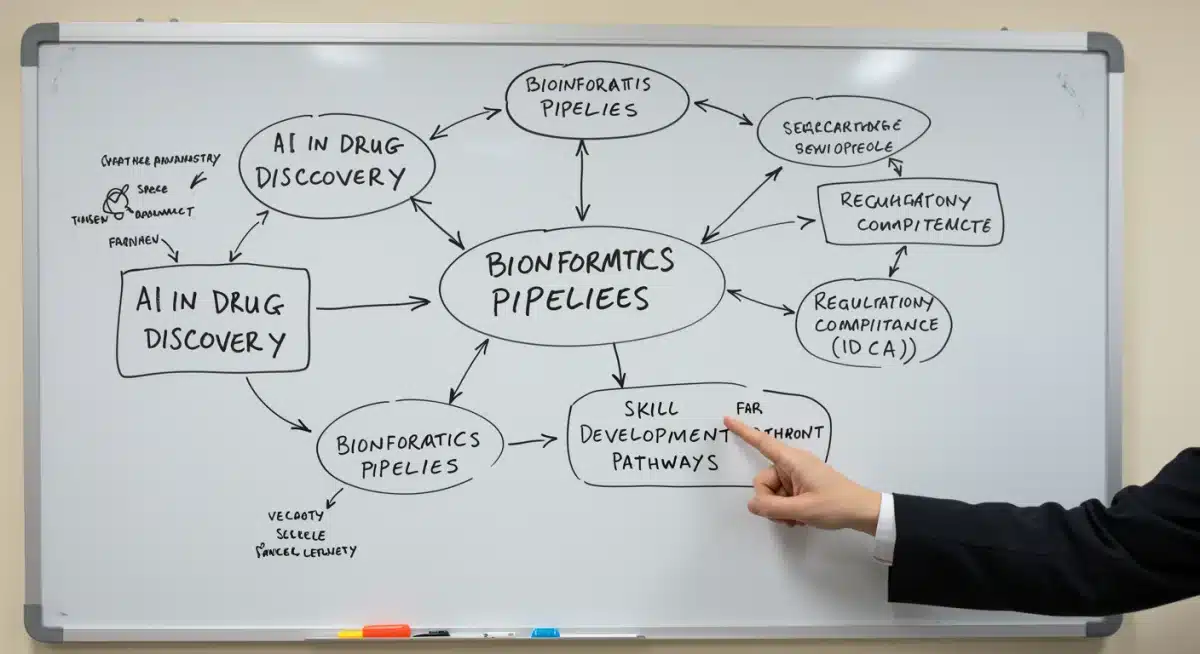
Essential Bioinformatics Competencies
- Genomic Data Analysis: Expertise in handling and interpreting DNA/RNA sequencing data.
- Proteomics and Metabolomics: Analyzing protein and metabolite profiles to understand cellular functions.
- Statistical Genetics: Applying statistical methods to genetic data for disease association studies.
Mastering advanced bioinformatics and computational biology is essential for professionals aiming for leadership and innovation roles in the 2025 biotech job market. This expertise enables direct contributions to scientific discovery and drug development, translating into significant career and salary progression.
Skill Gap 3: Regulatory Affairs and Compliance Expertise
The biotechnology industry operates under a stringent and continually evolving regulatory framework, particularly in the United States with agencies like the FDA. Navigating this complex landscape requires specialized knowledge in regulatory affairs and compliance. As new therapies, diagnostics, and technologies emerge, the regulatory pathways become even more intricate, creating a high demand for professionals who can ensure products meet all safety, efficacy, and quality standards.
This skill set isn’t limited to understanding current regulations; it also involves anticipating future changes, interpreting complex legal documents, and strategically guiding products through the approval process. Companies are willing to invest significantly in individuals who can mitigate risks, accelerate market entry, and maintain compliance throughout a product’s lifecycle. A deep understanding of global regulatory standards, such as those from the EMA or PMDA, also adds considerable value.
Challenges in Regulatory Compliance
- Rapid Innovation vs. Regulation: New technologies often outpace existing regulatory guidelines, requiring adaptive strategies.
- Global Harmonization: Navigating differing international regulatory requirements for product approval.
- Post-Market Surveillance: Ensuring ongoing compliance and safety monitoring after product launch.
Regulatory affairs and compliance expertise is a non-negotiable skill for success in the 2025 biotech job market. Professionals in this domain play a critical role in bringing life-changing innovations to patients safely and efficiently, making their contributions invaluable and highly compensated.
Strategies for Acquiring In-Demand Biotech Skills
Proactively addressing these skill gaps requires a strategic approach to continuous learning and professional development. Simply relying on a foundational science degree may no longer be sufficient for significant career advancement. Individuals must actively seek out opportunities to acquire new competencies, whether through formal education, specialized certifications, or hands-on project experience.
Online courses, bootcamps, and executive education programs offer flexible pathways to gain expertise in AI/ML, bioinformatics, and regulatory affairs. Networking with industry leaders and participating in professional organizations can also provide invaluable insights into emerging trends and skill requirements. Furthermore, seeking out mentorships can accelerate learning and provide guidance on career trajectories.
Effective Skill Acquisition Methods
- Online Certifications: Platforms like Coursera, edX, and specialized biotech academies offer targeted courses.
- Graduate Programs: Master’s degrees or Ph.D. specializations in computational biology, data science, or regulatory science.
- Industry Workshops & Conferences: Stay updated on the latest tools, techniques, and regulatory changes.
Developing a personalized learning roadmap that aligns with career aspirations and market demands is crucial. By investing in these in-demand skills, professionals can not only future-proof their careers but also position themselves for substantial salary growth in the dynamic 2025 biotech job market.
Maximizing Your Salary Potential in Biotech
Achieving a 15% salary increase in the 2025 biotech job market is an ambitious yet attainable goal for professionals who strategically enhance their skill sets. This growth is not merely a reflection of years of experience but a direct outcome of possessing skills that are scarce, critical, and directly contribute to a company’s success. Companies are increasingly prioritizing talent that can drive innovation, streamline processes, and navigate complex challenges.
Negotiation skills also play a vital role. Understanding your market value, based on your unique combination of scientific expertise and newly acquired high-demand skills, empowers you to advocate for appropriate compensation. Researching salary benchmarks for roles requiring AI/ML, advanced bioinformatics, or regulatory expertise will provide a solid foundation for salary discussions. Highlighting specific projects where your new skills led to tangible results can further strengthen your negotiation position.
Factors Influencing Salary Growth
- Specialized Expertise: Proficiency in niche, high-demand areas like AI/ML or advanced bioinformatics.
- Problem-Solving Acumen: Ability to apply complex skills to solve real-world biotech challenges.
- Leadership & Communication: Capacity to lead teams and communicate complex scientific concepts effectively.
By focusing on continuous skill enhancement in critical areas and effectively communicating your value, professionals can significantly increase their earning potential and secure a competitive advantage in the evolving 2025 biotech job market.
| Key Skill Gap | Brief Description |
|---|---|
| AI and Machine Learning | Applying algorithms to drug discovery, clinical trials, and personalized medicine for efficiency. |
| Advanced Bioinformatics | Developing algorithms, managing large biological datasets, and interpreting complex genomic data. |
| Regulatory Affairs | Navigating complex FDA and international regulations for product approval and compliance. |
Frequently Asked Questions About Biotech Careers
The highest-paying skills in biotech for 2025 include artificial intelligence/machine learning application, advanced bioinformatics, and specialized regulatory affairs expertise. These skills are critical for innovation and compliance, driving significant demand and higher compensation for professionals who possess them.
You can acquire new skills through online certifications, specialized graduate programs, industry workshops, and hands-on project experience. Networking and mentorship also provide valuable insights and opportunities to learn. Proactive engagement with these resources is key to staying competitive.
Regulatory affairs is crucial in biotech because it ensures products meet safety, efficacy, and quality standards, facilitating market approval. Professionals in this field navigate complex legal frameworks, mitigate risks, and ensure ongoing compliance, which are vital for bringing new therapies to patients.
AI plays a transformative role in modern drug discovery by accelerating target identification, optimizing compound screening, and predicting drug efficacy and toxicity. It analyzes vast datasets to uncover patterns and insights, significantly reducing the time and cost associated with drug development pipelines.
Biotech professionals with in-demand skills, particularly in AI/ML, advanced bioinformatics, and regulatory affairs, can expect to see significant salary growth, potentially up to 15% or more. This growth is driven by the high demand for specialized expertise that directly contributes to innovation and compliance within the industry.
Conclusion
The 2025 biotech job market presents immense opportunities for professionals willing to adapt and evolve their skill sets. By strategically focusing on areas such as artificial intelligence/machine learning, advanced bioinformatics, and regulatory affairs, individuals can not only bridge critical industry skill gaps but also position themselves for substantial career advancement and significant salary growth. Continuous learning and a proactive approach to professional development are the cornerstones of success in this rapidly innovating sector.