2026 US Biotech Event Landscape: Key Trends for Investors
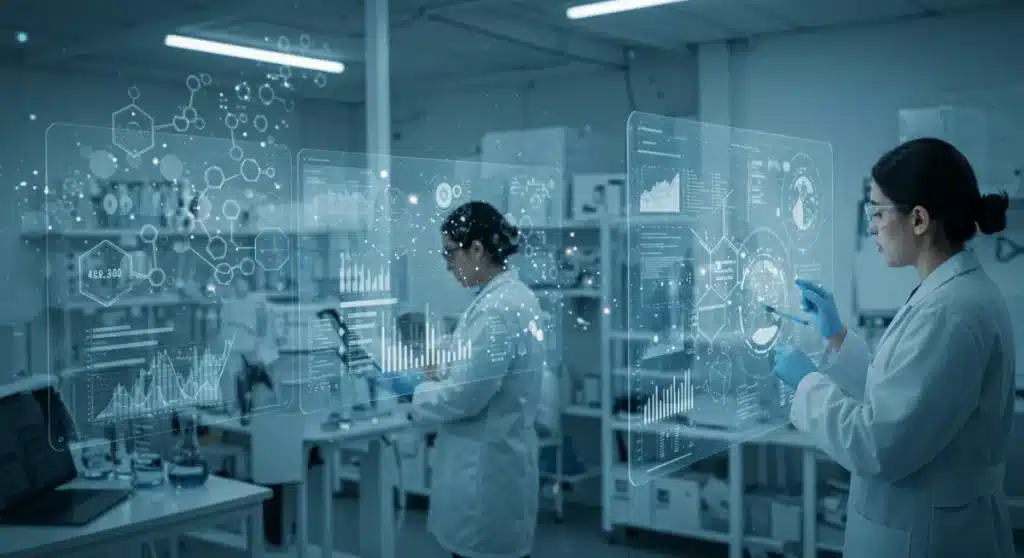
The 2026 US biotech event landscape will be dominated by breakthroughs in gene therapies, artificial intelligence in drug discovery, and sustainable biomanufacturing, presenting crucial investment opportunities and strategic shifts for stakeholders.
As we look towards the horizon of 2026, the biotech sector in the United States continues its rapid evolution, presenting both exciting opportunities and complex challenges for investors. Understanding the nuances of the 2026 US Biotech Event Landscape is paramount for strategic decision-making, offering a glimpse into the innovations and market shifts poised to redefine healthcare and beyond.
The rise of advanced gene and cell therapies
The landscape of medical treatment is undergoing a profound transformation, largely driven by the accelerating progress in advanced gene and cell therapies. These revolutionary approaches, once confined to the realm of science fiction, are now delivering tangible results for previously untreatable conditions, attracting significant investor attention.
In 2026, we anticipate a surge in clinical trial successes and regulatory approvals for these therapies. This momentum is fueled by enhanced research capabilities, better understanding of genetic mechanisms, and improvements in delivery systems. Investors should closely monitor companies demonstrating robust pipelines and strategic partnerships in this high-growth area.
Breakthroughs in gene editing technologies
CRISPR and other gene-editing tools are becoming increasingly sophisticated, moving beyond rare monogenic diseases to potentially address more common conditions. The precision and efficiency of these technologies are improving, opening doors to broader applications.
- Precision medicine: Tailoring treatments to an individual’s genetic makeup, minimizing side effects and maximizing efficacy.
- In-vivo vs. ex-vivo: Advancements in direct in-vivo delivery methods are reducing the complexity and cost of treatments.
- Ethical considerations: Ongoing discussions and frameworks are shaping the responsible development and application of gene editing.
Cell therapy expansion beyond oncology
While CAR-T cell therapies have revolutionized oncology, the application of cell therapies is rapidly expanding into other therapeutic areas. Immunomodulation, regenerative medicine, and autoimmune diseases are becoming fertile ground for novel cell-based treatments.
This diversification is creating new market segments and investment avenues. Companies that can successfully pivot or expand their cell therapy platforms beyond their initial indications are likely to see significant valuation increases. The scalability of manufacturing processes for these complex therapies remains a key challenge, but also a major opportunity for innovation.
The continued refinement of advanced gene and cell therapies will undoubtedly be a central theme in the 2026 US biotech event landscape. Investors must discern between promising early-stage research and mature, scalable technologies to make informed decisions.
Artificial intelligence and machine learning in drug discovery
The integration of artificial intelligence (AI) and machine learning (ML) into the drug discovery process is no longer a futuristic concept but a present-day reality, fundamentally altering how new medicines are identified, developed, and brought to market. This technological revolution is streamlining every stage, from target identification to clinical trials, promising unprecedented efficiencies and success rates.
By 2026, AI/ML platforms are expected to be indispensable across major pharmaceutical and biotech companies. These tools excel at analyzing vast datasets, predicting molecular interactions, and optimizing compound structures, significantly reducing the time and cost associated with traditional drug development pathways.
Accelerated target identification and validation
AI algorithms can sift through genomic, proteomic, and clinical data at speeds impossible for humans, pinpointing novel disease targets with higher confidence. This capability is transforming the early stages of drug discovery, enabling researchers to focus on the most promising avenues.
- Big data analytics: Processing petabytes of biological and chemical data to uncover hidden patterns.
- Predictive modeling: Forecasting disease progression and treatment responses based on patient data.
- Phenotypic screening: Identifying compounds that induce desired cellular changes, even without a known target.
Optimizing lead compound identification and optimization
Once a target is identified, AI/ML can rapidly screen millions of compounds, predict their binding affinity, toxicity profiles, and pharmacokinetic properties. This drastically narrows down the pool of potential drug candidates, saving immense resources.
Furthermore, these technologies can suggest modifications to lead compounds to improve their efficacy and safety, accelerating the optimization phase. The ability to simulate molecular interactions and predict outcomes in silico offers a powerful advantage over traditional, labor-intensive laboratory experiments.

The impact of AI and ML on drug discovery is profound, promising a future where drug development is faster, cheaper, and more successful. Companies that are effectively leveraging these technologies will be at the forefront of innovation within the 2026 US biotech event landscape, making them attractive prospects for discerning investors.
Sustainable biomanufacturing and supply chain resilience
As the biotech industry scales up, the imperative for sustainable practices and resilient supply chains becomes increasingly critical. The environmental footprint of biomanufacturing, coupled with the lessons learned from recent global disruptions, is driving a concerted effort towards greener, more robust production methods.
In 2026, we anticipate a significant focus on sustainable biomanufacturing techniques that reduce waste, conserve resources, and minimize energy consumption. Simultaneously, companies will prioritize building diversified and geographically resilient supply chains to mitigate future risks and ensure continuous access to essential components.
Eco-friendly production methods
New biomanufacturing technologies are emerging that aim to reduce the environmental impact of drug production. This includes the adoption of single-use systems, continuous manufacturing processes, and the use of renewable energy sources.
The industry is also exploring novel bioreactor designs and fermentation technologies that require fewer raw materials and generate less hazardous waste. These innovations not only benefit the environment but can also lead to cost efficiencies and improved production scalability.
Strengthening global supply chain resilience
The vulnerabilities exposed by recent global events have underscored the need for more resilient supply chains. Biotech companies are actively diversifying their sourcing, establishing regional manufacturing hubs, and investing in advanced logistics and inventory management systems.
- Regionalization: Shifting towards more localized production to reduce reliance on distant suppliers.
- Digitalization: Implementing advanced tracking and data analytics to monitor supply chain health in real-time.
- Strategic stockpiling: Maintaining critical reserves of raw materials and components to buffer against disruptions.
The role of circular economy principles
Embracing circular economy principles within biomanufacturing involves designing processes that minimize waste and maximize resource utilization. This includes recycling materials, recovering by-products, and developing biodegradable packaging.
Companies that integrate these sustainable practices are not only meeting growing regulatory and consumer demands but are also positioning themselves as leaders in responsible innovation. This focus on sustainability and resilience will be a defining characteristic of the 2026 US biotech event landscape, offering a unique investment angle.
Regulatory pathways and market access evolution
The regulatory landscape for biotech products in the US is continuously evolving, adapting to scientific advancements and public health needs. For investors, understanding these pathways and the dynamics of market access is crucial for evaluating pipeline potential and commercial viability.
By 2026, we expect continued efforts by regulatory bodies like the FDA to streamline approval processes for innovative therapies, particularly those addressing unmet medical needs. Simultaneously, payers and healthcare systems will exert increasing pressure on pricing and demonstrating real-world value.
Expedited approval programs
The FDA’s various expedited programs – such as Fast Track, Breakthrough Therapy, Accelerated Approval, and Priority Review – are vital for bringing groundbreaking treatments to patients faster. Companies that successfully navigate these pathways can achieve significant market advantages.
However, these expedited approvals often come with post-market study requirements and intense scrutiny. Investors need to assess a company’s ability to meet these ongoing obligations and generate robust real-world evidence.
Real-world evidence (RWE) and value-based care
The emphasis on real-world evidence (RWE) is growing, with payers increasingly demanding data on how new therapies perform in routine clinical practice, not just controlled trials. This shift is integral to the broader movement towards value-based care, where payment is tied to patient outcomes.
- Data generation: Companies investing in robust RWE generation strategies will be better positioned for market access.
- Outcome-based contracting: Innovative payment models are emerging, linking reimbursement to clinical effectiveness.
- Patient advocacy: The increasing role of patient groups in influencing regulatory decisions and market acceptance.
Global harmonization and localized challenges
While there’s a trend towards global regulatory harmonization, significant localized challenges remain. Understanding the specific requirements of the US market, including state-level regulations and payer dynamics, is essential for successful commercialization.
The interplay between federal and state policies, as well as the influence of major insurance providers, creates a complex environment. Biotech companies with strong regulatory affairs teams and a clear market access strategy will be better equipped to thrive in the 2026 US biotech event landscape.
Emerging therapeutic modalities and platforms
Beyond the established areas, the biotech sector is vibrant with emerging therapeutic modalities and technological platforms that promise to unlock new frontiers in medicine. These nascent fields, while often carrying higher risk, also offer the potential for disproportionately high returns for early and astute investors.
In 2026, several of these innovative modalities will begin to mature, moving from preclinical stages into early-phase clinical trials, providing crucial data points for evaluation. Tracking these developments is key to identifying the next wave of disruptive biotech companies.
RNA therapeutics beyond mRNA vaccines
The success of mRNA vaccines has brought RNA therapeutics into the spotlight, but the potential extends far beyond infectious diseases. Small interfering RNA (siRNA), antisense oligonucleotides (ASOs), and circular RNA are being explored for a wide range of conditions, including neurological disorders, cardiovascular diseases, and rare genetic conditions.
These modalities offer unique advantages, such as direct targeting of gene expression and the ability to address ‘undruggable’ targets. Investment in improved delivery systems and stability of RNA molecules will be crucial for their widespread adoption.
Microbiome-based therapies
The human microbiome is increasingly recognized as a critical factor in health and disease. Therapies targeting the gut microbiome, for example, are showing promise in areas like inflammatory bowel disease, metabolic disorders, and even neurological conditions.
- Fecal microbiota transplantation (FMT): Refined and standardized approaches for treating recurrent C. difficile infection.
- Live biotherapeutic products (LBPs): Developing specific bacterial strains as drugs to modulate the microbiome.
- Prebiotics and postbiotics: Non-living compounds that influence microbiome composition and function.
Organoids and organ-on-a-chip technologies
These advanced models are revolutionizing drug discovery and personalized medicine by providing more accurate representations of human physiology than traditional animal models. Organoids (miniature, self-organizing 3D tissues) and organ-on-a-chip devices are enabling better prediction of drug efficacy and toxicity.
Their increasing sophistication will accelerate preclinical development, reduce the need for animal testing, and facilitate the identification of patient-specific treatments. Companies specializing in these platform technologies are critical enablers for the broader biotech ecosystem, representing a strategic investment opportunity within the ever-evolving 2026 US biotech event landscape.
Strategic partnerships and M&A activity
The biotech industry has always been characterized by a dynamic ecosystem of collaboration, licensing deals, and mergers and acquisitions (M&A). In 2026, this activity is expected to remain robust, driven by the need for larger pharmaceutical companies to replenish their pipelines and for smaller biotechs to secure funding and commercialization expertise.
Strategic partnerships allow companies to share risks, pool resources, and leverage complementary strengths. M&A provides a critical pathway for innovation to reach patients, often offering significant returns for early investors and founders.
Big Pharma’s hunger for innovation
Major pharmaceutical companies face patent cliffs and the constant pressure to deliver new blockbusters. This drives their relentless pursuit of innovative therapies from smaller, agile biotech firms. Areas like gene therapy, AI-driven platforms, and novel oncology treatments are particularly attractive.
Expect to see continued high-value acquisitions and licensing agreements as Big Pharma seeks to integrate cutting-edge technologies and promising drug candidates into their portfolios.
Biotech funding landscape and IPOs
While venture capital remains a primary engine for early-stage biotechs, the IPO market can be cyclical. In 2026, the success of biotech IPOs will largely depend on market sentiment, clinical data readouts, and the overall economic environment.
- Venture capital trends: Continued strong investment in disruptive technologies and platforms.
- Strategic alliances: Partnerships with larger companies can de-risk development and provide non-dilutive funding.
- Public market readiness: Companies with strong clinical data and clear commercialization plans will be best positioned for successful public offerings.
Consolidation in specific therapeutic areas
As certain therapeutic areas mature, or as technologies become validated, consolidation often follows. This can involve smaller companies merging to gain scale or larger players acquiring multiple assets to dominate a particular market segment.
Identifying these consolidation trends early can provide investors with strategic advantages. The constant interplay of strategic partnerships and M&A activity will significantly shape the competitive landscape and investment opportunities within the 2026 US biotech event landscape.
| Key Trend | Brief Description |
|---|---|
| Advanced Gene & Cell Therapies | Revolutionary treatments moving beyond rare diseases, offering curative potential and expanding applications. |
| AI in Drug Discovery | Accelerating target ID, compound optimization, and clinical trial design, boosting efficiency and success rates. |
| Sustainable Biomanufacturing | Focus on eco-friendly production methods and robust supply chains to reduce environmental impact and risk. |
| Regulatory & Market Access | Evolving pathways, RWE requirements, and value-based care models shaping commercial success. |
Frequently asked questions about 2026 US biotech trends
Investment opportunities in gene therapy for 2026 primarily lie in companies developing advanced gene-editing tools like CRISPR, expanding applications beyond rare diseases, and those innovating in efficient, safe delivery mechanisms. Monitoring clinical trial advancements and regulatory milestones is key.
AI significantly impacts drug discovery by accelerating target identification, optimizing lead compounds, and enhancing clinical trial design. This drastically reduces both the time and cost associated with bringing new drugs to market, improving efficiency and success rates for biotech firms.
Sustainable biomanufacturing is crucial due to increasing environmental regulations, demand for reduced ecological footprints, and the need for resilient supply chains. It involves eco-friendly production methods, waste reduction, and localized manufacturing, aligning with both ethical and operational goals.
Real-world evidence (RWE) is increasingly vital for market access as payers demand data on how drugs perform in actual clinical practice, beyond controlled trials. RWE supports value-based care models, influencing reimbursement decisions and commercial success for novel biotech therapies.
Investors should monitor emerging therapeutic areas such as RNA therapeutics beyond mRNA vaccines, microbiome-based therapies, and advanced organoid/organ-on-a-chip technologies. These fields are poised for significant breakthroughs and could represent the next wave of disruptive medical innovations.
Conclusion
The 2026 US biotech event landscape promises to be a period of unprecedented innovation and strategic shifts. From the continued ascent of advanced gene and cell therapies to the transformative power of AI in drug discovery and the imperative for sustainable biomanufacturing, investors must remain agile and informed. Understanding these key trends, coupled with insights into evolving regulatory pathways and strategic collaborations, will be critical for navigating this dynamic sector. The biotech industry is not just about scientific breakthroughs; it’s about translating these discoveries into meaningful health outcomes and sustainable growth, offering compelling opportunities for those prepared to engage with its complexities.