US Biotech Seed Funding Soars: $5.2 Billion in Q1 2026 Explained

US Biotech Seed Funding Soars: A Record-Breaking $5.2 Billion in Q1 2026
The first quarter of 2026 has set an unprecedented benchmark for the US biotechnology sector, with seed funding reaching an astounding $5.2 billion. This remarkable surge underscores a robust investor confidence in the potential of groundbreaking scientific innovation and marks a pivotal moment for emerging biotech ventures across the nation. This article delves deep into the factors propelling this significant influx of capital, explores the key areas attracting the most investment, and discusses the long-term implications for the future of healthcare and scientific discovery.
The Unprecedented Rise in US Biotech Funding
The figure of $5.2 billion in seed funding for US biotech startups in Q1 2026 is not merely a number; it represents a powerful endorsement of the sector’s resilience, innovative capacity, and future promise. Compared to previous quarters and even years, this level of early-stage investment is extraordinary, signaling a renewed vigor among venture capitalists, institutional investors, and even strategic corporate partners. Several critical elements have converged to create this fertile investment landscape.
Firstly, the rapid advancements in scientific understanding, particularly in areas like genomics, artificial intelligence in drug discovery, and personalized medicine, have opened up vast new avenues for therapeutic development. These scientific breakthroughs are not just theoretical; they are translating into tangible pipelines of novel drugs and treatments that promise to address previously intractable diseases. Investors are keenly aware of the potential for disruptive technologies to generate significant returns, and they are willing to back early-stage companies that demonstrate credible scientific foundations and strong intellectual property.
Secondly, the global health challenges highlighted by recent pandemics have underscored the critical importance of a robust and agile biotechnology industry. This heightened awareness has translated into increased public and private sector support for biomedical research and development. Governments are investing more in foundational science, and pharmaceutical companies are actively seeking external innovation to bolster their R&D portfolios. This ecosystem of support creates a more favorable environment for startups to thrive, offering clearer pathways from discovery to commercialization.
Thirdly, the maturation of venture capital firms specializing in life sciences has created a sophisticated network of investors who understand the unique risks and rewards associated with biotech. These firms bring not only capital but also invaluable expertise in company building, regulatory navigation, and strategic partnerships. Their ability to identify promising scientific talent and guide nascent companies through the complex drug development process is a major draw for founders and a significant factor in attracting larger seed rounds. The increased competition among these specialized funds also drives up valuations and investment sizes, contributing to the overall surge in US biotech funding.
Key Drivers Behind the $5.2 Billion Influx
To fully appreciate the magnitude of this investment, it’s essential to dissect the primary drivers. The US biotech funding landscape is shaped by a confluence of scientific, economic, and strategic factors:
Technological Leaps and Scientific Innovation
At the heart of the biotech boom are the relentless advancements in scientific understanding and technological capabilities. CRISPR gene editing, mRNA technology, advanced bioinformatics, and single-cell genomics are just a few examples of fields that have moved from theoretical concepts to practical applications, offering unprecedented precision and efficacy in addressing disease. Startups leveraging these cutting-edge technologies are particularly attractive to investors who recognize their potential to revolutionize medicine.
Increased Focus on Unmet Medical Needs
There remains a vast landscape of diseases with significant unmet medical needs, from rare genetic disorders to common chronic conditions. Biotech startups are uniquely positioned to tackle these challenges, often focusing on niche areas that larger pharmaceutical companies might overlook in their early stages. The potential for high impact, coupled with accelerated regulatory pathways for orphan drugs and breakthrough therapies, makes these ventures appealing investment targets. The US biotech funding surge reflects a collective belief in the ability of these startups to deliver transformative solutions.
Favorable Regulatory Environment
The US Food and Drug Administration (FDA) has demonstrated a willingness to engage with and facilitate the development of innovative therapies, particularly those addressing serious conditions. Programs like Fast Track, Breakthrough Therapy, and Regenerative Medicine Advanced Therapy (RMAT) designations can expedite the review process, reducing the time and cost associated with bringing a new drug to market. This supportive regulatory climate mitigates some of the inherent risks in biotech investment, making it more attractive to capital providers.
Strong Talent Pool and Entrepreneurial Ecosystem
The United States boasts a world-class scientific research infrastructure, anchored by leading universities, research institutions, and a robust pool of highly skilled scientists, engineers, and clinicians. This talent base, combined with a vibrant entrepreneurial culture, creates an ideal environment for forming and scaling biotech startups. Incubators, accelerators, and technology transfer offices play crucial roles in nurturing these nascent companies, providing them with the resources and mentorship needed to attract early-stage investment. The concentration of this talent in biotech hubs like Boston, San Francisco, and San Diego further fuels the US biotech funding ecosystem.
Where the Capital is Flowing: Hot Therapeutic Areas
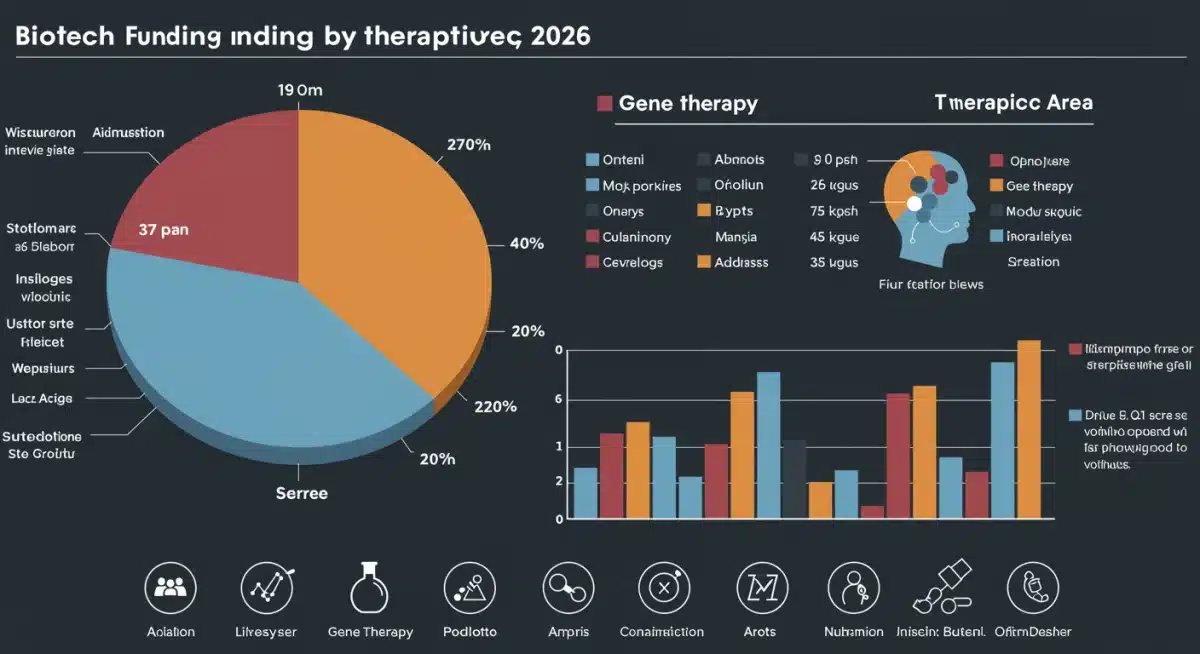
The $5.2 billion in US biotech funding was not evenly distributed across all therapeutic areas. Certain sectors have emerged as particularly hot, reflecting both scientific promise and market demand. Understanding these trends provides insight into the future direction of the industry.
Oncology Remains a Powerhouse
Cancer research and therapy continue to attract the lion’s share of investment. Advances in immunotherapies, targeted therapies, and combination approaches are yielding unprecedented outcomes for patients. Startups developing novel mechanisms of action, precision oncology platforms, and next-generation diagnostics are particularly well-funded. The sheer scale of the oncology market and the ongoing need for more effective treatments ensure its continued prominence in the US biotech funding landscape.
Gene and Cell Therapies: A New Era of Medicine
The field of gene and cell therapy, including CRISPR-based approaches, CAR-T cell therapies, and stem cell treatments, has seen an explosion of interest and investment. These therapies offer the potential for one-time cures for genetic diseases and transformative treatments for various cancers and other intractable conditions. While complex and expensive to develop, the curative potential drives significant investor enthusiasm. The promise of addressing diseases at their genetic root makes this sector a top priority for seed investors.
Neuroscience and Mental Health
After years of underinvestment, neuroscience and mental health are experiencing a renaissance. New understandings of brain function, coupled with innovative drug delivery systems and computational approaches, are leading to novel treatments for neurological disorders like Alzheimer’s, Parkinson’s, and a range of mental health conditions. The immense societal burden of these diseases, combined with a growing scientific pipeline, has made this area increasingly attractive for US biotech funding.
AI and Machine Learning in Drug Discovery
While not a therapeutic area in itself, the application of artificial intelligence (AI) and machine learning (ML) across all stages of drug discovery and development is a significant trend. Companies leveraging AI to identify drug targets, design molecules, predict clinical outcomes, and optimize clinical trials are receiving substantial investment. These technologies promise to accelerate the R&D process, reduce costs, and increase the probability of success, making them indispensable tools for the modern biotech industry.
The Impact of this US Biotech Funding Surge
The $5.2 billion in seed funding has far-reaching implications for the US biotech ecosystem and beyond. This capital infusion will:
Accelerate Innovation and Drug Development
More funding at the seed stage means more early-stage research can be pursued, more experiments can be conducted, and more promising ideas can be tested. This directly translates into an accelerated pace of innovation, bringing novel therapies closer to patients faster. The US biotech funding surge acts as a powerful catalyst for scientific progress.
Foster New Company Creation and Job Growth
Seed funding is crucial for the formation of new biotech companies. This capital allows founders to hire initial teams, secure lab space, and conduct foundational experiments. The growth of these startups, in turn, creates high-skill jobs in research, development, manufacturing, and commercialization, contributing significantly to economic growth.
Strengthen the US Position as a Global Biotech Leader
The robust investment in US biotech startups reinforces the country’s dominant position in the global biotechnology landscape. This influx of capital attracts top scientific talent from around the world and ensures that the US remains at the forefront of medical innovation, driving discoveries that benefit patients globally.
Potential for Higher Returns and Exits
For investors, this significant early-stage capital deployment, if successful, promises substantial returns through future funding rounds, mergers and acquisitions (M&A), or initial public offerings (IPOs). A healthy seed ecosystem is foundational for a vibrant M&A and IPO market in the long term, creating a virtuous cycle of investment and innovation.
Challenges and Considerations for the Future
While the Q1 2026 US biotech funding figures are overwhelmingly positive, it’s important to acknowledge potential challenges and considerations for sustained growth:
High Attrition Rates in Drug Development
Biotech remains a high-risk, high-reward industry. The vast majority of early-stage drug candidates fail in clinical trials. While seed funding fuels early innovation, subsequent funding rounds and successful clinical progression are essential for these companies to survive and thrive. Investors must maintain a long-term perspective and be prepared for potential setbacks.
Talent Acquisition and Retention
With an expanding number of well-funded startups, the competition for top scientific and entrepreneurial talent will intensify. Companies will need strong strategies for attracting and retaining skilled professionals to execute their research and development plans effectively. The demand generated by the US biotech funding boom will put pressure on the talent market.
Regulatory and Reimbursement Landscape
Bringing a novel therapy to market involves navigating complex regulatory pathways and securing favorable reimbursement policies. Changes in these landscapes can significantly impact a company’s prospects. While the current environment is generally supportive, biotech companies must remain adaptable to evolving policy frameworks.
Economic Headwinds and Market Volatility
The broader economic climate can always influence investor sentiment. While biotech has shown resilience, a significant downturn could impact the availability of later-stage funding, even for promising early-stage ventures. The sustainability of the US biotech funding surge depends, in part, on broader economic stability.
The Role of Strategic Partnerships and Collaborations
Beyond direct financial investment, strategic partnerships and collaborations play an increasingly vital role in the success of biotech startups. Large pharmaceutical companies are actively seeking to partner with innovative early-stage ventures to replenish their pipelines and access cutting-edge technologies. These collaborations can provide not only capital but also invaluable resources such as research expertise, manufacturing capabilities, and global commercialization networks. The US biotech funding environment encourages these symbiotic relationships, creating a more integrated ecosystem.

Academic institutions also continue to be crucial partners. Many biotech startups spin out directly from university research labs, leveraging intellectual property developed with public funding. Ongoing collaborations with academic researchers ensure a steady flow of foundational science and access to specialized equipment and expertise. The robust US biotech funding makes these university-industry partnerships even more attractive, as startups can secure the necessary capital to translate academic discoveries into commercial products.
Furthermore, the rise of incubators and accelerators specifically tailored for life sciences companies provides critical support during the earliest stages. These programs offer mentorship, shared lab space, access to capital, and networking opportunities that are invaluable for nascent biotech ventures. They help bridge the gap between scientific discovery and commercial viability, preparing companies to successfully attract significant US biotech funding.
Looking Ahead: Sustaining the Momentum
The record-breaking $5.2 billion in US biotech funding for Q1 2026 is a resounding testament to the dynamism and potential of the American biotechnology sector. To sustain this momentum, several factors will be key:
- Continued Scientific Breakthroughs: The pipeline of novel discoveries must remain robust. Investment in basic science research, both public and private, is fundamental to feeding the innovation engine.
- Supportive Policy Environment: Policies that encourage innovation, streamline regulatory processes, and ensure fair market access for new therapies will be crucial.
- Talent Development: Investing in STEM education and training programs will be essential to ensure a continuous supply of skilled professionals for the growing industry.
- Global Competitiveness: The US must continue to foster an environment that attracts global talent and capital, maintaining its competitive edge in the international biotech arena.
The unprecedented US biotech funding in Q1 2026 signals a period of immense growth and opportunity. It reflects a collective optimism in the power of science to solve some of humanity’s most pressing health challenges. As these seed-funded companies mature, their success will not only generate significant economic value but, more importantly, will bring forth the next generation of life-saving and life-altering therapies, profoundly impacting global health for decades to come.
Conclusion
The first quarter of 2026 has unequivocally demonstrated the strength and allure of the US biotechnology sector. With an astounding $5.2 billion in seed funding, the industry is poised for an era of accelerated innovation and growth. This capital infusion is driven by scientific breakthroughs, an increased focus on unmet medical needs, a favorable regulatory environment, and a vibrant entrepreneurial ecosystem. While challenges remain, the commitment of investors to early-stage biotech ventures bodes well for the future of medicine. This surge in US biotech funding is not just a financial triumph; it’s a profound investment in human health and the promise of a healthier future.