Remote Biotech Jobs US 2026: Opportunities & Challenges

The biotechnology sector, a powerhouse of innovation and scientific discovery, has been undergoing a transformative shift, particularly with the acceleration of remote work models. As we look ahead to 2026, the landscape for Remote Biotech Jobs in the US promises to be dynamic, offering both unprecedented opportunities and unique challenges. This comprehensive analysis will delve into what professionals can expect in the coming years, highlighting key trends, essential skills, and strategic approaches to thrive in this evolving environment.
The Evolving Landscape of Remote Biotech Jobs in the US by 2026
The concept of working remotely, once a niche offering, has firmly embedded itself across industries, and biotechnology is no exception. While traditionally a lab-centric field, the rise of digital tools, advanced data analytics, and a globalized workforce has paved the way for a significant increase in Remote Biotech Jobs. By 2026, we anticipate a more mature and integrated remote work ecosystem within biotech, driven by technological advancements, evolving corporate cultures, and a continued emphasis on work-life balance.
Understanding the Growth Drivers for Remote Biotech Jobs
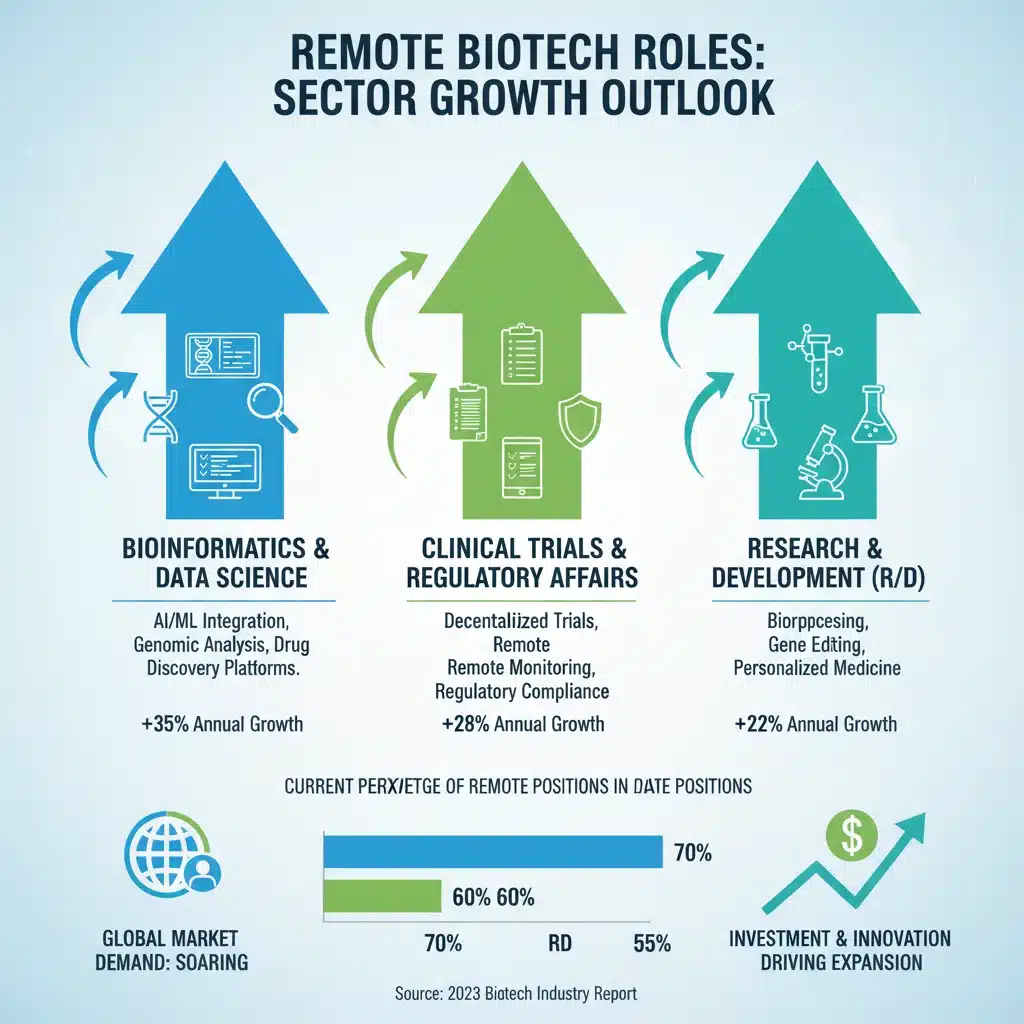
Several factors are propelling the expansion of Remote Biotech Jobs. Firstly, the sheer volume of data generated in biotech – from genomics to clinical trials – necessitates roles that can be performed efficiently off-site, such as bioinformatics, data science, and biostatistics. These roles are inherently digital and often require specialized computing power rather than physical lab access. Secondly, the increasing complexity of regulatory affairs and clinical trial management has created a demand for remote specialists who can navigate intricate legal frameworks and coordinate global studies from any location. Thirdly, the ongoing emphasis on personalized medicine and advanced therapeutic development means that project management, scientific writing, and strategic planning roles are becoming increasingly critical and can be effectively executed remotely.
The COVID-19 pandemic acted as a catalyst, forcing many biotech companies to rapidly adopt remote work solutions. This accelerated adoption proved that many functions previously thought to require an on-site presence could be performed effectively from home. As a result, companies have invested heavily in secure remote infrastructure, virtual collaboration tools, and new management strategies tailored for distributed teams. This foundational shift means that by 2026, remote work will no longer be an emergency measure but a strategic advantage for attracting top talent and optimizing operational costs.
Key Opportunities in Remote Biotech Jobs for 2026
For professionals eyeing the biotech sector, 2026 will present a wealth of opportunities in remote capacities. Here are some of the most promising areas:
1. Bioinformatics and Computational Biology
These fields are at the forefront of data-driven biology. With the explosion of genomic, proteomic, and metabolomic data, the demand for bioinformaticians and computational biologists who can analyze, interpret, and model complex biological systems remotely will continue to soar. These roles are almost entirely computer-based, making them ideal for remote work. Expertise in programming languages (Python, R), statistical analysis, and machine learning will be highly valued.
2. Data Science and AI in Biotech
Beyond traditional bioinformatics, dedicated data scientists and AI specialists will be crucial for extracting insights from vast datasets, optimizing drug discovery pipelines, and developing predictive models for disease progression and treatment efficacy. These roles often involve working with cloud-based platforms and large computational resources, making them perfectly suited for remote execution. The ability to translate complex data into actionable strategies will be a critical skill for Remote Biotech Jobs in this domain.
3. Clinical Research and Development (CRD)
While patient-facing roles in clinical trials remain on-site, many aspects of CRD can be managed remotely. This includes clinical data management, statistical programming, medical writing, regulatory affairs, and clinical project management. By 2026, expect an even greater integration of remote monitoring technologies and virtual trial components, increasing the need for remote CRD professionals who can oversee trials from initiation to completion, ensuring compliance and data integrity.
4. Medical Writing and Communications
The biotech industry constantly generates new research, clinical trial results, and regulatory submissions. Skilled medical writers are essential for translating complex scientific information into clear, concise, and compliant documents. These roles are inherently remote-friendly, requiring strong scientific understanding, exceptional writing skills, and adherence to strict deadlines. Demand for medical writers will remain robust as companies seek to publish findings, secure approvals, and communicate with stakeholders.
5. Regulatory Affairs and Quality Assurance
Navigating the intricate web of global regulations is paramount in biotech. Regulatory affairs specialists ensure products meet all legal and scientific requirements, while quality assurance professionals maintain high standards throughout development and manufacturing. Both roles involve extensive documentation, interpretation of guidelines, and communication with regulatory bodies, making them highly adaptable to remote work. The global nature of biotech also means remote regulatory experts can manage international submissions from anywhere.
6. Biotech Project Management
From early-stage research to product launch, every biotech endeavor requires meticulous project management. Remote project managers can oversee distributed teams, coordinate timelines, manage budgets, and ensure milestones are met, utilizing advanced project management software and communication tools. As projects become more complex and involve international collaborators, the ability to manage effectively from a remote setting becomes an invaluable asset for Remote Biotech Jobs.
Challenges and Considerations for Remote Biotech Professionals
Despite the numerous opportunities, pursuing Remote Biotech Jobs also comes with its share of challenges. Being aware of these can help professionals and companies prepare effectively for 2026.
1. Maintaining Collaboration and Innovation
Biotech thrives on serendipitous discoveries and spontaneous discussions that often occur in a physical lab or office setting. Replicating this level of organic collaboration and fostering an innovative culture remotely can be challenging. Companies and remote workers must actively invest in virtual collaboration platforms, regular team check-ins, and dedicated virtual brainstorming sessions to maintain a strong sense of community and foster creativity.
2. Data Security and Intellectual Property
Biotech deals with highly sensitive data, from patient information to proprietary research. Ensuring robust cybersecurity measures and protecting intellectual property (IP) when employees are working remotely is a paramount concern. Companies will need to implement stringent virtual private networks (VPNs), secure cloud storage, multi-factor authentication, and regular security audits. Remote professionals must also be diligent in following security protocols and maintaining a secure home office environment.
3. Access to Specialized Equipment and Labs
Some biotech roles inherently require access to specialized laboratory equipment, cleanroom facilities, or animal models. While certain tasks can be outsourced or performed by on-site teams, core experimental roles will likely remain primarily on-site. The challenge for Remote Biotech Jobs is identifying which aspects of a project can be effectively decoupled from physical infrastructure and which require a hybrid approach or dedicated on-site personnel.
4. Work-Life Balance and Burnout
The lines between work and personal life can blur easily when working remotely. This can lead to longer hours, increased stress, and potential burnout. Both employers and employees need to establish clear boundaries, promote digital detoxes, and encourage healthy work habits. Companies offering remote Remote Biotech Jobs should also focus on creating a supportive culture that prioritizes employee well-being.
5. Onboarding and Training
Effectively onboarding new employees and providing continuous training can be more complex in a remote setting. Companies need robust virtual onboarding programs, comprehensive online training modules, and dedicated mentorship programs to ensure remote hires are fully integrated and equipped with the necessary skills and knowledge. This is particularly crucial in a rapidly evolving field like biotech.
Essential Skills for Remote Biotech Jobs in 2026
To succeed in the remote biotech landscape of 2026, professionals will need a blend of technical expertise and strong soft skills:
Technical Skills:
- Advanced Data Analytics & AI: Proficiency in tools like R, Python, SQL, machine learning frameworks, and big data platforms.
- Cloud Computing: Experience with AWS, Azure, Google Cloud for data storage, processing, and application deployment.
- Bioinformatics Tools: Expertise in genomic sequencing analysis, structural biology software, and biological databases.
- Regulatory & Compliance Software: Familiarity with electronic document management systems and regulatory submission platforms.
- Project Management Software: Proficiency in tools like Asana, Trello, Jira, or Microsoft Project for distributed team coordination.
Soft Skills:
- Exceptional Communication: Clear, concise written and verbal communication, crucial for virtual team interactions.
- Self-Motivation & Discipline: Ability to manage time effectively, set priorities, and work autonomously without direct supervision.
- Adaptability & Resilience: The biotech field is constantly changing; remote workers must be agile and able to pivot quickly.
- Problem-Solving: Critical thinking and the ability to troubleshoot issues independently.
- Collaboration & Teamwork: Even remotely, the ability to work effectively with diverse teams is paramount.
- Digital Literacy: Comfort and proficiency with various virtual collaboration tools, video conferencing, and remote access technologies.

Strategies for Companies Offering Remote Biotech Jobs
For biotech companies looking to attract and retain top talent in remote roles by 2026, strategic planning is essential:
1. Invest in Robust Technology Infrastructure
This includes secure VPNs, cloud-based platforms, advanced cybersecurity measures, and reliable communication and collaboration tools. Ensuring seamless access to necessary software and data is foundational for successful remote operations.
2. Foster a Culture of Trust and Autonomy
Remote work thrives on trust. Companies must empower employees with autonomy, focusing on results rather than micromanagement. This involves setting clear expectations, providing regular feedback, and celebrating achievements.
3. Implement Clear Communication Protocols
Establish guidelines for virtual meetings, email etiquette, and instant messaging to avoid misunderstandings and ensure information flows efficiently across distributed teams. Regular, structured communication is key to keeping everyone aligned.
4. Prioritize Employee Well-being and Engagement
Offer resources for mental health, encourage breaks, and organize virtual social events to maintain team cohesion. Regular pulse surveys can help gauge employee satisfaction and identify areas for improvement.
5. Develop Hybrid Work Models
For roles that require some on-site presence, consider hybrid models where employees come into the lab or office for specific tasks or team meetings. This offers flexibility while ensuring critical experimental work proceeds efficiently.
Navigating the Job Search for Remote Biotech Roles
For job seekers, a targeted approach will be crucial. Here’s how to position yourself for success in Remote Biotech Jobs by 2026:
1. Specialize in In-Demand Areas
Focus on developing expertise in bioinformatics, data science, regulatory affairs, clinical data management, or medical writing, as these are highly adaptable to remote work.
2. Highlight Remote-Specific Skills
In your resume and interviews, emphasize your ability to work autonomously, communicate effectively in virtual environments, manage projects independently, and your proficiency with remote collaboration tools.
3. Network Actively
Engage with professionals in the biotech industry through online platforms like LinkedIn, attend virtual conferences, and participate in relevant online communities. Networking can open doors to opportunities that aren’t publicly advertised.
4. Build a Strong Online Presence
Showcase your expertise through a professional LinkedIn profile, a personal website, or a portfolio of your work (e.g., GitHub for bioinformaticians, writing samples for medical writers). This demonstrates your capabilities and readiness for remote engagement.
5. Be Proactive in Learning
The biotech field is constantly evolving. Stay updated on the latest scientific advancements, technological tools, and regulatory changes through continuous learning, online courses, and industry publications.
The Future Outlook: Hybrid Models and Global Talent Pools
Looking beyond 2026, the trend for Remote Biotech Jobs is likely to lean towards more sophisticated hybrid models. Companies may establish ‘hub-and-spoke’ systems, with central labs or offices serving as innovation hubs, complemented by a distributed network of remote talent. This allows for specialized, on-site experimental work to continue while leveraging a global talent pool for data analysis, regulatory oversight, and strategic planning.
The ability to tap into a wider talent pool is a significant advantage for companies. It means they are not limited by geographical constraints when searching for highly specialized skills, which are often scarce in biotech. For employees, this translates into greater flexibility, access to a broader range of opportunities, and potentially a better work-life integration. However, it also means increased competition, necessitating continuous skill development and a proactive approach to career management.
Furthermore, the regulatory landscape for remote work, especially across international borders, will continue to evolve. Companies and professionals alike will need to stay informed about tax implications, labor laws, and data privacy regulations that apply to distributed teams. This will add another layer of complexity but also foster new opportunities for legal and HR professionals specializing in remote work frameworks.
Conclusion
The future of Remote Biotech Jobs in the US by 2026 is bright and full of potential. The industry is embracing flexibility, driven by technological innovation and a desire to attract and retain the best scientific minds. While challenges related to collaboration, data security, and work-life balance persist, proactive strategies from both employers and employees can mitigate these issues.
For those aspiring to a career in biotech, developing a strong foundation in data science, regulatory affairs, clinical research management, or scientific communication, coupled with robust soft skills, will be paramount. As the sector continues its rapid evolution, remote work will not just be a perk but a fundamental component of how groundbreaking science is conducted and brought to market. By understanding these dynamics, professionals can strategically position themselves to thrive in the exciting world of remote biotechnology.