Biotech ETF Comparison 2026: US Growth Opportunities

The biotechnology sector continues to be a beacon of innovation and growth, driven by groundbreaking scientific discoveries, advancements in medical treatments, and an ever-increasing global demand for healthcare solutions. As we look ahead to 2026, investors are keenly eyeing the best avenues to capitalize on this dynamic industry. Exchange-Traded Funds (ETFs) offer a diversified and often cost-effective way to gain exposure to the biotech landscape, mitigating some of the idiosyncratic risks associated with individual stock picking in such a volatile sector. This comprehensive guide, focusing on a robust Biotech ETF Comparison, aims to dissect the leading funds, analyze their strategies, and pinpoint which ones are best positioned to deliver superior returns, particularly within the promising US growth markets.
Understanding the nuances of each ETF is crucial. The biotech sector is not monolithic; it encompasses everything from large-cap pharmaceutical giants to small, clinical-stage biotechs. Each fund’s investment mandate, underlying index, and management approach will significantly influence its risk-reward profile. Our analysis will delve into key metrics such as expense ratios, historical performance, holdings diversification, and the specific focus on US-based innovation, which remains a powerhouse for biotech breakthroughs. By the end of this comparison, you will have a clearer picture of which Biotech ETFs align with your investment goals for 2026 and beyond.
The Biotech Landscape in 2026: A Vision of Innovation and Growth
The year 2026 is anticipated to be a pivotal moment for the biotechnology sector. Several macro and micro trends are converging to create a fertile ground for innovation and investment. The accelerating pace of scientific discovery, particularly in areas like gene editing (CRISPR), personalized medicine, cell therapies, and mRNA technology, promises to revolutionize treatment paradigms for a wide array of diseases. These advancements are not just theoretical; many are moving rapidly through clinical trials and gaining regulatory approvals, translating into tangible products and significant market opportunities.
Furthermore, demographic shifts, such as an aging global population and a rising prevalence of chronic diseases, continue to fuel demand for novel healthcare interventions. This sustained demand provides a strong fundamental backdrop for biotech companies. Governments and private entities globally are also increasing their investments in healthcare research and development, recognizing its critical importance for public health and economic growth. The US, in particular, remains a global leader in biotech R&D, attracting substantial venture capital and fostering a vibrant ecosystem of startups and established pharmaceutical companies.
Regulatory environments are also evolving. While regulatory scrutiny remains high, agencies like the FDA are increasingly streamlining approval processes for breakthrough therapies, which can accelerate market access for innovative drugs. This dynamic environment underscores the potential for substantial growth, but also the inherent risks, making a diversified approach through ETFs particularly attractive for many investors. Our Biotech ETF Comparison will explore how different funds navigate this complex but rewarding terrain.
Key Drivers of Biotech Growth in the US
The United States stands out as a global epicenter for biotechnology, driven by several unique factors:
- Robust Research Infrastructure: World-class universities, research institutions, and medical centers are at the forefront of scientific discovery, often collaborating with biotech companies.
- Strong Venture Capital Ecosystem: The US boasts an unparalleled venture capital landscape, providing crucial early-stage funding for innovative biotech startups.
- Supportive Regulatory Framework: While rigorous, the FDA’s processes, including fast-track designations and accelerated approvals, can expedite the development and market entry of promising therapies.
- Intellectual Property Protection: Strong patent laws in the US incentivize innovation by protecting the intellectual property of biotech companies.
- Large and Affluent Market: The significant US healthcare market provides a substantial customer base for new biotech products and therapies.
These factors combine to create an environment where biotech companies can thrive, making US growth exposure a highly desirable component of any biotech investment strategy. This is a central theme we will consider in our Biotech ETF Comparison for 2026.
Understanding Biotech ETFs: What to Look For
Before diving into specific funds, it’s essential to understand the criteria for evaluating Biotech ETFs. Not all ETFs are created equal, and their underlying methodologies can lead to vastly different performance profiles and risk exposures.
Diversification and Holdings
A primary appeal of ETFs is diversification. However, the degree and type of diversification vary. Some biotech ETFs might concentrate on large-cap, established pharmaceutical and biotech companies, offering more stability but potentially slower growth. Others might focus on small and mid-cap companies, including those in clinical stages, which offer higher growth potential but come with increased risk due to the inherent uncertainties of drug development and regulatory approval.
It’s crucial to examine the top holdings of an ETF. Are they concentrated in a few large companies, or are they spread across many different firms? Does the ETF have exposure to different sub-sectors within biotech, such as genomics, oncology, immunology, or rare diseases? A well-diversified fund can help mitigate the impact of any single company’s success or failure.
Expense Ratios
The expense ratio is a critical factor, representing the annual fee charged by the ETF issuer. In the long run, even seemingly small differences in expense ratios can significantly impact your total returns. While actively managed ETFs might justify higher fees if they consistently outperform, passively managed index-tracking ETFs typically have lower expense ratios. For a long-term investment, lower fees are generally preferable.
Liquidity and Assets Under Management (AUM)
Liquidity refers to how easily you can buy and sell shares of the ETF without significantly impacting its price. ETFs with higher trading volumes and larger AUM tend to be more liquid. While not always a deal-breaker for long-term investors, good liquidity ensures you can enter and exit positions efficiently when needed.
Tracking Error and Index Methodology
Most ETFs aim to track a specific index. The tracking error measures how closely the ETF’s performance matches its underlying index. A lower tracking error indicates a more efficient fund. Understanding the index methodology is also vital. Does the index use market-cap weighting, equal weighting, or a modified approach? Does it screen for profitability, growth potential, or specific therapeutic areas? These details dictate the fund’s exposure and potential biases.
Focus on US Growth
Given our focus on US growth, investors should scrutinize the geographic allocation of an ETF’s holdings. While many biotech companies are global, some funds might have a higher concentration in US-based firms, which aligns with our objective of capturing domestic innovation and market strength. This specific lens will be paramount in our Biotech ETF Comparison.
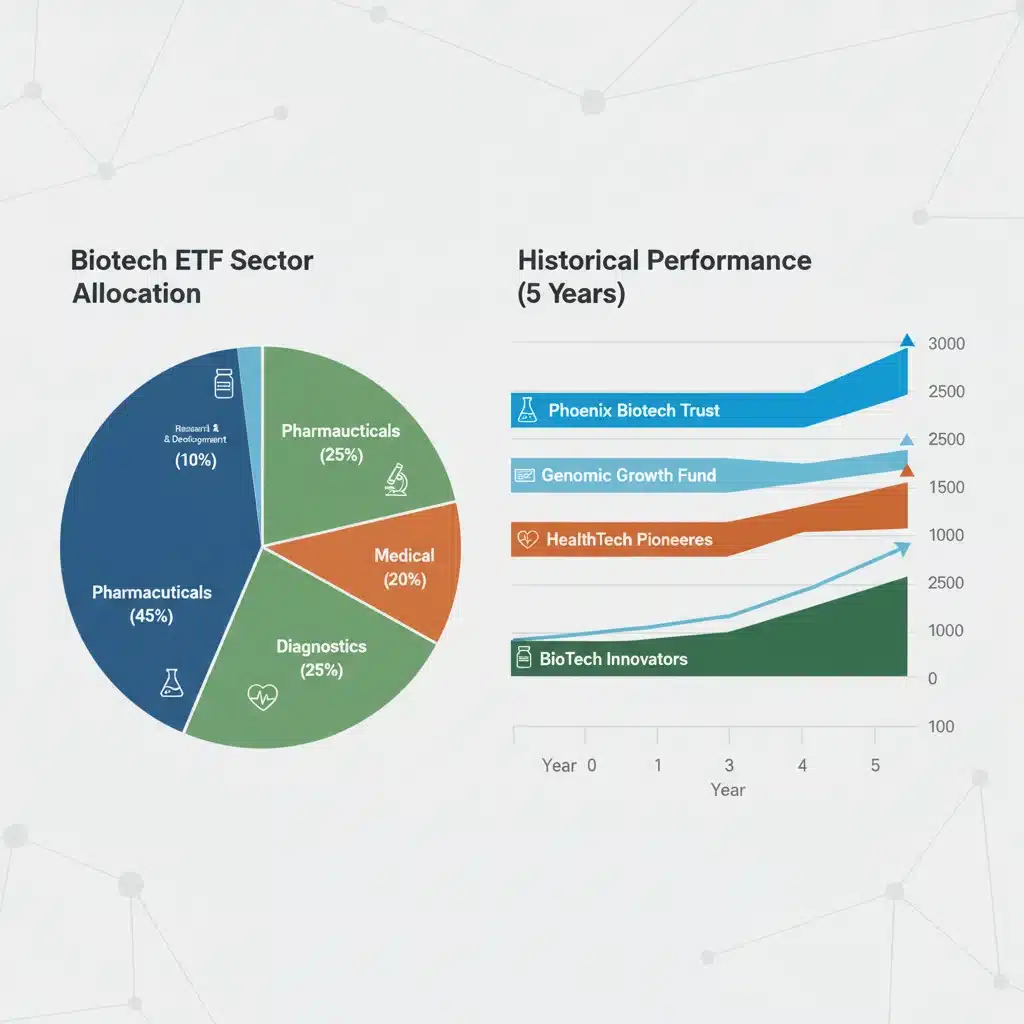
Leading Biotech ETFs for 2026: A Deep Dive
Now, let’s explore some of the prominent Biotech ETFs that are likely to be key players in 2026, evaluating them based on the criteria outlined above, with a particular emphasis on US growth exposure.
1. iShares Biotechnology ETF (IBB)
The iShares Biotechnology ETF (IBB) is one of the oldest and largest biotech ETFs, making it a cornerstone for many investors seeking broad exposure to the sector. IBB tracks the NASDAQ Biotechnology Index, which is composed of NASDAQ-listed biotechnology and pharmaceutical companies. Its significant AUM and high liquidity make it an attractive option for institutional and individual investors alike.
- Holdings: IBB typically holds a diverse portfolio of large and mid-cap US biotech and pharmaceutical companies. Its top holdings often include well-established names like Amgen, Gilead Sciences, Moderna, and Vertex Pharmaceuticals. This focus on established players provides a degree of stability compared to funds heavily weighted towards clinical-stage companies.
- Expense Ratio: IBB generally has a competitive expense ratio, reflecting its passive indexing strategy.
- US Growth Exposure: As it tracks a NASDAQ index, IBB inherently has a strong focus on US-listed companies, making it a solid choice for investors prioritizing US growth. Its holdings are often at the forefront of innovation within the US biotech landscape.
- Performance: Historically, IBB has demonstrated strong performance, benefiting from the growth of its large-cap constituents. However, its large-cap bias can sometimes lead to less explosive growth compared to funds focused on smaller companies.
2. SPDR S&P Biotech ETF (XBI)
The SPDR S&P Biotech ETF (XBI) takes a different approach than IBB, tracking the S&P Biotechnology Select Industry Index. What sets XBI apart is its equal-weighted methodology, meaning that smaller companies have the same impact on the fund’s performance as larger ones. This can lead to higher volatility but also potentially greater upside, especially if a smaller, innovative company achieves a breakthrough.
- Holdings: XBI’s equal-weighting results in a much broader and more diversified portfolio of small and mid-cap biotech companies. This structure gives it significant exposure to emerging innovators and clinical-stage firms, which are often the engines of future growth in the sector.
- Expense Ratio: XBI’s expense ratio is also competitive, reflecting its index-tracking nature.
- US Growth Exposure: The S&P Biotechnology Select Industry Index primarily comprises US-based companies, ensuring strong exposure to the vibrant US biotech ecosystem. Its equal-weighting amplifies the impact of numerous US-based growth stories.
- Performance: Due to its equal-weighting and focus on smaller companies, XBI can be more volatile than IBB. However, it has also historically delivered periods of significant outperformance when smaller biotechs are thriving. It’s an excellent choice for investors seeking higher growth potential, albeit with commensurately higher risk.
3. VanEck Biotech ETF (BBH)
The VanEck Biotech ETF (BBH) tracks the MVIS US Listed Biotech 25 Index, which focuses on the 25 largest and most liquid US-listed companies in the biotechnology sector. This concentrated approach means BBH typically holds fewer companies than IBB or XBI, but these companies are often industry leaders with robust pipelines and market presence.
- Holdings: BBH’s portfolio is highly concentrated in mega-cap and large-cap biotech firms. This includes names like Amgen, Gilead, Regeneron, and Biogen. The emphasis is on established players with significant market capitalization and often a history of profitability.
- Expense Ratio: Its expense ratio is generally in line with other passively managed biotech ETFs.
- US Growth Exposure: As the index specifically targets US-listed companies, BBH offers direct exposure to the largest and most influential US biotech firms, which are often global leaders in their respective therapeutic areas.
- Performance: BBH’s performance tends to be less volatile than XBI due to its focus on larger, more established companies. It can provide steady growth, but might miss out on the explosive gains of smaller, emerging biotechs. It’s suitable for investors who prefer a more stable, large-cap-focused approach to biotech.
4. ARK Genomic Revolution ETF (ARKG)
While not strictly a pure-play biotech ETF in the traditional sense, the ARK Genomic Revolution ETF (ARKG) deserves mention for its active management and thematic focus on disruptive innovation within genomics. ARKG invests in companies involved in gene editing, genomic sequencing, gene therapy, and bioinformatics, many of which are US-based and represent the bleeding edge of biotech innovation.
- Holdings: ARKG’s portfolio is highly concentrated and actively managed, featuring companies that ARK Invest believes are poised for significant disruption. This often includes smaller, rapidly growing companies alongside some larger innovators. Examples might include CRISPR Therapeutics, Exact Sciences, and Pacific Biosciences.
- Expense Ratio: As an actively managed fund, ARKG has a higher expense ratio than passively managed ETFs. This is the trade-off for its potential to identify and capitalize on high-growth, disruptive trends.
- US Growth Exposure: A significant portion of ARKG’s holdings are US-based companies that are leaders in genomic innovation. Its focus on revolutionary technologies inherently targets high-growth segments within the US biotech landscape.
- Performance: ARKG can exhibit significant volatility due to its active management and focus on high-growth, often early-stage, companies. However, it has also demonstrated periods of exceptional returns when its investment theses play out. It’s suited for investors with a higher risk tolerance and a belief in the transformative power of genomic technologies.
Choosing the Right Biotech ETF for Your Portfolio in 2026
The decision of which Biotech ETF to choose for 2026 depends heavily on your individual investment goals, risk tolerance, and time horizon. Our Biotech ETF Comparison highlights distinct characteristics:
For Broad, Stable US Biotech Exposure:
- iShares Biotechnology ETF (IBB): Excellent for investors seeking diversified exposure to established US biotech and pharmaceutical giants. It offers a balance of growth and relative stability within the sector.
For High Growth Potential with Higher Risk:
- SPDR S&P Biotech ETF (XBI): Ideal for investors willing to accept higher volatility for the potential of greater returns, driven by its equal-weighted exposure to a broad range of small and mid-cap US biotech innovators.
For Concentrated Exposure to Large US Biotech Leaders:
- VanEck Biotech ETF (BBH): Suited for those who prefer exposure to the largest and most liquid US biotech companies, offering a more concentrated, yet often more stable, growth profile.
For Thematic, Disruptive Genomic Innovation:
- ARK Genomic Revolution ETF (ARKG): Best for aggressive investors who believe in the transformative power of genomics and are comfortable with the higher fees and volatility associated with actively managed, high-conviction portfolios.
Considerations Beyond Fund Selection
Beyond selecting the right ETF, several other factors should influence your investment strategy:
- Market Cycle: The biotech sector can be sensitive to broader market cycles, interest rate changes, and regulatory shifts. Be aware of the current economic environment.
- Innovation Pipeline: Keep an eye on the overall innovation pipeline within the biotech industry. Major breakthroughs can significantly impact the sector’s trajectory.
- Diversification: Even within biotech, it’s wise to ensure your overall portfolio is diversified across different sectors and asset classes to mitigate risk.
- Long-Term Horizon: Biotech investing often rewards a long-term perspective, as drug development and commercialization can take many years.

The Future of Biotech and US Growth in 2026
The trajectory for the biotech sector in 2026 appears promising, particularly within the United States. The confluence of scientific advancement, robust funding, and a strong market demand creates a compelling investment thesis. Personalized medicine, driven by advances in genomics and artificial intelligence, is expected to become even more mainstream, offering tailored treatments that are more effective and have fewer side effects. The fight against cancer, neurodegenerative diseases, and autoimmune disorders will continue to be a major focus, with new therapies constantly emerging from research pipelines.
Furthermore, the integration of technology, such as AI and machine learning, into drug discovery and development processes is accelerating the pace of innovation. This not only makes the process more efficient but also opens up new avenues for identifying therapeutic targets and designing novel molecules. US companies are at the forefront of this technological integration, further solidifying their position as global leaders.
However, investors must remain cognizant of the inherent risks. Regulatory hurdles, clinical trial failures, patent disputes, and pricing pressures can all impact the performance of biotech companies and, by extension, biotech ETFs. Geopolitical factors and global economic conditions also play a role. Therefore, a well-researched and diversified approach, such as investing in carefully selected Biotech ETFs, is paramount.
Conclusion: Navigating Biotech Opportunities with Smart ETF Choices
As we navigate towards 2026, the biotechnology sector, particularly within the United States, presents a wealth of investment opportunities driven by relentless innovation and growing healthcare needs. A thoughtful Biotech ETF Comparison reveals that while all funds aim to capture this growth, they do so through diverse strategies, offering different risk-reward profiles.
Whether you prioritize broad exposure to established leaders (IBB), seek higher growth from emerging innovators (XBI), focus on the top-tier large caps (BBH), or aim for disruptive genomic breakthroughs (ARKG), there’s an ETF to match your investment philosophy. By understanding the underlying holdings, expense ratios, and specific focus on US growth, investors can make informed decisions to position their portfolios for success in this exciting and rapidly evolving industry.
Remember that investing in the biotech sector, even through diversified ETFs, carries inherent risks. It is always advisable to conduct your own due diligence, consider consulting with a financial advisor, and ensure that any investment aligns with your overall financial goals and risk tolerance. The future of medicine is being written today, and with the right Biotech ETF, you can be part of that transformative journey, potentially reaping significant rewards from the dynamic US growth market.