Biotech Venture Capital Trends: Q4 2025 Review & 2026 Outlook

The biotech venture capital landscape in Q4 2025 revealed a strategic pivot towards precision medicine and AI-driven drug discovery, setting a robust stage for diversified early-stage investments throughout 2026.
Are you tracking the pulse of innovation and investment? The world of biotech is constantly evolving, and understanding the nuances of biotech venture capital trends is crucial for anyone looking to make informed decisions. As we close out Q4 2025 and peer into the promising horizon of 2026, a clear picture emerges for early-stage investments. What shifts are defining this dynamic market, and where do the most significant opportunities lie?
Q4 2025: A landscape of cautious optimism and strategic shifts
The final quarter of 2025 presented a complex yet compelling narrative for biotech venture capital. While macroeconomic headwinds continued to exert pressure, the sector demonstrated remarkable resilience, driven by a renewed focus on fundamental science and impactful therapeutic areas. Investors, having navigated a period of broad-based enthusiasm, became more discerning, prioritizing companies with robust data, clear clinical pathways, and strong management teams.
This period saw a notable divergence in funding patterns. Late-stage deals, while still significant, faced increased scrutiny regarding valuation and exit potential. Conversely, early-stage funding, particularly for seed and Series A rounds, maintained a steady pace, reflecting investors’ appetite for groundbreaking innovation at its nascent stages. The emphasis shifted from rapid scale-up to sustainable growth and de-risking early development.
key investment areas in Q4 2025
- Precision medicine: Personalized therapies, especially in oncology and rare diseases, continued to attract substantial capital. The ability to tailor treatments based on individual genetic profiles offered compelling value propositions and improved clinical outcomes.
- AI and machine learning in drug discovery: Companies leveraging artificial intelligence to accelerate drug identification, optimize clinical trial design, and predict treatment responses saw significant investor interest. These technologies promised to reduce costs and timelines in an otherwise lengthy development process.
- Gene editing and cell therapies: Advancements in CRISPR technology and next-generation cell therapies, including allogeneic approaches, remained hotbeds of innovation and investment. The potential to cure previously untreatable diseases fueled continued excitement.
The cautious optimism of Q4 2025 was underpinned by a strategic recalibration among venture capitalists. Rather than chasing every promising lead, firms focused on deep diligence and a more hands-on approach with their portfolio companies. This disciplined environment set the stage for a more mature and potentially more rewarding investment cycle in the years to come.
Emerging therapeutic modalities: beyond small molecules and biologics
As we move into 2026, the biotech investment landscape is increasingly defined by a shift towards novel therapeutic modalities that promise to revolutionize patient care. The traditional reliance on small molecules and biologics, while still vital, is being complemented by a new wave of innovative approaches.
This evolution is not just about new drugs, but fundamentally new ways of interacting with human biology. Investors are actively seeking out companies that are pushing the boundaries of what’s possible, identifying therapies that can address unmet medical needs with unprecedented precision and efficacy.
the rise of RNA-based therapies
Following the success of mRNA vaccines, RNA-based therapies have garnered immense attention. This category includes not only mRNA but also siRNA, antisense oligonucleotides (ASOs), and circular RNA. These modalities offer distinct advantages, such as the ability to target previously undruggable proteins, modulate gene expression with high specificity, and potentially offer more rapid development timelines. Venture capital firms are keenly interested in platforms that can deliver these therapies safely and efficiently to target cells.
- mRNA: Beyond vaccines, mRNA is being explored for therapeutic proteins, cancer immunotherapies, and rare genetic disorders.
- siRNA/ASO: These technologies silence specific genes, offering potential treatments for conditions like Huntington’s disease, liver disorders, and certain cancers.
- Circular RNA: An emerging area, circular RNAs are more stable than linear RNA and show promise for sustained therapeutic protein production.
The versatility and programmable nature of RNA therapies make them particularly attractive for early-stage investment, as they represent a foundational technology with broad applicability across various disease areas. The potential for platform scalability further enhances their appeal.
The growing influence of artificial intelligence in biotech investments
Artificial intelligence (AI) is no longer a buzzword in biotech; it is a transformative force fundamentally reshaping how drugs are discovered, developed, and delivered. In Q4 2025, and continuing into 2026, AI’s integration into biotech has become a primary driver of venture capital interest, moving beyond theoretical potential to demonstrated utility.
Investors are increasingly sophisticated in evaluating AI-driven biotech startups, looking for clear differentiation, proprietary datasets, and demonstrable improvements in efficiency or success rates. The focus is on companies that leverage AI to solve concrete problems within the drug development pipeline, rather than those offering generic AI solutions.
AI for accelerated drug discovery
One of the most impactful applications of AI is in accelerating the drug discovery process. Machine learning algorithms can analyze vast datasets of biological and chemical information to identify novel drug candidates, predict their efficacy and toxicity, and optimize their molecular structure. This significantly reduces the time and cost associated with traditional, labor-intensive screening methods.
- Target identification: AI can pinpoint novel disease targets by analyzing genomic, proteomic, and clinical data.
- Molecule generation: Generative AI models design de novo compounds with desired properties, accelerating lead optimization.
- Preclinical prediction: Machine learning predicts drug-target interactions and potential off-target effects, enhancing safety profiles.
Beyond discovery, AI is also making inroads into clinical development, optimizing trial design, identifying suitable patient populations, and monitoring patient responses. This comprehensive integration of AI across the value chain makes it a critical area for venture capital, promising to de-risk investments and accelerate market entry for new therapies.
Early-stage investment strategies for 2026: focusing on de-risking and platforms
For early-stage biotech investors, 2026 will be characterized by a heightened emphasis on de-risking strategies and a preference for platform technologies. The days of funding single-asset companies with limited validation are largely over; the market demands more robust foundations and broader applicability.
Venture capitalists are now looking for companies that offer not just a promising lead candidate, but a reproducible technological platform that can generate multiple therapeutic assets or address a range of indications. This approach mitigates the inherent risks of biotech development by diversifying potential successes within a single investment. 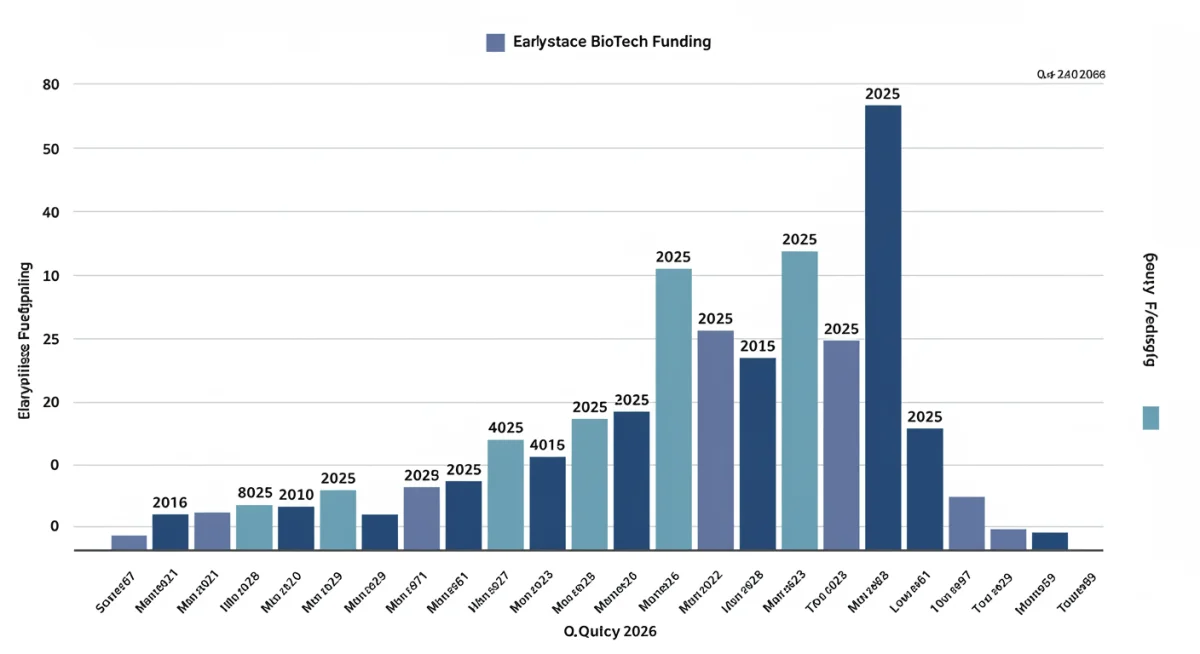
importance of platform technologies
Platform technologies are particularly attractive because they offer scalability and a higher probability of generating a pipeline of products. For example, a company developing a novel gene editing tool might apply it to several different genetic diseases, rather than focusing on just one. This broadens the potential market and reduces reliance on the success of a single program.
- Modular design: Platforms that can be easily adapted for various targets or disease areas.
- Scalability: Technologies capable of producing multiple therapeutic candidates efficiently.
- IP strength: Robust intellectual property protecting the underlying platform, not just individual assets.
Furthermore, early-stage investors are prioritizing companies with clear scientific validation, even at the preclinical stage. This includes strong in vitro and in vivo data, well-defined mechanisms of action, and a credible path to clinical translation. The due diligence process has become more rigorous, with a greater emphasis on scientific expertise and independent validation.
Geographic hotspots and talent acquisition in biotech venture capital
While Boston and the San Francisco Bay Area remain perennial powerhouses in biotech, Q4 2025 and the outlook for 2026 reveal an increasing diversification of geographic hotspots. Emerging biotech clusters across the United States are gaining traction, driven by strong academic institutions, supportive state funding, and a growing talent pool.
This decentralization offers new opportunities for venture capitalists to tap into innovative research and entrepreneurial ecosystems that may offer more competitive valuations and access to specialized talent. The ability to attract and retain top scientific and business talent remains a critical factor for success in early-stage biotech.
rising biotech hubs
Beyond the traditional centers, cities like San Diego, Research Triangle Park (North Carolina), Philadelphia, and Seattle are solidifying their positions as significant biotech hubs. These regions often benefit from lower operating costs, strong university-industry collaborations, and a high quality of life, which helps in attracting skilled professionals.
- San Diego: Known for its strong focus on genomics, oncology, and neuroscience, fueled by UC San Diego and Scripps Research.
- Research Triangle Park: A rapidly growing hub for gene therapy, agricultural biotech, and contract research organizations.
- Philadelphia: A leader in cell and gene therapy, with a rich academic and clinical research environment.
Talent acquisition is a constant challenge. Companies that can articulate a compelling vision, offer competitive compensation, and foster a strong scientific culture are better positioned to attract the best minds. Venture capitalists are increasingly looking at a startup’s ability to build and retain a high-performing team as a key indicator of its potential for success.
Regulatory landscape and market access considerations for 2026
The regulatory environment plays a pivotal role in shaping biotech venture capital trends, particularly for early-stage investments. In Q4 2025, and looking ahead to 2026, investors are keenly aware of evolving FDA guidelines, accelerated approval pathways, and the broader implications for market access and reimbursement. A clear understanding of these factors is crucial for de-risking investments and ensuring a viable path to commercialization.
The FDA continues to adapt its frameworks to accommodate novel therapeutic modalities, such as cell and gene therapies, and AI-driven diagnostics. Companies that proactively engage with regulatory bodies and design their development programs with regulatory requirements in mind will have a distinct advantage.
navigating FDA pathways
For early-stage biotech companies, understanding and strategizing around FDA pathways is paramount. This includes leveraging designations like Orphan Drug, Fast Track, Breakthrough Therapy, and Regenerative Medicine Advanced Therapy (RMAT) when applicable. These designations can significantly accelerate development and review times, which is critical for investor confidence.
- Orphan Drug Designation: Provides incentives for developing therapies for rare diseases.
- Breakthrough Therapy Designation: Expedites development and review of drugs for serious conditions that show substantial improvement over existing therapies.
- RMAT Designation: Facilitates development and review of regenerative medicine therapies.
Beyond regulatory approval, market access and reimbursement strategies are becoming increasingly important, even at the early stages. Investors are evaluating a company’s potential to secure favorable pricing and coverage, particularly for high-cost, innovative therapies. The ability to demonstrate real-world value and cost-effectiveness will be critical for long-term commercial success in 2026 and beyond.
| Key Trend | Brief Description |
|---|---|
| AI Integration | AI and machine learning are revolutionizing drug discovery and development, attracting significant VC interest for their efficiency. |
| Platform Technologies | Investors favor companies with scalable platforms capable of generating multiple therapeutic assets, de-risking portfolios. |
| RNA-based Therapies | Post-mRNA vaccine success, RNA-based modalities (siRNA, ASO) are gaining traction for their versatility and precision. |
| Geographic Diversification | Emerging biotech hubs beyond traditional centers are attracting capital due to strong academic ties and talent pools. |
Frequently asked questions about biotech venture capital
Q4 2025 saw a pivot towards more discerning investments, with a strong focus on precision medicine, AI-driven drug discovery, and validated early-stage platforms. Investors prioritized companies with robust scientific data and clear clinical development paths over speculative ventures, reflecting a period of cautious optimism and strategic recalibration within the market.
In 2026, early-stage investment is projected to concentrate on RNA-based therapies, gene editing technologies, and advanced cell therapies. Additionally, precision oncology, neuroscience, and rare diseases, particularly those leveraging AI for target identification and drug design, are expected to remain high-priority areas for venture capitalists seeking innovative solutions.
AI is profoundly influencing VC decisions by enabling faster, more efficient drug discovery and development. Investors are keen on startups that utilize AI for novel target identification, molecular design, and clinical trial optimization. This reduces development costs and timelines, making AI-powered biotech companies highly attractive for their potential to de-risk investments and accelerate market entry.
Platform technologies are crucial for early-stage biotech investments as they offer scalability and the potential to generate multiple therapeutic assets from a single core technology. This approach diversifies risk and increases the probability of success compared to single-asset companies. VCs seek robust platforms with strong intellectual property and broad applicability across various disease indications.
Biotech startups in 2026 must demonstrate a clear understanding of evolving FDA guidelines and strategic engagement with accelerated approval pathways like Orphan Drug or Breakthrough Therapy designations. Investors evaluate a company’s regulatory strategy, including plans for market access and reimbursement, as these factors are critical for de-risking investments and ensuring a viable path to commercialization and profitability.
Conclusion
The biotech venture capital landscape, as evidenced by the trends in Q4 2025 and the outlook for 2026, is characterized by a dynamic interplay of scientific innovation, strategic investment, and evolving market demands. Early-stage investments are increasingly focused on groundbreaking platform technologies, the transformative power of AI, and novel therapeutic modalities like RNA-based therapies. While challenges remain, the sector’s resilience and its commitment to addressing unmet medical needs continue to attract significant capital, promising a future rich with therapeutic breakthroughs and robust growth for discerning investors. The emphasis on de-risking, scientific validation, and a clear regulatory path will be paramount for success in this exciting and rapidly advancing field.