AI’s Impact on US Biotech Recruitment: 4 Key Updates for Job Seekers

The landscape of talent acquisition is in a perpetual state of flux, but few sectors are experiencing a transformation as profound and rapid as biotechnology, particularly within the United States. At the heart of this revolution is Artificial Intelligence (AI). AI is not merely a tool; it’s a paradigm shift, redefining how biotech companies identify, attract, and onboard their most valuable asset: human talent. For job seekers and employers alike, understanding the nuances of how AI is influencing US biotech recruitment is no longer optional; it’s imperative for survival and success in this highly competitive and innovative field.
The integration of AI into recruitment processes promises enhanced efficiency, reduced bias, and the ability to unearth candidates with specialized skills that might otherwise be overlooked. However, it also introduces new challenges, ethical considerations, and a demand for a different kind of skill set among both applicants and hiring managers. This comprehensive article delves into four recent, critical updates that are currently shaping the US biotech recruitment sphere due to the pervasive influence of AI. We will explore how these developments are altering job requirements, interview processes, and the very definition of a successful candidate in the biotech industry.
The Shifting Skill Set: Data Fluency and AI Literacy as Core Competencies
One of the most significant and immediate impacts of AI on US biotech recruitment is the dramatic shift in the required skill set for candidates. Traditionally, biotech roles emphasized deep scientific knowledge, laboratory techniques, and a strong understanding of biological processes. While these remain foundational, the advent of AI has introduced a new layer of essential competencies: data fluency and AI literacy.
Biotech companies are increasingly leveraging AI for everything from drug discovery and development to personalized medicine and diagnostic tools. This means that even roles that were once purely wet-lab based now often require an understanding of how to interact with, interpret, and sometimes even build AI models. For instance, a molecular biologist might need to analyze large genomic datasets using machine learning algorithms, or a clinical researcher might utilize AI-powered tools to identify patient cohorts or predict treatment responses.
Recent updates show a surge in demand for professionals who can bridge the gap between biological science and computational methods. This includes roles such as computational biologists, bioinformatics specialists, AI/ML engineers with a biotech background, and data scientists specializing in life sciences. However, the influence extends beyond these specialized positions. Even traditional roles like lab technicians, research associates, and project managers are now expected to possess a foundational understanding of data handling, statistical analysis, and the capabilities (and limitations) of AI tools.
Employers are actively seeking candidates who can not only generate data but also manage, clean, analyze, and derive insights from vast, complex datasets characteristic of modern biotech research. This necessitates skills in programming languages like Python or R, experience with data visualization tools, and an understanding of machine learning principles. Furthermore, AI literacy involves understanding the ethical implications of AI in healthcare, data privacy regulations, and the ability to critically evaluate AI-generated outcomes.
For job seekers, this means a proactive approach to skill development is crucial. Online courses, bootcamps, and advanced degrees focusing on bioinformatics, computational biology, and AI in life sciences are becoming increasingly valuable. Demonstrating proficiency in these areas through projects, publications, or certifications can significantly enhance a candidate’s attractiveness in the competitive US biotech recruitment market. Recruiters, in turn, are adapting their screening processes to identify these emerging competencies, often incorporating technical assessments or case studies that evaluate a candidate’s data and AI aptitude.
The emphasis on data fluency and AI literacy is a testament to the fact that AI is not just automating tasks; it’s augmenting human intelligence, allowing scientists to ask bigger questions and find answers more efficiently. Therefore, the ability to effectively collaborate with AI tools is becoming a cornerstone of success in the modern biotech workforce.
AI-Driven Candidate Sourcing and Screening: Precision and Pitfalls
The second major update in US biotech recruitment concerns the transformative role of AI in candidate sourcing and screening. AI-powered platforms are revolutionizing how companies identify potential hires, moving beyond traditional keyword matching to more sophisticated analyses of resumes, cover letters, and even online professional profiles. These tools can parse vast amounts of data, identifying patterns and correlations that human recruiters might miss, leading to more precise and efficient candidate identification.
Recruitment AI now employs natural language processing (NLP) to understand the nuances of job descriptions and candidate qualifications, going beyond simple keyword searches. It can analyze a candidate’s project experience, publications, and even their contributions to open-source communities to assess their fit for highly specialized biotech roles. This allows recruiters to cast a wider net while simultaneously narrowing down the field to the most relevant candidates, saving significant time and resources.
For example, AI can quickly identify candidates with specific experience in CRISPR gene editing and machine learning, or those who have published research in a niche area of immunology. This level of precision is invaluable in biotech, where specialized expertise is often paramount. Furthermore, AI can help identify passive candidates who may not be actively looking for jobs but possess the desired skills and experience, allowing companies to tap into a broader talent pool.
However, this increased precision comes with its own set of challenges and potential pitfalls. One of the most significant concerns is algorithmic bias. If the AI models are trained on historical data that reflects existing biases in hiring practices (e.g., favoring certain demographics or educational institutions), the AI might perpetuate or even amplify these biases, leading to a less diverse workforce. This is a critical ethical consideration, especially in a sector like biotech that thrives on diverse perspectives and innovative thinking.
Another pitfall is the potential for overlooking unconventional but highly capable candidates. AI algorithms are designed to identify patterns, and candidates whose experiences don’t perfectly align with predefined criteria, even if their skills are transferable and valuable, might be inadvertently filtered out. This ‘black box’ problem, where the reasoning behind an AI’s decision isn’t always transparent, makes it challenging to identify and rectify such issues.
Recent updates indicate that leading biotech companies and recruitment firms are becoming increasingly aware of these challenges. Efforts are being made to develop more transparent and auditable AI systems, to diversify training data, and to ensure human oversight remains an integral part of the screening process. For job seekers, this means optimizing their resumes and online profiles not just for human eyes, but also for AI algorithms, by using relevant keywords, clearly articulating their skills, and showcasing projects that demonstrate their capabilities. Understanding how AI might interpret their qualifications is becoming a new aspect of career strategy in this evolving landscape of US biotech recruitment.
Automated Interviewing and Assessment: Efficiency Meets Authenticity
The third significant update in US biotech recruitment involves the rise of automated interviewing and assessment tools. Beyond initial resume screening, AI is now being deployed in various stages of the interview process, aiming to enhance efficiency, standardize evaluations, and potentially reduce human bias. This includes AI-powered video interviews, gamified assessments, and predictive analytics tools that evaluate candidate responses and behaviors.
AI-powered video interviews, for instance, analyze candidates’ verbal and non-verbal cues, such as tone of voice, facial expressions, and body language, in addition to the content of their answers. While controversial, proponents argue this can provide a more objective and consistent evaluation across candidates, especially for soft skills like communication, critical thinking, and problem-solving – which are increasingly important in collaborative biotech environments. These systems can also flag answers that align with desired competencies, helping recruiters identify top talent more quickly.
Gamified assessments are another innovative application of AI. These tools present candidates with interactive challenges or simulations designed to measure specific cognitive abilities, technical skills, and even personality traits relevant to biotech roles. For example, a candidate might be tasked with solving a virtual lab problem or making strategic decisions in a simulated drug development scenario. AI analyzes their performance, providing insights into their problem-solving approach, attention to detail, and ability to learn new concepts – all crucial for success in the dynamic biotech sector.
The benefits of these automated tools are clear: they can significantly streamline the initial stages of the interview process, allowing recruiters to assess a larger volume of candidates more efficiently. This is particularly valuable in US biotech recruitment, where specialized roles often attract a global talent pool, and traditional interview methods can be time-consuming and logistically challenging.
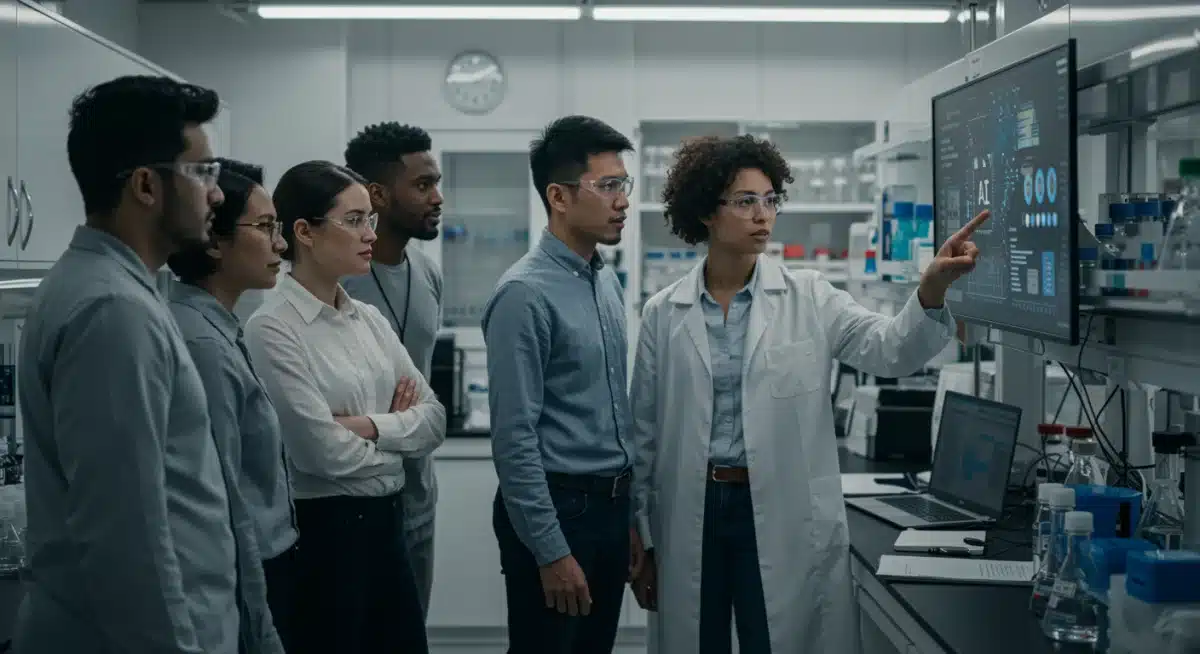
However, concerns about authenticity and candidate experience persist. Candidates may feel that interacting with an AI rather than a human interviewer lacks the personal touch, potentially deterring some highly qualified individuals. There are also questions about the validity and reliability of AI’s emotional and behavioral analyses, and whether these truly reflect a candidate’s potential in a real-world biotech setting. The ‘black box’ problem also resurfaces here, as the exact algorithms used to evaluate candidates are often proprietary and not fully transparent.
Recent trends show a move towards hybrid approaches, where AI tools are used for initial screening and assessment, followed by human-led interviews for final evaluations. This blend aims to leverage AI’s efficiency while preserving the human element crucial for building rapport and assessing cultural fit. For job seekers, preparing for AI-driven interviews means practicing clear communication, being mindful of non-verbal cues, and understanding that their performance will be analyzed systematically. Authenticity, coupled with strategic presentation, becomes key to navigating these new assessment landscapes in US biotech recruitment.
Ethical Considerations and Regulatory Scrutiny: Ensuring Fair Play in AI Biotech Recruitment
The fourth and arguably most crucial update in the context of AI’s impact on US biotech recruitment revolves around ethical considerations and increasing regulatory scrutiny. As AI becomes more deeply embedded in hiring practices, questions of fairness, transparency, and accountability are taking center stage. The biotech industry, with its profound implications for human health and well-being, has an especially high ethical bar, and its recruitment practices are no exception.
The primary ethical concern, as touched upon earlier, is algorithmic bias. If AI systems inadvertently discriminate against certain demographic groups, it not only leads to unfair hiring practices but also deprives biotech companies of diverse talent, potentially hindering innovation. Such biases can arise from biased training data, flawed algorithms, or even the subtle ways in which AI interprets information. Ensuring equitable opportunities for all candidates is paramount.
Another significant ethical consideration is data privacy and security. Recruitment AI systems collect and process vast amounts of personal data from applicants. Protecting this sensitive information from breaches and ensuring its ethical use is a critical responsibility. Candidates have a right to know what data is being collected, how it’s being used, and for how long it will be stored. Transparency in these practices is essential for building trust.
The ‘black box’ nature of some AI algorithms also raises ethical questions about transparency and explainability. If an AI system rejects a candidate, can the reasons be clearly articulated? Without this transparency, it’s difficult for both candidates and recruiters to understand potential biases or errors, making appeals or improvements challenging. This lack of explainability can exacerbate feelings of unfairness and erode confidence in AI-driven processes.
In response to these concerns, there’s growing regulatory scrutiny, particularly in the US. Legislators and advocacy groups are pushing for regulations that mandate transparency, explainability, and fairness in AI hiring tools. While a comprehensive federal framework is still evolving, states and cities are beginning to implement their own rules. For example, New York City has implemented a law requiring independent audits for bias in automated employment decision tools. Other states are exploring similar legislation, signaling a broader trend towards regulating AI in HR.
For biotech companies, this means a proactive approach to ethical AI implementation is no longer just good practice; it’s becoming a legal necessity. This involves investing in AI systems designed with fairness and transparency in mind, conducting regular audits for bias, ensuring robust data security measures, and providing clear communication to candidates about how AI is being used in the recruitment process. Collaborating with legal and ethical experts in AI is becoming a core part of HR strategy.
For job seekers, understanding these ethical dimensions can help them navigate the recruitment process more effectively. Being aware of their rights regarding data privacy and the potential for algorithmic bias can empower them to ask relevant questions and advocate for fair treatment. Ultimately, the goal is to harness the power of AI to create a more efficient and equitable US biotech recruitment ecosystem, rather than one that perpetuates existing inequalities.
Preparing for the Future of US Biotech Recruitment: Strategies for Success
As AI continues to embed itself deeply within US biotech recruitment, both job seekers and employers must adapt their strategies to remain competitive and effective. The four updates discussed – the shifting skill set, AI-driven sourcing and screening, automated interviewing, and ethical/regulatory scrutiny – collectively paint a picture of a dynamic and rapidly evolving hiring landscape. Navigating this future successfully requires foresight, continuous learning, and a commitment to ethical practices.
For Job Seekers:
- Embrace Continuous Learning: Prioritize acquiring skills in data science, machine learning, and computational biology. Even if your primary role is in a wet lab, a foundational understanding of these areas will be invaluable. Online courses, certifications, and advanced degrees can provide this edge.
- Optimize for AI and Humans: Craft resumes and online profiles (LinkedIn, GitHub, etc.) that are rich in relevant keywords and clearly articulate your skills and project experiences. Use language that both AI algorithms and human recruiters can easily understand. Quantify your achievements whenever possible.
- Practice AI-Driven Assessments: Familiarize yourself with automated video interviews and gamified assessments. Practice articulating your thoughts clearly and concisely, and be prepared for analytical or problem-solving challenges.
- Understand Ethical Implications: Be aware of data privacy and algorithmic bias. Don’t hesitate to ask recruiters about their AI tools and how they ensure fairness and transparency.
- Network Strategically: While AI automates many processes, human connections remain vital. Network with professionals in your target biotech companies and attend industry events to gain insights and make personal connections.
- Develop Soft Skills: As AI handles more routine tasks, soft skills like critical thinking, complex problem-solving, creativity, emotional intelligence, and collaboration become even more pronounced. These are challenging for AI to replicate and are highly valued in team-oriented biotech environments.
For Employers and Recruiters in US Biotech:
- Invest in Ethical AI Tools: Select AI recruitment platforms that prioritize fairness, transparency, and explainability. Demand documented evidence of bias mitigation and regular audits from your vendors.
- Diversify Training Data: Actively work to diversify the data used to train AI algorithms to prevent the perpetuation of historical biases. Regularly review and update your AI models.
- Maintain Human Oversight: AI should augment, not replace, human judgment. Ensure human recruiters are involved at critical stages of the hiring process to review AI recommendations, conduct interviews, and make final decisions.
- Educate Your Team: Train your HR and hiring managers on the capabilities and limitations of AI tools, as well as the ethical considerations involved. Foster a culture of responsible AI usage.
- Enhance Candidate Experience: While leveraging AI for efficiency, strive to maintain a positive candidate experience. Provide clear communication about the use of AI, offer feedback where possible, and ensure a human touchpoint at key stages.
- Focus on Skills-Based Hiring: Shift from solely credential-based hiring to a more skills-based approach, which AI can effectively support by identifying transferable skills and potential beyond traditional qualifications.
- Stay Abreast of Regulations: Keep informed about evolving local, state, and federal regulations concerning AI in employment. Proactively adjust your practices to ensure compliance and avoid legal pitfalls.
Conclusion
The integration of AI into US biotech recruitment is not a futuristic concept; it is a present reality that is continually evolving. From redefining essential skill sets to transforming sourcing, screening, and assessment methodologies, AI’s impact is undeniable. While it offers unprecedented opportunities for efficiency and precision, it also brings forth critical ethical and regulatory challenges that demand careful navigation.
By understanding these four recent updates – the demand for data fluency and AI literacy, the dual nature of AI-driven sourcing and screening, the efficiency versus authenticity debate in automated interviewing, and the increasing focus on ethical AI and regulatory compliance – both job seekers and biotech organizations can better prepare for the future. The biotech industry, at its core, is about innovation and progress. Embracing AI responsibly in its most vital function – acquiring the best talent – will be key to unlocking the next generation of scientific breakthroughs and maintaining the US’s leadership in this critical sector. The future of US biotech recruitment is intelligent, interconnected, and, above all, human-centric in its ultimate goals.