Q1 2026 Biotech Job Market Report: Key Insights for US Researchers and Scientists

The biotechnology sector continues its relentless march forward, driven by groundbreaking discoveries, an escalating global health crisis, and significant investment in research and development. For researchers and scientists in the United States, understanding the nuances of the biotech job market is paramount for career planning and advancement. This comprehensive Q1 2026 report delves into the current landscape, identifying key trends, areas of high demand, salary expectations, and what the future holds for this dynamic industry.
The first quarter of 2026 has witnessed a robust and evolving biotech job market, characterized by a sustained demand for highly skilled professionals. While macroeconomic factors can always introduce volatility, the fundamental drivers of biotech growth – innovation in therapeutics, diagnostics, agricultural biotechnology, and industrial applications – remain strong. This report aims to provide actionable insights for both job seekers and industry stakeholders, offering a data-driven perspective on where the opportunities lie and what competencies are most valued.
Overview of the Q1 2026 US Biotech Job Market
The US biotech job market in Q1 2026 has shown remarkable resilience and growth, building on the momentum from previous years. Despite some initial concerns about venture capital funding slowdowns in late 2025, the sector has demonstrated its ability to attract substantial investment, particularly in areas addressing unmet medical needs and transformative technologies. The overall employment rate within the biotech and pharmaceutical industries remains healthy, with a continued emphasis on specialized roles.
Key Statistics and Growth Indicators
- Job Postings: A 7% increase in new job postings was observed in Q1 2026 compared to Q4 2025, indicating a strong hiring appetite across the board.
- Investment: Venture capital funding for US biotech startups reached approximately $12 billion in Q1 2026, slightly surpassing projections, with a significant portion directed towards early-stage companies focused on novel drug discovery and gene therapies.
- Geographic Hotspots: Traditional biotech hubs such as Boston/Cambridge, San Francisco Bay Area, San Diego, and Research Triangle Park (RTP) continue to dominate, accounting for over 60% of all biotech job openings. However, emerging clusters in cities like Seattle, Philadelphia, and Austin are also experiencing accelerated growth.
- Company Growth: Both established pharmaceutical giants and nimble biotech startups are actively recruiting. While large companies offer stability and extensive resources, startups often provide opportunities for greater impact and rapid career progression.
The data suggests a robust and expanding ecosystem, where innovation is directly translating into employment opportunities. The demand for professionals who can navigate complex scientific challenges and contribute to product development remains high, solidifying the US as a global leader in biotechnology.
High-Demand Roles and Specializations
Within the broad spectrum of the biotech job market, certain roles and specializations are experiencing particularly high demand in Q1 2026. This reflects the current scientific frontiers and the industry’s strategic priorities.
For Researchers:
- Gene and Cell Therapy Researchers: With several gene therapies receiving FDA approval and many more in clinical trials, experts in viral vector design, cell manufacturing, and gene editing (CRISPR, base editing) are highly sought after.
- Bioinformatics Scientists/Computational Biologists: The explosion of ‘omics’ data (genomics, proteomics, metabolomics) requires professionals skilled in data analysis, algorithm development, and machine learning to extract meaningful biological insights.
- Immunology Researchers: Cancer immunotherapy, autoimmune diseases, and infectious disease research continue to drive demand for immunologists with expertise in T-cell biology, antibody engineering, and immune-oncology.
- Neuroscience Researchers: As the understanding of neurological disorders advances, there’s a growing need for researchers focused on neurodegenerative diseases (Alzheimer’s, Parkinson’s), neurodevelopmental disorders, and pain management.
- Structural Biologists: Expertise in cryo-EM, X-ray crystallography, and NMR for determining protein structures is crucial for rational drug design and understanding disease mechanisms.
For Scientists:
- Process Development Scientists (Upstream/Downstream): Essential for scaling up biologic production, these scientists optimize fermentation, cell culture, purification, and recovery processes.
- Analytical Development Scientists: Responsible for developing and validating assays for characterization, potency, and purity of biotech products, critical for regulatory submissions.
- Formulation Scientists: Focus on developing stable and effective formulations for biologics and small molecules, ensuring drug delivery and shelf-life.
- Clinical Research Scientists: Play a pivotal role in designing, executing, and monitoring clinical trials, bridging the gap between preclinical research and patient care.
- Regulatory Affairs Scientists: Navigating the complex regulatory landscape (FDA, EMA, etc.) is crucial. These professionals ensure compliance and facilitate product approvals.
The interdisciplinary nature of modern biotechnology also means that roles requiring a blend of skills – for example, a computational biologist with a strong understanding of immunology – are particularly valuable. Companies are increasingly looking for individuals who can not only perform specialized tasks but also collaborate effectively across different scientific disciplines.
Emerging Trends Shaping the Biotech Job Market
Several significant trends are reshaping the biotech job market, influencing skill requirements, research directions, and career paths. Staying abreast of these developments is crucial for professionals seeking to remain competitive.
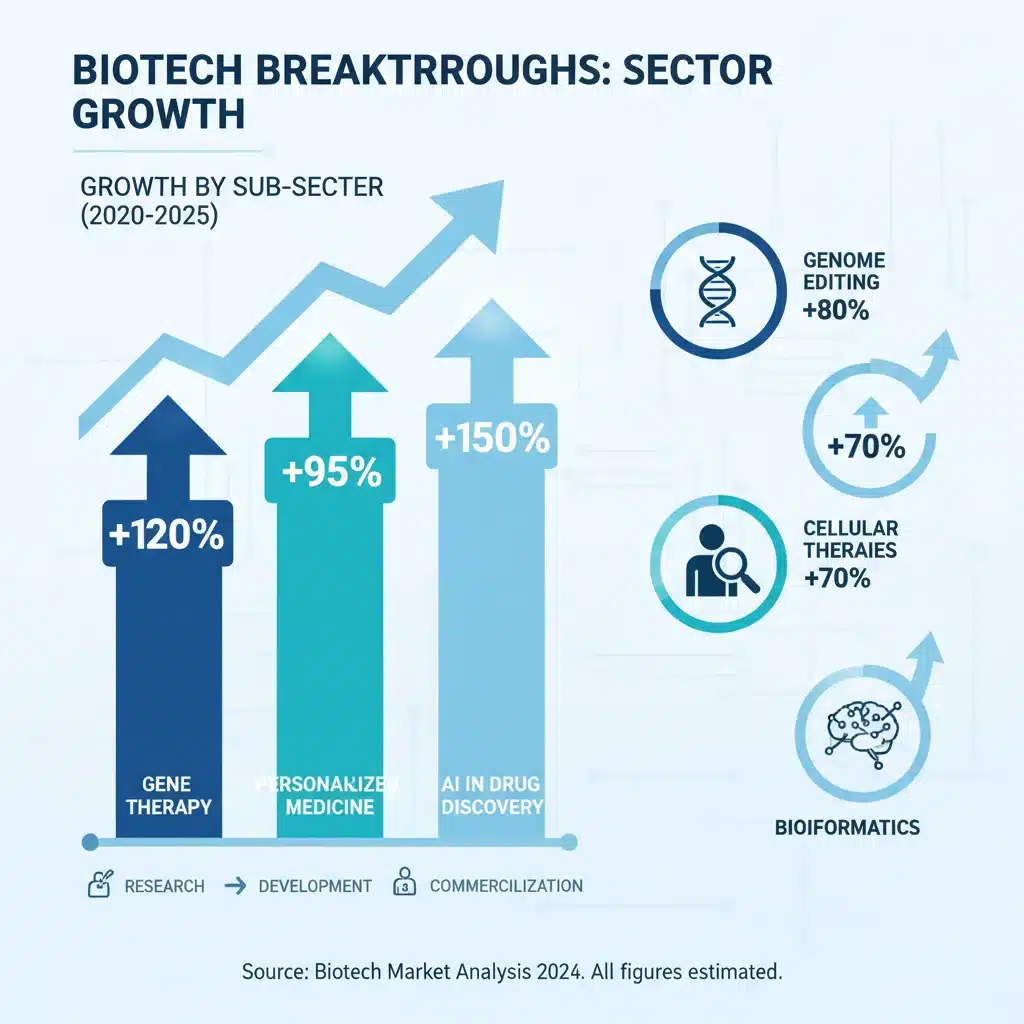
1. Artificial Intelligence and Machine Learning in Drug Discovery
AI/ML is no longer a nascent concept in biotech; it’s an indispensable tool. From accelerating target identification and lead optimization to predicting drug efficacy and toxicity, AI is revolutionizing the drug discovery pipeline. This trend fuels demand for:
- AI/ML Engineers: Specializing in biological data.
- Data Scientists: With domain expertise in genomics, proteomics, or chemistry.
- Computational Chemists: Leveraging AI for molecular modeling and virtual screening.
Professionals with a strong foundation in both biology/chemistry and computational methods will find themselves highly marketable.
2. Personalized Medicine and Diagnostics
The shift towards tailored treatments based on an individual’s genetic makeup, lifestyle, and environment continues to gain traction. This drives demand for:
- Molecular Diagnostics Scientists: Developing and validating assays for biomarkers.
- Medical Geneticists: Interpreting genomic data for clinical applications.
- Bioethicists: Addressing the complex ethical considerations of personalized medicine.
The integration of diagnostics with therapeutics is creating new opportunities for scientists who can bridge these two areas.
3. Advanced Biomanufacturing and Automation
As biotech products move from labs to large-scale production, efficient and cost-effective manufacturing processes become critical. Automation and advanced bioprocessing techniques are key to this evolution, creating roles for:
- Automation Engineers: Designing and implementing automated systems for labs and manufacturing.
- Bioprocess Engineers: Optimizing bioreactor design, cell culture conditions, and purification methods.
- Quality Control/Assurance Specialists: Ensuring product quality throughout the automated manufacturing pipeline.
4. Sustainable Biotechnology (Bio-based Economy)
Beyond human health, biotechnology is increasingly applied to environmental and industrial challenges. This includes developing biofuels, biodegradable plastics, sustainable agricultural practices, and bioremediation solutions. This expanding area requires:
- Industrial Microbiologists: For fermentation and enzyme engineering.
- Agricultural Biotechnologists: For crop improvement and sustainable farming.
- Environmental Scientists: Applying biotech solutions to pollution and waste management.
This sector offers exciting opportunities for those passionate about applying scientific solutions to global sustainability issues.
Salary Expectations and Compensation Trends
Compensation in the biotech job market remains highly competitive, reflecting the specialized skills and extensive education required. Salaries are influenced by several factors:
- Experience Level: Entry-level positions typically require a Bachelor’s or Master’s degree, while senior research and leadership roles often demand a Ph.D. and significant post-doctoral or industry experience. Salaries increase significantly with experience and a proven track record.
- Geographic Location: Biotech hubs generally offer higher salaries to offset the higher cost of living. For instance, a scientist in the San Francisco Bay Area can expect a higher base salary than one in a less expensive region, even for comparable roles.
- Company Size and Funding: Large pharmaceutical companies often provide robust compensation packages, including competitive base salaries, bonuses, and comprehensive benefits. Startups, while potentially offering lower base salaries, may compensate with significant equity stakes and the promise of substantial returns if the company succeeds.
- Specialization: Roles in high-demand areas like gene therapy, AI/ML, and clinical development often command premium salaries due to the scarcity of specialized talent.
Typical Salary Ranges (Q1 2026, US Averages):
- Research Associate (BS/MS): $65,000 – $90,000
- Scientist (PhD, 0-3 years exp): $95,000 – $130,000
- Senior Scientist (PhD, 4-7 years exp): $120,000 – $170,000
- Principal Scientist/Associate Director: $150,000 – $220,000+
- Bioinformatics Scientist: $100,000 – $160,000
- Process Development Scientist: $90,000 – $150,000
These figures represent base salaries and do not include performance bonuses, stock options, sign-on bonuses, or comprehensive benefits packages (health, dental, vision, 401K match, etc.), which can significantly increase total compensation. Negotiation skills are crucial, especially for candidates with unique and in-demand skill sets.
Skills & Qualifications Highly Valued in Q1 2026
Beyond specific scientific expertise, certain transferable skills are increasingly valued across the biotech job market. Cultivating these can significantly enhance a candidate’s attractiveness.
Technical Skills:
- Data Science & Analytics: Proficiency in programming languages (Python, R), statistical analysis, machine learning frameworks, and data visualization tools.
- Bioinformatics Tools: Expertise with genomic databases, sequence alignment tools, and ‘omics’ data analysis platforms.
- Lab Automation & Robotics: Experience with automated liquid handlers, high-throughput screening, and robotic systems.
- GMP/GLP Compliance: Understanding and adherence to Good Manufacturing Practices and Good Laboratory Practices, especially for roles in development and manufacturing.
- CRISPR/Gene Editing Techniques: Practical experience with advanced gene editing technologies.
Soft Skills:
- Critical Thinking & Problem-Solving: The ability to design experiments, troubleshoot issues, and interpret complex data.
- Communication: Excellent written and verbal communication for presenting research, writing reports, and collaborating with diverse teams.
- Collaboration & Teamwork: Biotech projects are inherently multidisciplinary, requiring effective collaboration with scientists from various backgrounds.
- Adaptability & Resilience: The biotech landscape changes rapidly, demanding professionals who can quickly learn new technologies and adjust to evolving research priorities.
- Project Management: The ability to plan, execute, and oversee research projects, often involving multiple stakeholders and tight deadlines.

Challenges and Opportunities in the Biotech Sector
While the biotech job market is thriving, it’s not without its challenges. Understanding these can help professionals navigate their careers more effectively.
Challenges:
- Funding Volatility: While Q1 2026 saw strong investment, the capital markets can be unpredictable. Companies, especially startups, need to demonstrate clear pathways to clinical success and profitability to secure continued funding.
- Talent Scarcity: For highly specialized roles (e.g., experienced gene therapy process engineers, senior AI/ML scientists with biotech domain expertise), there is a significant talent gap, leading to intense competition among employers.
- Regulatory Hurdles: Bringing novel biotech products to market involves rigorous and often lengthy regulatory approval processes, requiring significant investment and expertise.
- Ethical Considerations: Advances in areas like gene editing and synthetic biology raise complex ethical questions that the industry and society must continually address.
Opportunities:
- Global Health Impact: Biotech offers unparalleled opportunities to address pressing global health challenges, from new infectious diseases to chronic conditions.
- Technological Convergence: The integration of biotech with AI, nanotechnology, and advanced materials science is opening entirely new avenues for innovation.
- Entrepreneurship: The relatively low barrier to entry for certain biotech ventures (e.g., diagnostics, research tools) fosters a vibrant entrepreneurial ecosystem.
- Career Growth: The rapid pace of discovery and development means continuous learning and ample opportunities for career progression and skill diversification.
Advice for Aspiring and Established Biotech Professionals
For those looking to enter or advance within the biotech job market, strategic planning is essential. Whether you are a recent graduate or an experienced scientist, continuous learning and networking are key.
For Students and Recent Graduates:
- Gain Practical Experience: Internships, co-op programs, and research assistant positions are invaluable. They provide hands-on experience and build your professional network.
- Develop Interdisciplinary Skills: Supplement your core scientific degree with courses or workshops in computer science, data analytics, or business fundamentals.
- Network Actively: Attend industry conferences, career fairs, and professional association meetings. Informational interviews can provide insights and connections.
- Tailor Your Resume/CV: Highlight specific skills and experiences relevant to the roles you are targeting. Quantify your achievements whenever possible.
For Experienced Researchers and Scientists:
- Embrace Continuous Learning: The biotech field evolves rapidly. Stay updated on the latest scientific discoveries, technologies, and regulatory changes through publications, webinars, and professional development courses.
- Consider Skill Gaps: Identify areas where your skills might be lacking (e.g., AI/ML, specific analytical techniques) and seek opportunities for upskilling or reskilling.
- Mentor and Lead: As you gain experience, seek out leadership opportunities, whether managing projects, mentoring junior scientists, or leading a team.
- Expand Your Network: Reconnect with former colleagues, attend leadership summits, and consider joining industry advisory boards.
- Explore Entrepreneurial Avenues: If you have a novel idea or technology, explore the possibility of spinning it out into a startup.
The Future Outlook for the US Biotech Job Market
Looking beyond Q1 2026, the long-term outlook for the US biotech job market remains overwhelmingly positive. Several factors will continue to fuel its expansion:
- Aging Population & Chronic Diseases: The increasing global burden of chronic and age-related diseases will sustain the demand for novel therapeutics and diagnostics.
- Technological Advancements: Breakthroughs in gene editing, synthetic biology, organoids, and advanced imaging will continue to open new frontiers in research and development.
- Digital Transformation: The deeper integration of AI, big data, and automation will streamline processes, accelerate discovery, and create new types of roles.
- Global Biosecurity: Lessons learned from recent pandemics will likely lead to sustained investment in infectious disease research, vaccine development, and rapid diagnostic platforms.
The industry is expected to become even more interdisciplinary, requiring professionals who can effectively bridge biology, chemistry, engineering, and computer science. The ability to translate complex scientific findings into tangible, market-ready products will be a highly prized skill.
Conclusion
The Q1 2026 US biotech job market report paints a picture of a vibrant, dynamic, and opportunity-rich sector. For researchers and scientists, this means a promising career landscape, particularly for those with specialized skills in areas like gene therapy, bioinformatics, immunology, and advanced biomanufacturing. While challenges exist, the overarching trend is one of sustained growth, driven by innovation and a global need for advanced biological solutions.
By understanding the current trends, anticipating future developments, and continuously investing in skill development, professionals can strategically position themselves for success in this exciting and impactful industry. The biotech sector is not just about jobs; it’s about making a profound difference in human health, agriculture, and the environment, offering a deeply rewarding career path for those dedicated to scientific discovery and its application.