Seed Funding Strategies: Boost Biotech Startup Valuation by 15%

Seed Funding Strategies for US Biotech Startups: Achieving a 15% Higher Valuation in 2026 Rounds
The landscape of biotech seed funding is fiercely competitive, yet ripe with unparalleled opportunities for innovative US startups. In an industry where groundbreaking discoveries can redefine healthcare and human well-being, securing the right initial investment is not just about survival; it’s about setting the stage for exponential growth and achieving a significantly higher valuation in subsequent funding rounds. This comprehensive guide delves into actionable strategies designed to help US biotech startups not only attract crucial seed capital but also to position themselves for a remarkable 15% higher valuation by the pivotal 2026 funding rounds. Our focus is on the strategic pillars that underpin successful fundraising: robust scientific validation, a clear intellectual property (IP) roadmap, a compelling business model, a strong team, and an acute understanding of investor expectations.
The biotech sector, characterized by its high-risk, high-reward nature, demands a nuanced approach to fundraising. Unlike other tech sectors, biotech ventures often require extensive R&D, lengthy regulatory processes, and significant capital expenditure before commercialization. This unique dynamic means that seed investors in biotech are not just looking for a good idea; they are seeking a combination of scientific rigor, market potential, and a credible path to clinical translation and commercial success. Achieving a 15% higher valuation is an ambitious yet attainable goal for startups that meticulously plan and execute their seed funding strategy, focusing on demonstrating tangible progress and de-risking their technology at every turn.
This article will dissect the critical components of a winning biotech seed funding strategy, offering insights into how to build an irresistible investment case. We will explore how to articulate your scientific vision, protect your innovations, and construct a financial narrative that resonates with sophisticated biotech investors. By adhering to these principles, US biotech startups can not only secure the necessary capital but also establish a foundation for sustained growth and an elevated market position as they approach the crucial 2026 funding cycle.
Understanding the Seed Funding Landscape for US Biotech
Before diving into specific strategies, it’s crucial to understand the current biotech seed funding environment in the US. The market is dynamic, influenced by global health trends, technological advancements, and shifting investor appetites. As we approach 2026, investors are increasingly sophisticated, looking beyond raw scientific data to evaluate the broader commercial viability and strategic positioning of a biotech startup. They are seeking ventures that demonstrate a clear unmet medical need, a differentiated solution, and a credible team capable of navigating the complex drug development or medical device pathway.
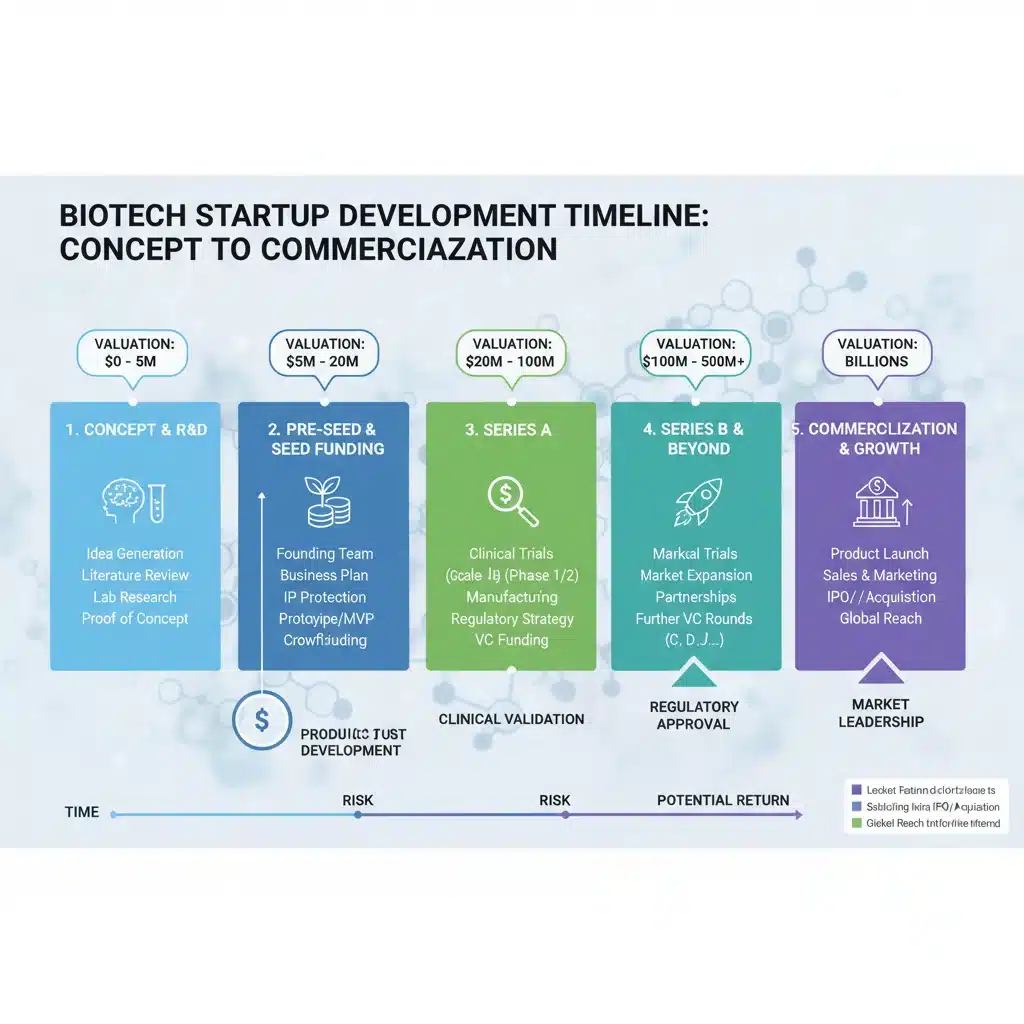
Seed funding in biotech typically ranges from a few hundred thousand to several million dollars. This initial capital is vital for early-stage R&D, proof-of-concept studies, intellectual property protection, and assembling the foundational team. The valuation at this stage is often based on the potential of the technology, the strength of the IP, the expertise of the founders, and the size of the addressable market, rather than established revenue streams. Therefore, the ability to articulate a compelling vision and demonstrate significant de-risking milestones is paramount.
Investors in the biotech space often include angel investors, venture capital firms specializing in life sciences, corporate venture arms of pharmaceutical companies, and increasingly, family offices and strategic individual investors. Each type of investor brings different expectations and strategic value. Understanding who you are pitching to and tailoring your message accordingly is a critical first step. For instance, a strategic corporate investor might prioritize alignment with their existing pipeline, while a pure-play VC might focus on the potential for a large exit.
The competitive nature of the biotech market means that startups must differentiate themselves early. This differentiation can come from novel scientific approaches, proprietary technology platforms, unique therapeutic mechanisms, or innovative business models. A strong understanding of the competitive landscape and a clear articulation of your unique selling proposition (USP) are essential for standing out and attracting the attention of discerning seed investors. Moreover, demonstrating an awareness of potential regulatory hurdles and a preliminary strategy to overcome them can significantly enhance investor confidence.
Finally, the economic climate and interest rates also play a role. In periods of economic uncertainty, investors may become more risk-averse, favoring companies with quicker paths to clinical trials or clearer market opportunities. Conversely, in more buoyant markets, there might be a greater appetite for truly disruptive, long-horizon technologies. Monitoring these macroeconomic trends and adapting your fundraising narrative can be a significant advantage for US biotech startups aiming for a higher valuation.
Pillar 1: Scientific Validation and Data Integrity
At the heart of any successful biotech startup is robust science. For biotech seed funding, investors are scrutinizing the scientific foundation of your innovation with extreme diligence. Achieving a 15% higher valuation hinges significantly on the quality and integrity of your scientific data and the clarity with which you present your scientific validation. This isn’t just about having promising lab results; it’s about demonstrating reproducibility, statistical significance, and a clear path from bench to bedside.
Rigorous Pre-clinical Data Generation
The cornerstone of scientific validation lies in your pre-clinical data. This includes in vitro studies, cell-based assays, and animal models. Investors will want to see data that:
- Is statistically sound: Ensure your experiments are well-designed with appropriate controls and statistical analysis. Poorly designed experiments or insufficient data sets can raise red flags.
- Shows clear efficacy: Demonstrate that your therapeutic candidate or diagnostic tool works as intended in relevant biological systems.
- Indicates safety profiles: Early indications of safety and toxicity are crucial. While comprehensive toxicology studies come later, any preliminary data suggesting a favorable safety profile can significantly de-risk your proposition.
- Is reproducible: The ability to replicate your results internally and ideally, externally, enhances credibility.
Investing in high-quality research from the outset, even if it means a slower start, will pay dividends when seeking biotech seed funding. Sloppy science or rushed experiments will inevitably undermine investor confidence and valuation potential.
Peer Review and KOL Endorsement
External validation adds immense weight to your scientific claims. Publishing your research in reputable peer-reviewed journals demonstrates scientific rigor and allows for independent scrutiny. Furthermore, securing endorsements or collaborations with Key Opinion Leaders (KOLs) in your field can be a powerful testament to the significance and potential of your work. KOLs can provide invaluable insights, lend their credibility to your project, and open doors to further scientific and clinical collaborations. Their involvement signals to investors that your science is not only sound but also recognized by leading experts.
Clear Mechanism of Action (MOA)
Investors want to understand *how* your technology works. A well-defined and validated Mechanism of Action (MOA) provides confidence that your therapeutic or diagnostic approach is rational and has a scientific basis. If your MOA is unclear or speculative, it introduces a significant element of risk. Investing in studies to elucidate your MOA, even at the seed stage, can dramatically improve your narrative and valuation.
Translational Strategy
For US biotech startups, the ultimate goal is often clinical translation. Even at the seed stage, investors want to see a credible, albeit early, translational strategy. This includes:
- Identification of target patient population: Who will benefit from your technology?
- Biomarkers: Are there measurable biomarkers that can indicate efficacy or patient response in clinical trials?
- Clinical development plan: A high-level overview of potential clinical trial phases, even if preliminary, demonstrates foresight.
By meticulously addressing these aspects of scientific validation, US biotech startups can build an unshakeable foundation that justifies a premium valuation, making them highly attractive targets for biotech seed funding. This scientific rigor is the bedrock upon which all other valuation drivers are built, directly contributing to the goal of a 15% higher valuation in future rounds.
Pillar 2: Robust Intellectual Property (IP) Strategy
In the biotech sector, intellectual property (IP) is often the crown jewel, representing years of research, innovation, and significant investment. A robust and well-articulated IP strategy is not just a defensive measure; it’s a powerful offensive tool that can significantly enhance a US biotech startup’s valuation, directly contributing to achieving that 15% higher valuation in 2026 funding rounds. Investors are acutely aware that a strong IP portfolio provides a competitive moat, protecting future revenue streams and creating barriers to entry for competitors.
Early and Comprehensive Patent Filing
The foundation of a strong IP strategy begins with early and comprehensive patent filing. This means:
- Provisional Patents: File provisional patent applications as soon as an invention is conceived and reduced to practice. This secures an early priority date without the immediate cost and complexity of a full utility patent.
- Utility Patents: Follow up with non-provisional utility patent applications within 12 months, detailing the invention comprehensively. Ensure claims are broad enough to cover variations and future developments, yet specific enough to be defensible.
- International Protection: Consider filing PCT (Patent Cooperation Treaty) applications to preserve the option for international protection in key markets, especially if your target patient population or manufacturing base is global.
Engaging experienced patent attorneys specializing in biotechnology is non-negotiable. Their expertise is crucial in navigating the intricate patent landscape, drafting strong claims, and responding to office actions. A poorly drafted patent can be worse than no patent at all, as it can create a false sense of security.
Freedom-to-Operate (FTO) Analysis
Before significant investment in development, conduct a thorough Freedom-to-Operate (FTO) analysis. This involves searching existing patents to ensure your technology does not infringe on the intellectual property of others. An FTO analysis mitigates legal risks, avoids costly litigation down the line, and assures investors that your path to commercialization is clear. Identifying potential infringement early allows for strategic adjustments, licensing discussions, or even patent challenges, all of which are preferable to a last-minute discovery that halts progress.
Trade Secrets and Know-How
Not all valuable intellectual property can or should be patented. Trade secrets, such as proprietary manufacturing processes, cell lines, formulations, or specialized research protocols, can provide a significant competitive advantage. Develop robust internal policies to protect these trade secrets, including non-disclosure agreements (NDAs) with employees, contractors, and partners, and secure data management systems. Investors appreciate a multi-faceted IP strategy that leverages both patent protection and trade secret management.
Ongoing IP Management and Expansion
IP strategy is not a one-time event; it’s an ongoing process. As your technology evolves and new discoveries are made, continuously evaluate opportunities to expand your patent portfolio. This could involve filing continuation patents, divisional patents, or new applications for improvements and new uses of your core technology. A dynamic IP strategy demonstrates foresight and a commitment to long-term protection, which resonates positively with investors seeking to maximize returns from their biotech seed funding.
For US biotech startups, a strong IP portfolio signals innovation, market exclusivity, and a potential for high returns. It’s a tangible asset that directly impacts valuation, making your company more attractive to investors and justifying a premium. By prioritizing a robust IP strategy from inception, startups can significantly enhance their prospects for achieving a 15% higher valuation in upcoming funding rounds.
Pillar 3: Compelling Business Model and Market Strategy
While cutting-edge science and strong IP are foundational, even the most revolutionary biotech discoveries will struggle to attract biotech seed funding without a clear, compelling business model and a well-defined market strategy. Investors, particularly those looking for a 15% higher valuation potential, want to see a credible path to commercialization and profitability. This pillar focuses on articulating how your scientific breakthrough will translate into a viable product, reach its target market, and generate revenue.
Defining the Unmet Medical Need and Market Size
Every successful biotech product addresses an unmet medical need. Clearly articulate:
- The Problem: What specific disease, condition, or diagnostic gap does your technology address? Provide compelling data on the prevalence, incidence, and burden of this problem.
- Current Solutions: What are the existing treatments or diagnostics? What are their limitations, and how does your solution offer a significant improvement?
- Market Size: Quantify the target patient population and estimate the total addressable market (TAM), serviceable available market (SAM), and serviceable obtainable market (SOM). Use credible sources and provide realistic assumptions. A large, underserved market is a powerful draw for investors.
Demonstrating a deep understanding of the market and its dynamics is crucial for securing biotech seed funding.
Clear Product Development Roadmap
Investors need to see a detailed, yet flexible, roadmap for product development. This includes:
- Key Milestones: Outline specific, measurable, achievable, relevant, and time-bound (SMART) milestones for pre-clinical development, IND (Investigational New Drug) filing, clinical trial phases (Phase 1, 2, 3), and regulatory approval.
- Timelines and Resources: Provide realistic timelines for achieving each milestone, along with the estimated resources (capital, personnel) required.
- De-risking Strategy: Identify potential risks (scientific, regulatory, financial) and outline strategies to mitigate them. Acknowledging risks and having a plan to address them demonstrates maturity and foresight.
A well-defined roadmap instills confidence that the team has a clear vision and a pragmatic approach to bringing the product to market.
Commercialization Strategy
How will your product reach patients? Even at the seed stage, investors expect a preliminary commercialization strategy, which might include:
- Go-to-Market Approach: Will you partner with a larger pharmaceutical company, license your technology, or build your own sales and marketing infrastructure? Each option has different implications for capital requirements and time to market.
- Pricing Strategy: A preliminary understanding of potential pricing, especially considering health economic value, can be beneficial.
- Reimbursement Strategy: For medical devices and therapies, a basic understanding of potential reimbursement pathways is important.
For US biotech startups, a robust strategy here is key. For example, if your strategy involves an early acquisition by a larger pharma, demonstrate the strategic fit and potential synergies. If you plan to go it alone, highlight your team’s commercial experience or plans to recruit such talent.
Financial Projections and Use of Funds
Investors require clear financial projections. While these will be early-stage, they should be:
- Realistic: Avoid overly optimistic revenue forecasts. Ground your projections in market data and reasonable assumptions.
- Detailed: Break down expenses, R&D costs, and potential revenue streams.
- Transparent: Clearly outline how the biotech seed funding will be used to achieve specific milestones. Show a clear return on investment.
A well-constructed financial model that ties directly to your milestones and commercialization strategy demonstrates financial acumen and a clear understanding of what it takes to succeed. This transparency and strategic financial planning are crucial for achieving a 15% higher valuation and attracting serious seed investors in the US biotech market.
Pillar 4: Building an Exceptional Team and Advisory Board
In the early stages of a US biotech startup, especially when seeking biotech seed funding, the team is often the most significant asset. Investors are not just backing an idea or a technology; they are investing in the people who will bring that vision to fruition. A strong, experienced, and well-rounded team, complemented by a stellar advisory board, can significantly enhance a startup’s credibility and valuation, directly contributing to the goal of a 15% higher valuation for 2026 rounds.
Founding Team: Expertise and Vision
The founding team must possess a compelling blend of scientific expertise, entrepreneurial drive, and business acumen. Key attributes investors look for include:
- Scientific Prowess: Deep understanding and experience in the specific scientific domain of the startup’s technology. This often means individuals with PhDs, post-doctoral experience, or a track record of significant scientific contributions.
- Relevant Industry Experience: Experience in drug discovery, clinical development, regulatory affairs, or commercialization within the biotech or pharmaceutical industry. This demonstrates an understanding of the sector’s unique challenges and pathways.
- Entrepreneurial Spirit: The ability to adapt, persevere through challenges, and build a company from the ground up. Past startup experience, even if not in biotech, can be a valuable indicator.
- Complementary Skill Sets: A diverse team with expertise spanning science, business development, finance, and operations. A solo founder, no matter how brilliant, often raises concerns about bandwidth and breadth of knowledge.
- Passion and Commitment: Investors want to see founders who are deeply passionate about their mission and fully committed to the success of the venture.
Highlighting the team’s track record of innovation, successful project management, and ability to attract talent is paramount. Each team member’s role and contribution should be clearly defined and aligned with the company’s strategic goals.
Strategic Recruitment and Future Hires
Even if the initial team is small, demonstrating a strategic plan for future hires is important. This shows foresight and an understanding of the talent required to scale the company. Investors will be interested in how you plan to attract top-tier scientists, clinicians, and business professionals as the company grows. This includes:
- Talent Pipeline: Identifying key roles and potential candidates for future recruitment.
- Compensation Strategy: A realistic plan for attracting talent through competitive salaries, equity, and benefits.
- Culture Building: How you plan to foster an innovative, collaborative, and productive work environment.
The Power of an Elite Advisory Board
An advisory board composed of highly respected individuals in the biotech, medical, and business communities can be a game-changer for biotech seed funding. These advisors bring:
- Credibility and Validation: Their association lends significant credibility to your scientific approach and business strategy.
- Strategic Guidance: They can offer invaluable insights into scientific development, clinical trial design, regulatory pathways, market access, and fundraising.
- Networking Opportunities: Advisors often have extensive networks that can open doors to potential investors, partners, and key talent.
- De-risking: Their experience can help anticipate and mitigate common startup pitfalls.
When selecting advisors, prioritize individuals with direct experience relevant to your technology and market. Clearly define their roles and responsibilities, and ensure there’s a mechanism for regular engagement. Presenting a stellar advisory board to potential investors demonstrates that your startup is well-connected, guided by wisdom, and positioned for success. This collective expertise and strategic guidance are powerful indicators of potential, making a US biotech startup significantly more attractive and justifying a higher valuation in the competitive seed funding landscape.
Pillar 5: Navigating Investor Relations and Due Diligence
Securing biotech seed funding is as much about the quality of your technology as it is about your ability to effectively engage with investors and navigate the rigorous due diligence process. For US biotech startups aiming for a 15% higher valuation in 2026 rounds, mastering investor relations and preparing meticulously for due diligence are non-negotiable. This pillar focuses on strategic communication, transparency, and readiness to build trust and confidence with potential investors.
Crafting a Compelling Pitch Deck and Executive Summary
Your pitch deck and executive summary are your initial calling cards. They must be concise, clear, and compelling. For biotech, this means:
- Problem/Solution: Clearly articulate the unmet medical need and how your technology uniquely addresses it.
- Science and IP: Summarize your scientific data, mechanism of action, and patent strategy in an accessible manner. Avoid overly technical jargon.
- Market Opportunity: Present a realistic and attractive market size.
- Team: Highlight the expertise and experience of your core team and advisory board.
- Product Roadmap & Milestones: Outline your development plan, key milestones, and the capital required to achieve them.
- Financials & Ask: Clearly state your funding request and how the funds will be utilized to de-risk the technology and increase valuation.
- Exit Strategy: Provide a preliminary view of potential exit opportunities (e.g., acquisition, IPO).
Tailor your pitch to the specific investor you are meeting. A venture capitalist might prioritize different aspects than a strategic corporate investor. Practice your pitch relentlessly, ensuring you can deliver it confidently and answer questions effectively.
Proactive Investor Engagement and Networking
Building relationships with investors should start long before you formally begin fundraising. Attend industry conferences, participate in biotech accelerators, and leverage your network to secure introductions. When engaging with potential investors:
- Be Prepared: Understand their investment thesis, portfolio companies, and typical stage of investment.
- Be Transparent: Honesty about risks and challenges builds trust.
- Be Responsive: Timely and thorough responses to investor inquiries demonstrate professionalism.
- Demonstrate Traction: Even small wins, like new data, key hires, or strategic partnerships, can show momentum.
A warm introduction from a trusted source is often more effective than a cold outreach. Leverage your scientific advisors, mentors, and existing network to facilitate these connections.
Mastering the Due Diligence Process
Once an investor expresses serious interest, they will initiate due diligence. This is a thorough examination of every aspect of your company. Being prepared for due diligence is critical for a smooth process and to maintain your desired valuation. Create a virtual data room (VDR) with all relevant documents, including:
- Legal: Company formation documents, cap table, NDAs, material contracts, IP filings.
- Scientific: Detailed lab notebooks, raw data, study reports, publications, MOA studies.
- Regulatory: Pre-IND meeting summaries, regulatory advice, compliance documents.
- Financial: Historical financials, detailed projections, burn rate analysis, use of funds.
- Team: Resumes, organizational chart, employment agreements.
- Market: Market research, competitive analysis, commercialization plans.
Ensure all documents are organized, up-to-date, and easily accessible. Anticipate questions and have answers ready. Transparency and thoroughness during due diligence can significantly accelerate the funding process and reinforce investor confidence, ultimately supporting a higher valuation for your biotech seed funding round.

Strategic Positioning for 2026 Valuation Growth
Achieving a 15% higher valuation by the 2026 funding rounds for US biotech startups requires more than just securing initial biotech seed funding; it demands a strategic, forward-looking approach to growth and milestone achievement. This involves continuously building on the foundational pillars, demonstrating tangible progress, and proactively communicating your value proposition to the broader investment community.
Demonstrating Consistent Milestone Achievement
The most powerful driver of valuation growth in biotech is the consistent achievement of key milestones. For a seed-funded startup, this typically means:
- Advancing Pre-clinical Studies: Successfully completing key in vivo proof-of-concept studies, toxicology assessments, and pharmacokinetic/pharmacodynamic (PK/PD) studies.
- Strengthening IP: Filing new patents for improvements, formulations, or new indications, and successfully defending existing IP.
- Regulatory Progress: Engaging with regulatory bodies (e.g., FDA) through pre-IND meetings, receiving positive feedback, and moving towards an IND filing.
- Team Expansion: Attracting and retaining top-tier talent in key scientific, clinical, and business roles.
- Forming Strategic Partnerships: Collaborations with academic institutions, contract research organizations (CROs), or even early-stage licensing deals can validate your technology and provide non-dilutive funding.
Each successfully completed milestone de-risks the technology further, adding tangible value to the company and justifying a higher valuation. Investors in subsequent rounds will look at your track record of delivering on promises made during the seed round.
Proactive Communication and Thought Leadership
Maintaining an active and positive presence in the biotech ecosystem is crucial. This includes:
- Presenting at Conferences: Sharing your scientific progress at reputable industry and scientific conferences.
- Publishing Research: Continuing to publish in peer-reviewed journals.
- Engaging with Media: Thoughtfully engaging with biotech-focused media and publications to raise your company’s profile.
- Investor Updates: Regularly updating your seed investors on progress, challenges, and future plans. Transparency builds long-term trust.
Becoming a recognized thought leader in your specific therapeutic area can attract attention from potential partners and investors, enhancing your perceived value.
Strategic Financial Management and Capital Efficiency
While securing biotech seed funding is vital, how you manage that capital is equally important. Demonstrating capital efficiency means:
- Prudent Spending: Making strategic investments in R&D and operations that directly contribute to milestone achievement.
- Extended Runway: Managing your burn rate to extend your financial runway as long as possible, providing flexibility in future fundraising.
- Non-Dilutive Funding: Actively pursuing grants (e.g., NIH, SBIR/STTR), collaborations, and other forms of non-dilutive funding to supplement equity investment. This reduces reliance on dilutive rounds and preserves equity for founders and early investors.
A well-managed balance sheet and a clear demonstration of efficient capital utilization will be highly attractive to investors in future rounds, directly supporting a higher valuation.
Anticipating and Adapting to Market Trends
The biotech market is constantly evolving. Staying abreast of scientific breakthroughs, regulatory changes, reimbursement trends, and shifts in investor focus is critical. Be prepared to adapt your strategy if market conditions change. For instance, a new competitor entering the market or a shift in regulatory guidance could impact your development plan and valuation. Agility and foresight are key to sustained growth and maintaining a competitive edge.
By focusing on these strategic positioning elements, US biotech startups can systematically build value, de-risk their technology, and effectively communicate their progress. This sustained effort and clear demonstration of potential will not only attract subsequent funding but will also justify the targeted 15% higher valuation in the competitive 2026 funding rounds, paving the way for long-term success in the dynamic biotech industry.
Conclusion: Pathways to Elevated Biotech Valuation
For US biotech startups, the journey from groundbreaking scientific discovery to a commercially viable product is arduous, yet immensely rewarding. Securing biotech seed funding is merely the first critical step in this complex process. To truly thrive and achieve a remarkable 15% higher valuation by the pivotal 2026 funding rounds, a strategic, multi-faceted approach is indispensable. This article has illuminated the five core pillars that underpin such success: unwavering scientific validation, a robust intellectual property strategy, a compelling business model with a clear market strategy, an exceptional team augmented by a strong advisory board, and a masterful approach to investor relations and due diligence.
The pursuit of a higher valuation is not a passive endeavor; it requires proactive engagement, meticulous planning, and relentless execution. Startups must consistently de-risk their technology by achieving scientific milestones, expanding their IP portfolio, and demonstrating a clear path to commercialization. Every data point, every patent filed, every strategic hire, and every successful investor interaction contributes incrementally to the overall value proposition. Transparency, integrity, and a deep understanding of both the science and the market are the hallmarks of biotech ventures that command premium valuations.
As the biotech landscape continues to evolve, influenced by rapid technological advancements, changing regulatory environments, and dynamic global health needs, US biotech startups must remain agile and adaptable. The ability to anticipate market shifts, leverage non-dilutive funding, and strategically manage capital will be as crucial as the underlying scientific innovation itself. By consistently communicating their progress, showcasing their unique advantages, and building enduring relationships with key stakeholders, these startups can differentiate themselves in a crowded market.
Ultimately, achieving a 15% higher valuation by 2026 is an ambitious but attainable goal for US biotech startups that embrace these strategic principles. It’s about building a solid foundation, demonstrating consistent progress, and articulating a future vision that resonates deeply with sophisticated investors. The reward for this diligence is not just increased capital, but the accelerated ability to translate pioneering science into life-changing therapies and diagnostics, ultimately benefiting patients and delivering significant returns to those who believed in their vision from the seed stage.
Embrace these strategies, and position your US biotech startup not just for survival, but for unparalleled success and a significantly elevated market presence in the years to come. The future of healthcare depends on your innovation, and the right biotech seed funding strategy is your gateway to making that future a reality.