Biotech Talent Acquisition: 2026 Strategies for US Startups

Securing top-tier PhD researchers within three months by 2026 requires US biotech startups to implement agile talent acquisition strategies, focusing on specialized sourcing, compelling value propositions, and expedited hiring processes.
The landscape of US biotech is fiercely competitive, and for burgeoning startups, attracting and retaining elite scientific minds is not merely an advantage; it’s a necessity for survival and growth. By 2026, the urgency to secure top PhD researchers within a tight three-month window will define success. This article delves into critical strategies for effective biotech talent acquisition, ensuring your startup can outpace the competition and build a formidable research team.
understanding the 2026 biotech talent landscape
The US biotech sector continues its exponential growth, fueled by advancements in genomics, AI-driven drug discovery, and personalized medicine. This expansion creates an unprecedented demand for highly specialized talent, particularly PhD researchers with deep expertise and innovative capabilities. Understanding the unique dynamics of this talent pool is the first step toward successful recruitment.
In 2026, the competition for PhDs will be even more intense. Large pharmaceutical companies, well-funded established biotech firms, and even tech giants are vying for the same limited pool of experts. Startups, with their often-leaner resources, must differentiate themselves significantly. This means not only offering competitive compensation but also a compelling vision and a culture that fosters groundbreaking research and personal growth.
the evolving role of PhD researchers
PhD researchers in biotech are no longer confined to traditional lab roles. Their expertise is increasingly valued in areas such as data science, bioinformatics, regulatory affairs, and even business development. This expanded scope means startups need to look beyond conventional recruitment channels and consider candidates with diverse skill sets and interdisciplinary backgrounds.
- Deep scientific knowledge and critical thinking
- Adaptability to new technologies and methodologies
- Problem-solving capabilities under pressure
- Strong communication and collaboration skills
The talent landscape in 2026 demands a proactive and adaptive approach. Startups must be acutely aware of market trends, salary benchmarks, and the evolving expectations of top-tier scientific talent. A failure to adapt will inevitably lead to missed opportunities and a struggle to innovate, ultimately hindering the startup’s potential to make a significant impact in the biotech space.
crafting an irresistible employer brand for scientists
In a highly competitive market, a strong employer brand is paramount for attracting top PhD researchers. This brand needs to communicate not just what your startup does, but who you are, what you stand for, and the unique opportunities you offer. It’s about selling a vision, a purpose, and a culture that resonates deeply with highly motivated scientific minds.
For biotech startups, this means highlighting the potential for groundbreaking discoveries, the direct impact on human health, and the opportunity to work in an agile, less bureaucratic environment. PhD researchers are often driven by intellectual curiosity and the desire to contribute meaningfully to science. Your brand must speak to these core motivations.
showcasing your unique value proposition
What makes your startup different? Is it your cutting-edge technology, your innovative research approach, or a collaborative culture that empowers individuals? Clearly articulate these unique selling points. Beyond salary, consider offering attractive benefits packages that cater to a research-oriented demographic, such as professional development opportunities, conference attendance, and access to advanced tools and resources.
- Opportunity for impactful, translational research
- Culture of innovation, intellectual freedom, and collaboration
- Direct access to leadership and rapid decision-making
- Equity opportunities and performance-based incentives
Building an irresistible employer brand also involves leveraging your existing team. Testimonials from current PhD researchers about their experiences, the challenges they solve, and the support they receive can be powerful recruitment tools. Authentic stories are far more compelling than generic marketing claims. This brand isn’t just about external perception; it’s about fostering an internal environment where scientists thrive and become advocates for your company.
strategic sourcing and outreach: beyond traditional job boards
Relying solely on traditional job boards for biotech talent acquisition in 2026 will no longer suffice. Top PhD researchers are often passively looking or are deeply entrenched in their academic or industry networks. Startups must adopt a multi-faceted and proactive sourcing strategy to reach these elusive candidates effectively within the three-month target.
This entails engaging with academic institutions, attending specialized scientific conferences, and actively participating in online scientific communities. Building relationships with professors, post-doctoral advisors, and industry leaders can provide invaluable referrals and insights into emerging talent. The goal is to be where the talent is, rather than waiting for them to come to you.
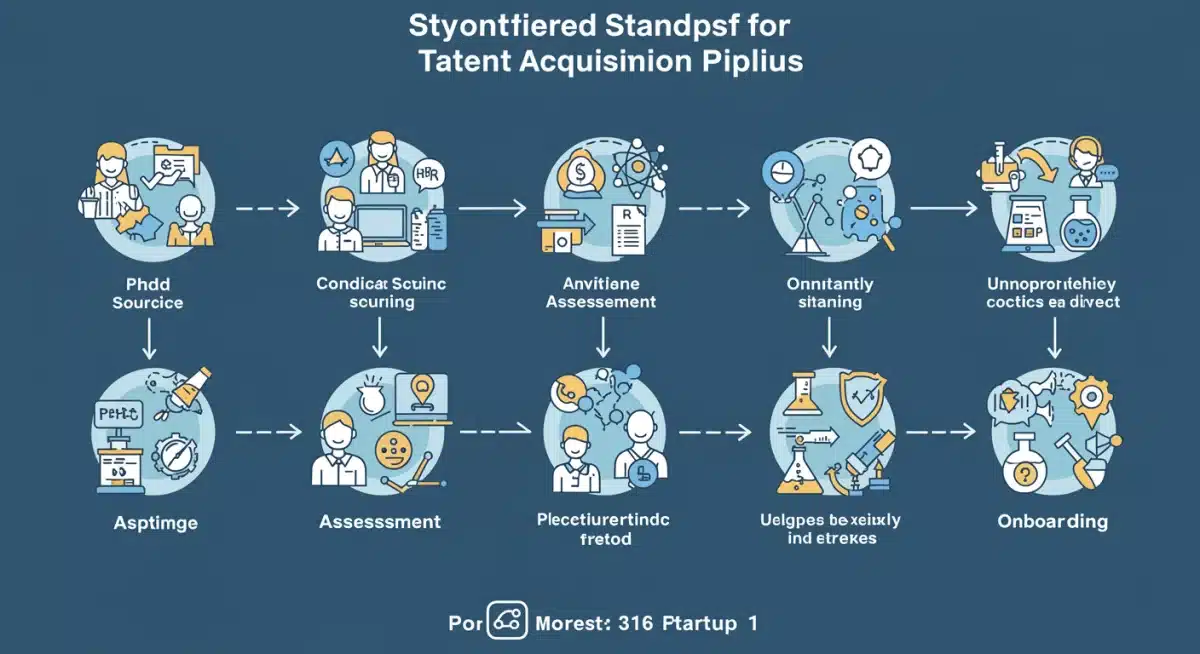
Social media platforms, particularly LinkedIn and specialized scientific networks, also play a crucial role. Craft compelling content that showcases your research, company culture, and the impact your team is making. Engage with relevant discussions and share thought leadership pieces to establish your startup as an attractive destination for scientific excellence.
leveraging scientific networks and AI tools
Direct outreach through professional networks remains highly effective. Personalized messages that highlight specific research interests or potential contributions can be far more impactful than generic solicitations. Additionally, consider leveraging AI-powered recruitment tools that can identify candidates with specific skill sets and publication histories that align with your needs.
- Networking at scientific conferences and symposia
- Partnering with university career centers and research labs
- Engaging on platforms like ResearchGate, Academia.edu, and LinkedIn
- Utilizing AI for proactive candidate identification and outreach
The key to strategic sourcing is persistence and personalization. Generic approaches will fall flat with highly sought-after PhDs. By investing time and resources into tailored outreach and leveraging diverse channels, startups can significantly increase their chances of connecting with the right talent and initiating the recruitment process effectively.
expedited and efficient interview processes
The three-month hiring target for PhD researchers in biotech demands an interview process that is both thorough and remarkably efficient. Prolonged, multi-stage interviews can lead to top candidates accepting offers elsewhere. Startups must streamline their assessment methods without compromising on the quality of evaluation.
This often means front-loading technical assessments, integrating problem-solving challenges early, and ensuring that all key decision-makers are available and aligned. Virtual interviews have become standard, but ensure they are conducted professionally and provide a clear picture of the candidate’s capabilities and cultural fit.
structured interviews and rapid feedback
Implement structured interview questions that directly assess the critical skills required for the role, such as experimental design, data analysis, and scientific communication. Consider incorporating a presentation component where candidates can discuss their past research or propose solutions to a relevant scientific problem. This offers valuable insight into their scientific rigor and presentation skills.
- Concise initial screening calls
- Technical interviews focused on specific research expertise
- Case studies or scientific problem-solving exercises
- Cultural fit interviews with key team members
Providing rapid and constructive feedback at each stage is crucial. Even if a candidate is not selected, a positive interview experience can reflect well on your employer brand and potentially lead to future referrals. The goal is to respect the candidate’s time and expertise, demonstrating that your startup values efficiency and clear communication throughout the hiring journey.
competitive compensation and compelling offer packages
While intellectual challenge and impact are significant motivators, competitive compensation remains a cornerstone of successful biotech talent acquisition. US biotech startups must benchmark salaries and benefits against both established industry players and other innovative startups to ensure their offers are attractive and equitable. This is particularly true for PhD researchers, who represent a significant investment in specialized education and training.
Beyond base salary, a compelling offer package includes a range of elements designed to attract and retain top talent. This holistic approach recognizes that PhD researchers often seek long-term career growth, financial security, and a supportive work environment. Transparency about the components of the compensation package can also build trust and rapport with candidates.
equity, benefits, and professional development
Offering equity or stock options can be a powerful incentive for early-stage startups, aligning the researcher’s success with the company’s growth. Comprehensive health and wellness benefits are also expected. Furthermore, investing in professional development, such as funding for advanced training, attendance at leading scientific conferences, and opportunities for patent applications, can significantly enhance an offer.
- Competitive base salary aligned with market rates
- Equity or stock options with clear vesting schedules
- Robust health, dental, and vision insurance
- Generous paid time off and flexible work arrangements
- Funding for continuous learning and professional growth
Negotiations should be handled with professionalism and flexibility. Understanding a candidate’s individual priorities can help tailor an offer that genuinely meets their needs. A well-constructed and transparent offer package demonstrates that your startup not only values their scientific contributions but also their overall well-being and career trajectory, making it a truly desirable opportunity.
onboarding and retention: securing long-term success
Securing a top PhD researcher within three months is a significant achievement, but the work doesn’t end there. Effective onboarding and robust retention strategies are crucial for ensuring these valuable assets integrate successfully, become productive quickly, and remain committed to your startup’s mission long-term. High turnover among scientific staff can be incredibly costly, both in terms of lost intellectual capital and financial resources.
A well-structured onboarding program goes beyond mere administrative tasks. It should immerse the new researcher in the company’s culture, introduce them to key stakeholders, and clearly outline their initial projects and performance expectations. Providing mentors and peer support can also accelerate their acclimatization and foster a sense of belonging within the team.
fostering a culture of innovation and growth
Retention hinges on creating an environment where PhD researchers feel valued, challenged, and empowered to pursue innovative ideas. Provide opportunities for intellectual freedom, access to cutting-edge tools, and clear pathways for career advancement. Regular check-ins and performance reviews should focus on growth and development, not just task completion.
- Structured onboarding with clear project assignments
- Mentorship programs with senior scientific staff
- Opportunities for cross-functional collaboration
- Regular feedback and professional development planning
- Recognition for scientific achievements and contributions
Investing in your researchers’ professional growth, celebrating their successes, and providing a supportive, intellectually stimulating environment are key to long-term retention. A startup that genuinely supports its scientific team will not only retain its talent but also cultivate a reputation as a premier destination for groundbreaking biotech research, attracting even more top PhDs in the future.
| Key Strategy | Brief Description |
|---|---|
| Employer Branding | Highlight unique vision, culture, and impact to attract top PhDs. |
| Strategic Sourcing | Go beyond job boards; use networks, conferences, and AI for outreach. |
| Efficient Interviews | Streamline assessment processes to secure candidates quickly. |
| Retention Focus | Implement strong onboarding and growth opportunities for long-term success. |
frequently asked questions about biotech talent acquisition
Biotech startups compete with larger, established companies and even tech giants for a limited pool of highly specialized PhD talent. Startups often have fewer resources, making it crucial to differentiate through unique value propositions and a compelling employer brand to attract these experts.
While traditional hiring can take longer, the goal for US biotech startups by 2026 is to secure top PhD researchers within three months. This aggressive timeline necessitates highly efficient sourcing, expedited interview processes, and competitive, appealing offer packages.
Startups can differentiate by emphasizing opportunities for groundbreaking research, direct impact on human health, intellectual freedom, agile work environments, and potential for significant equity. Showcasing a strong, supportive company culture also plays a vital role in attraction.
While traditional job boards can still be part of a strategy, they are often insufficient alone. Top PhD researchers are frequently found through scientific networks, academic partnerships, specialized conferences, and proactive outreach facilitated by AI-powered recruitment tools and social media engagement.
Beyond competitive salaries, PhDs are attracted by comprehensive packages that include equity, robust health benefits, and significant professional development opportunities. These elements demonstrate long-term investment in their career and well-being, making the offer more compelling.
conclusion
Successfully navigating biotech talent acquisition for US startups in 2026 demands a strategic, agile, and candidate-centric approach. By understanding the evolving talent landscape, meticulously crafting a compelling employer brand, employing diverse sourcing methods, streamlining interview processes, offering competitive compensation, and focusing on robust retention strategies, startups can secure the top PhD researchers essential for their innovation and growth. The ability to act swiftly and decisively, securing top talent within a three-month window, will be a defining characteristic of successful biotech ventures in the coming years.