Series A Funding Rounds: US Biotech VC Expectations 2026

In early 2026, US biotech VCs are intensely focused on Series A funding rounds for startups demonstrating groundbreaking scientific innovation, robust data, experienced teams, and clear paths to market, prioritizing high-impact therapeutic areas.
As we approach early 2026, the landscape for Series A Funding Rounds: What US Biotech VCs are Looking for in Early 2026 continues to evolve, presenting both challenges and unprecedented opportunities for innovative biotech startups. Understanding the shifting priorities of venture capitalists is crucial for securing that pivotal first major investment.
The evolving VC landscape for biotech Series A in 2026
The venture capital environment for biotech startups in the United States is dynamic, influenced by technological advancements, regulatory shifts, and global health trends. In early 2026, VCs are operating with a refined lens, seeking not just promising science, but also a clear strategic vision and robust operational execution.
Investors are increasingly sophisticated, demanding more than just compelling preclinical data. They are looking for a comprehensive package that mitigates risk and demonstrates a credible path to commercialization, even at this early stage. The investment climate has matured, requiring founders to present a more complete story from the outset.
Emphasis on de-risked science and market validation
One significant trend is the heightened focus on de-risked science. This means that while novelty is still prized, VCs want to see early validation that goes beyond initial lab findings. This often involves robust preclinical data, independent replication, and a clear understanding of the biological mechanism of action.
- Strong preclinical data packages with statistically significant results.
- Evidence of reproducibility and independent validation of key findings.
- Clear understanding of the therapeutic target and its biological relevance.
- Initial market research indicating unmet medical need and patient population.
Furthermore, early market validation is becoming critical. This doesn’t necessarily mean a product on the market, but rather a deep understanding of the competitive landscape, the regulatory pathway, and potential payer considerations. Startups that have already engaged with key opinion leaders and potential strategic partners will stand out.
Scientific rigor and innovation: The bedrock of investment
At its core, biotech venture capital is about funding groundbreaking science. In early 2026, US biotech VCs are particularly keen on innovations that address significant unmet medical needs with novel mechanisms of action. Incremental improvements, while valuable, often struggle to attract Series A capital unless they offer a truly disruptive advantage.
The bar for scientific rigor has been raised. Investors are conducting more thorough due diligence, often bringing in external scientific advisors to scrutinize data and experimental designs. This rigorous evaluation ensures that the science is not only exciting but also robust and reproducible.
Therapeutic areas attracting significant attention
Certain therapeutic areas continue to be hotbeds of innovation and investor interest. These often include fields with high disease burden, significant market potential, and rapid technological advancements.
- Gene and cell therapies, especially those with improved delivery systems or broader applicability.
- Novel oncology targets and immunotherapies, moving beyond current standard-of-care limitations.
- Neuroscience, particularly for neurodegenerative diseases with a focus on disease modification.
- Rare diseases, where accelerated regulatory pathways and high unmet needs remain attractive.
- Precision medicine approaches, leveraging genomics and biomarkers for targeted therapies.
Beyond these specific areas, platform technologies that can generate multiple therapeutic candidates or provide significant advantages in drug discovery and development are also highly sought after. These platforms offer scalability and diversified risk for investors.
Ultimately, VCs are looking for science that has the potential to be truly transformative. They want to see a clear vision for how the technology will impact patient lives and create substantial value. The scientific narrative must be compelling, articulate, and backed by solid data.
Team strength and experience: A non-negotiable factor
While groundbreaking science is essential, even the most innovative discoveries can falter without the right team to execute on the vision. In early 2026, US biotech VCs place immense emphasis on the quality, experience, and cohesion of the founding and early leadership team. They are investing in people as much as in the science.
A strong team demonstrates a blend of scientific expertise, drug development experience, and business acumen. Investors want to see individuals who have successfully navigated the challenges of preclinical and clinical development, regulatory hurdles, and commercialization strategies.
Key qualities VCs seek in biotech teams
The ideal biotech startup team for a Series A round will exhibit several critical attributes that instill confidence in investors. These qualities go beyond just a stellar CV and delve into the team’s ability to work together effectively and adapt to challenges.
- Scientific founders with deep domain expertise: Credibility in their specific scientific field is paramount.
- Experienced CEO/drug developer: Someone with a proven track record of bringing therapies through development stages.
- Financial and operational savvy: A team member capable of managing budgets, fundraising, and day-to-day operations.
- Strong advisory board: Access to a network of industry veterans, clinicians, and regulatory experts.
- Demonstrated leadership and resilience: The ability to inspire, recruit top talent, and overcome inevitable obstacles.
VCs understand that startups will face unforeseen challenges. A team that can demonstrate adaptability, problem-solving skills, and a clear understanding of their strengths and weaknesses is highly valued. They are looking for leaders who can attract and retain top talent, building a robust organization around the core scientific innovation.
Intellectual property and competitive advantage
In the highly competitive biotech arena, a robust intellectual property (IP) portfolio is not just a desirable asset; it’s a fundamental requirement for securing Series A funding. US biotech VCs in early 2026 are scrutinizing IP strategies to ensure long-term defensibility and a sustainable competitive advantage.
A strong IP position provides a moat around the company’s innovations, protecting its technology from competitors and ensuring that the startup can capitalize on its discoveries. This includes patents, trade secrets, and other proprietary knowledge that distinguishes the company’s approach.
Building a defensible IP strategy
Founders must demonstrate a proactive and comprehensive approach to IP protection. This means not only filing patents but also understanding the nuances of patent families, geographic coverage, and the potential for future IP generation.
- Broad patent claims: Ensuring patents cover not just the initial discovery but also potential future applications and modifications.
- Freedom to operate (FTO) analysis: Demonstrating that the company’s technology does not infringe on existing patents.
- Trade secret protection: Identifying and safeguarding proprietary processes, know-how, and data that are not publicly disclosed.
- Strategic patent prosecution: Working with experienced IP counsel to build a strong and enforceable patent portfolio.
Beyond formal IP, VCs also assess the company’s overall competitive advantage. This could stem from unique technology, proprietary datasets, specialized manufacturing capabilities, or a first-mover advantage in a nascent field. The combination of strong IP and a clear competitive edge significantly enhances a startup’s attractiveness to investors.
Clear regulatory and clinical development path
Securing Series A funding in early 2026 for a US biotech startup hinges significantly on presenting a well-defined and realistic regulatory and clinical development plan. VCs are not just funding science; they are funding a journey towards market approval, and that journey is heavily dictated by regulatory bodies like the FDA.
Investors want to see that the founding team has a clear understanding of the regulatory landscape, potential hurdles, and a credible strategy to navigate them. This includes identifying the appropriate regulatory pathways, potential for expedited designations, and a realistic timeline for preclinical and clinical milestones.
Key elements of a compelling development plan
A strong development plan at the Series A stage will articulate the critical steps needed to advance the therapeutic candidate from preclinical studies through early-stage clinical trials. It should also acknowledge potential challenges and outline risk mitigation strategies.
- Preclinical plan: Detailed studies required for IND (Investigational New Drug) submission, including toxicology and pharmacology.
- Regulatory strategy: Identification of the target indication, relevant FDA division, and potential for breakthrough or orphan drug designations.
- Clinical trial design (Phase 1/2): Outline of initial human trials, including patient population, endpoints, and safety monitoring.
- Timeline and budget: Realistic projections for achieving key milestones and the associated capital requirements.
- Risk assessment: Identification of potential development risks (scientific, regulatory, clinical) and proposed mitigation strategies.
The ability to articulate a clear, capital-efficient, and de-risked path through early clinical development is paramount. VCs are looking for evidence that the team has thought critically about how to generate compelling data that will attract subsequent larger funding rounds and eventually lead to market success.
Financial projections and exit strategy
Even at the Series A stage, US biotech VCs are evaluating not just the immediate potential but also the long-term financial viability and ultimate exit opportunities for their investment. In early 2026, robust financial projections and a credible, albeit preliminary, exit strategy are crucial components of a compelling pitch.
Investors understand that biotech development is capital-intensive and time-consuming. They need to see a clear financial roadmap that demonstrates how the Series A funds will be utilized to achieve significant value inflection points, paving the way for future funding rounds or strategic partnerships.
Crafting realistic financial models and exit scenarios
Startups must present financial models that are grounded in realistic assumptions about development costs, timelines, and potential market size. Overly optimistic projections can undermine credibility.
- Detailed use of funds: A clear breakdown of how the Series A capital will be spent on R&D, team expansion, IP protection, and operational expenses.
- Milestone-based funding: Demonstrating how the current funding will achieve specific value-creating milestones that justify future investment rounds.
- Market opportunity analysis: A thorough assessment of the target market size, competitive landscape, and potential pricing strategies.
- Preliminary exit scenarios: Discussion of potential acquisition targets (large pharma/biotech), IPO potential, or strategic partnerships down the line.
While an exit strategy at Series A is typically conceptual, VCs want to know that the founders are thinking strategically about the ultimate monetization of their technology. This includes identifying potential acquirers and understanding the valuation drivers within the biotech M&A market. A well-thought-out financial plan and a vision for long-term value creation significantly enhance a startup’s appeal to discerning investors.
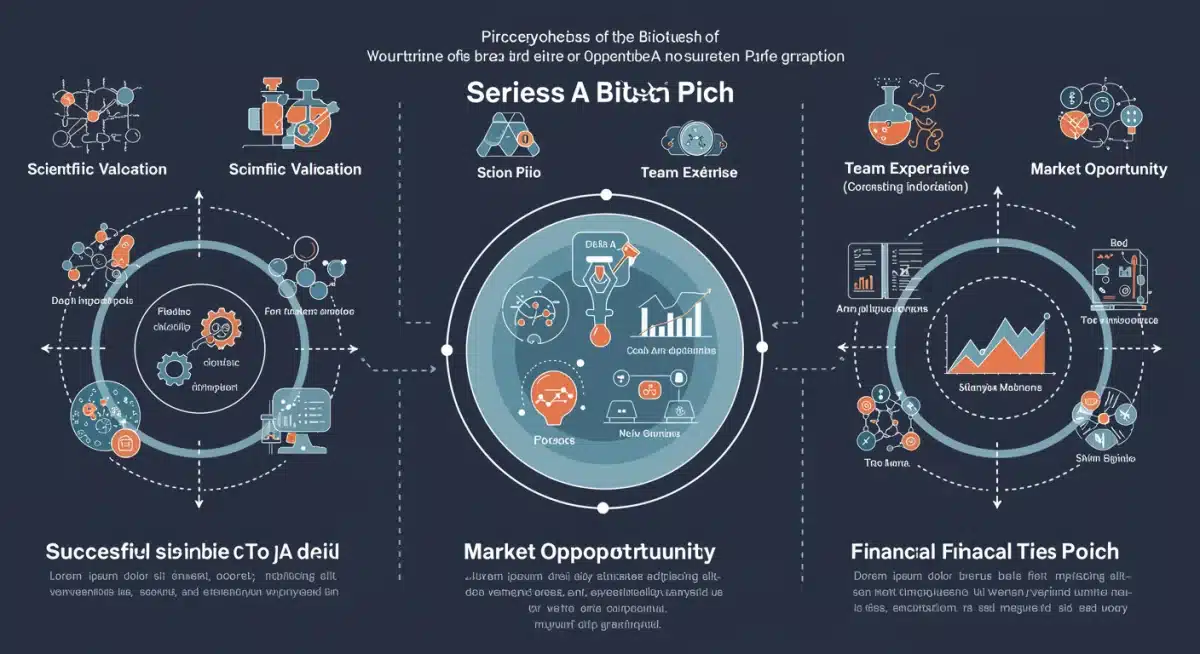
Beyond the science: ESG and diversity considerations
In early 2026, the criteria for US biotech Series A funding extend beyond traditional scientific and financial metrics. Environmental, Social, and Governance (ESG) factors, along with a commitment to diversity, equity, and inclusion (DEI), are increasingly playing a role in VC investment decisions. Investors are recognizing that these elements contribute to long-term sustainability and societal impact.
Startups that can articulate a clear commitment to responsible practices, ethical research, and a diverse workforce are often viewed more favorably. This reflects a broader trend in the investment community towards impact investing and a recognition that diverse teams often lead to better outcomes.
Integrating ESG and DEI into the biotech startup ethos
For biotech companies, ESG considerations can span from ethical sourcing of materials and sustainable lab practices to ensuring equitable access to future therapies. DEI initiatives focus on building a team that reflects a wide range of backgrounds and perspectives, fostering innovation and better decision-making.
- Ethical research practices: Adherence to the highest ethical standards in all research and development activities.
- Sustainable operations: Efforts to minimize environmental footprint in lab and office settings.
- Patient-centric approach: Demonstrating a clear focus on patient needs and community engagement.
- Diverse leadership and team: Proactive strategies to build a team with diverse backgrounds, experiences, and perspectives.
- Inclusive culture: Fostering an environment where all employees feel valued and have opportunities to contribute and grow.
While not always explicit deal-breakers, a strong narrative around ESG and DEI can differentiate a startup in a competitive funding landscape. It signals to VCs a forward-thinking leadership team committed to building a company that is not only scientifically excellent but also socially responsible and resilient.
| Key Investment Area | VC Focus in Early 2026 |
|---|---|
| Scientific Innovation | Groundbreaking discoveries with robust preclinical data and clear biological mechanisms. |
| Team Expertise | Experienced founders and leadership with track records in drug development and business acumen. |
| IP & Market Strategy | Defensible intellectual property and a well-articulated plan for market entry and competitive advantage. |
| Regulatory Pathway | Clear understanding of regulatory requirements and a realistic clinical development strategy. |
Frequently asked questions about Series A biotech funding
US biotech VCs in early 2026 are primarily seeking startups with highly innovative, de-risked science addressing significant unmet medical needs. They prioritize robust preclinical data, a clear mechanism of action, and strong intellectual property protection, alongside a compelling market opportunity.
The team is critically important. VCs look for a blend of deep scientific expertise, proven drug development experience, and strong business acumen. An experienced CEO, a credible scientific founder, and a robust advisory board are key indicators of a startup’s potential for successful execution.
Intellectual property is fundamental. Investors require a strong, defensible IP portfolio, typically broad patent claims, to protect the innovation and ensure a competitive advantage. A clear freedom-to-operate analysis is also essential to mitigate future legal risks.
Yes, increasingly so. While not always explicit, ESG (Environmental, Social, Governance) and DEI (Diversity, Equity, Inclusion) factors are gaining importance. Startups demonstrating ethical research, sustainable practices, and a commitment to diversity are often viewed more favorably by modern VCs seeking long-term value and societal impact.
VCs expect realistic financial projections detailing the use of funds, key value-inflection milestones, and a preliminary understanding of the market opportunity. While a detailed exit strategy isn’t fully formed, founders should articulate potential acquisition targets or IPO pathways to demonstrate long-term vision.
Conclusion
In conclusion, navigating the landscape of Series A Funding Rounds: What US Biotech VCs are Looking for in Early 2026 requires a multifaceted approach. Beyond groundbreaking science, successful biotech startups must demonstrate a robust and de-risked development path, a highly experienced and cohesive team, a strong intellectual property position, and realistic financial projections. Furthermore, an increasing emphasis on ESG and DEI principles reflects a maturing investment climate that values not just innovation, but also responsible and sustainable growth. By meticulously preparing across all these dimensions, biotech founders can significantly enhance their chances of securing the crucial Series A capital needed to bring their transformative therapies to patients.