2025 US Biotech Event Landscape: Investor vs. Scientific Focus

The 2025 US biotech event landscape is characterized by a clear divergence in focus between investor-centric conferences prioritizing market opportunities and scientific gatherings dedicated to groundbreaking research and clinical advancements.
As we look towards 2025, the 2025 US biotech event landscape promises a vibrant array of gatherings, each designed to serve specific segments within this rapidly evolving industry. From high-stakes investor pitches to deep dives into groundbreaking scientific discoveries, understanding the nuances of these events is crucial for anyone involved in biotechnology. This article will explore the distinct characteristics of investor-focused vs. scientific-focused events, offering insights into their objectives, audiences, and strategic value.
Understanding the investor-focused biotech event panorama
Investor-focused biotech events in 2025 are meticulously crafted platforms where capital meets innovation. These gatherings are primarily designed to connect emerging biotech companies with potential investors, ranging from venture capitalists and private equity firms to institutional investors and pharmaceutical companies seeking strategic partnerships. The overarching goal is often to secure funding, forge collaborations, and ultimately, drive market valuation.
These events typically feature company presentations, one-on-one meetings, and panel discussions centered on market trends, regulatory insights, and financial projections. Emphasis is placed on business models, intellectual property, commercialization strategies, and the potential return on investment. Attendees are generally C-suite executives, business development professionals, and financial analysts.
Key characteristics of investor conferences
Investor conferences are characterized by their structured networking opportunities and emphasis on quantifiable metrics. Companies often present detailed financial forecasts and highlight their competitive advantages to attract investment.
- Deal-making opportunities: These events are prime venues for initiating and closing investment rounds, licensing agreements, and mergers and acquisitions.
- Market insights: Attendees gain perspectives on investor sentiment, emerging therapeutic areas, and economic factors influencing the biotech market.
- Visibility for startups: Smaller biotech firms can gain significant exposure to a broad investor base, crucial for their growth and development.
In essence, investor events serve as critical junctures for capital allocation and strategic alignment within the biotech ecosystem. They are less about the granular scientific details and more about the commercial viability and future potential of biotechnological advancements, shaping the financial trajectory of the industry.
Exploring scientific-centric biotech gatherings
Conversely, scientific-centric biotech gatherings in 2025 prioritize the dissemination of new research, clinical trial results, and technological breakthroughs. These events are intellectual powerhouses, bringing together researchers, clinicians, academics, and regulatory experts to share knowledge, debate methodologies, and foster collaborative scientific inquiry. The focus is squarely on advancing the understanding of biology and developing novel solutions to medical challenges.
Conferences like the American Association for Cancer Research (AACR) or the Society for Neuroscience annual meetings exemplify this focus. They feature abstract presentations, poster sessions, symposia, and workshops that delve into the specifics of scientific methodology, data analysis, and preclinical or clinical findings. The discussions are often highly technical, requiring a deep understanding of scientific principles.
Hallmarks of scientific symposia and workshops
Scientific events are defined by their commitment to peer-to-peer learning and the rigorous exchange of data. They are crucial for validating research and pushing the boundaries of scientific knowledge.
- Knowledge exchange: Researchers present their latest findings, fostering critical discussion and facilitating the spread of new information.
- Collaborative research: These events often spark new collaborations between academic institutions, research organizations, and biotech companies.
- Professional development: Scientists and clinicians can stay abreast of the latest techniques, technologies, and therapeutic approaches, enhancing their expertise.
Ultimately, scientific gatherings are the bedrock of innovation, providing the intellectual capital that underpins all commercial endeavors in biotechnology. They are about the journey of discovery and the meticulous process of turning hypotheses into tangible scientific progress, driving the fundamental advancement of medicine and biology.
Key differences in objectives and audience
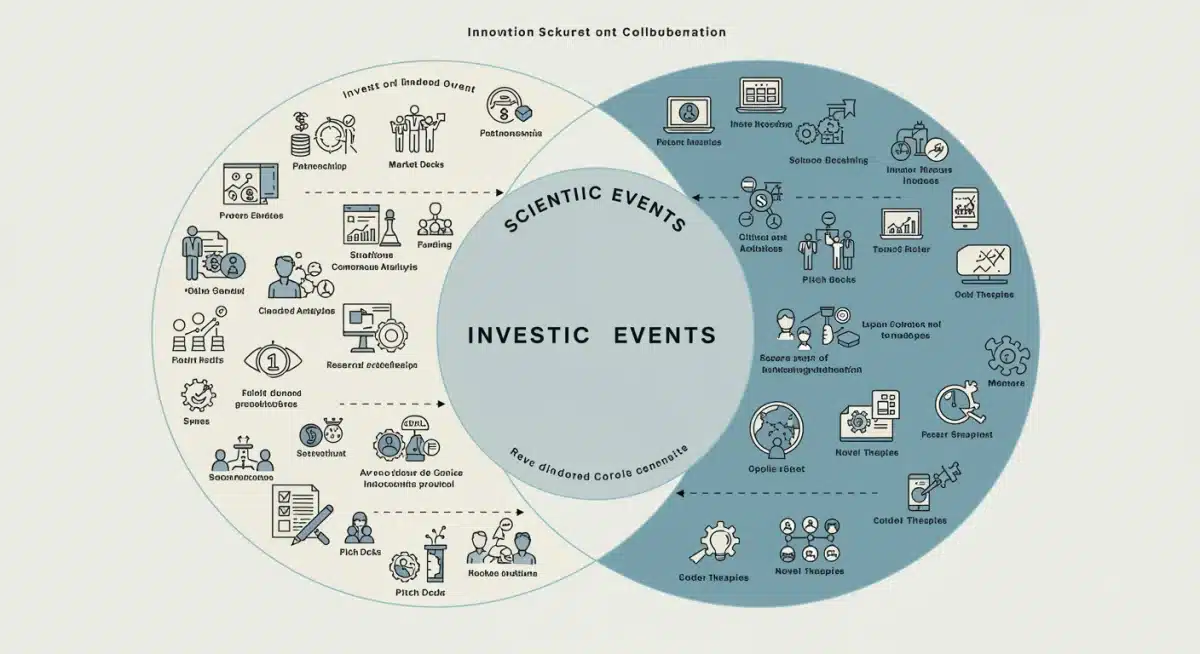
The fundamental divergence between investor and scientific biotech events lies in their primary objectives and, consequently, their target audiences. Investor events are transactional, aiming to facilitate financial exchanges and strategic partnerships. Their audience consists of those interested in the commercial success and market potential of biotech innovations. Success is often measured by funding secured, deals closed, and stock performance.
Scientific events, on the other hand, are intellectual endeavors focused on discovery and validation. Their audience comprises individuals dedicated to the advancement of scientific knowledge and clinical practice. Success here is measured by the quality of presented research, the fostering of new collaborations, and the impact on future scientific direction. While both ultimately contribute to patient outcomes, their immediate goals are distinct.
Strategic implications for participation
For biotech companies, understanding these differences is critical for strategic participation. A startup seeking seed funding would prioritize investor conferences, whereas a research team validating a new therapeutic mechanism would focus on scientific symposia. The messaging, presentation style, and networking approach must be tailored accordingly.
- Investor-focused preparation: Requires a strong business case, clear financial projections, and a compelling narrative about market opportunity and team expertise.
- Scientific-focused preparation: Demands rigorous data, sound methodology, and the ability to engage in detailed scientific discourse and peer review.
The strategic choice of which events to attend, and how to prepare for them, directly impacts a company’s ability to secure necessary resources, whether that be capital for growth or validation for groundbreaking research. Both types of events are indispensable but serve different purposes in the biotech lifecycle.
The evolving landscape of hybrid events in 2025
The 2025 US biotech event landscape is increasingly embracing hybrid models, blurring the traditional lines between purely investor-focused and purely scientific gatherings. While the core objectives remain distinct, many conferences now incorporate elements designed to appeal to both audiences. For example, a major scientific congress might include dedicated investor tracks or business development forums, while an investor conference might feature scientific keynotes or detailed presentations on novel technologies.
This evolution is driven by the recognition that scientific breakthroughs are the engine of commercial success, and investment is essential to translate scientific discoveries into marketable products. Hybrid events aim to foster a more integrated ecosystem where scientists can understand market needs and investors can appreciate the scientific rigor behind potential investments. This cross-pollination can accelerate innovation and streamline the development pipeline.
Benefits of integrated approaches
Hybrid events offer a multifaceted value proposition, enabling a broader range of stakeholders to engage with the latest developments.
- Enhanced collaboration: Facilitates dialogue between scientific innovators and commercial strategists, leading to more informed decisions.
- Broader reach: Attracts a more diverse audience, increasing the potential for serendipitous connections and unexpected partnerships.
- Efficiency: Consolidates networking and learning opportunities, potentially reducing the need for separate travel to distinct event types.
The rise of hybrid events signifies a maturing industry that recognizes the interconnectedness of scientific advancement and commercial viability. These events are becoming crucial for bridging the gap between the lab bench and the patient, creating a more cohesive and efficient biotech development pathway.
Major investor-focused biotech events to watch in 2025
Several prominent investor-focused biotech events are anticipated to draw significant attention in 2025, serving as critical barometers for industry trends and investment opportunities. These conferences typically attract the biggest names in biotech and pharmaceutical investment, making them essential for companies seeking capital and for investors looking for the next big thing. Attendance at these events often requires careful planning and a clear understanding of their specific focus areas.
Examples include the J.P. Morgan Healthcare Conference, known for its sheer scale and the volume of deals initiated, and various regional investor forums that cater to specific therapeutic areas or stages of company development. These events are characterized by their fast pace, high-stakes presentations, and extensive networking opportunities, often leading to significant announcements and market movements.
Anticipated highlights for investors
Investors will be keen to identify companies demonstrating strong clinical data, robust intellectual property, and clear paths to market. The emphasis will be on innovation that addresses unmet medical needs and offers substantial commercial potential.
- Emerging therapeutic modalities: Focus on gene therapies, cell therapies, and advanced precision medicine platforms.
- Digital health integration: Presentations on how AI, big data, and digital tools are transforming drug discovery and patient care.
- Sustainable biotech: Growing interest in companies developing environmentally friendly biomanufacturing processes and sustainable solutions.
These investor-centric events are not just about capital; they are about setting the strategic direction for the biotech industry, influencing where research and development efforts will be concentrated and which innovations will receive the necessary backing to reach patients.
Leading scientific biotech conferences in 2025
For the scientific community, 2025 will also feature a lineup of leading conferences dedicated to pushing the boundaries of biological and medical knowledge. These gatherings are where researchers unveil their latest discoveries, debate complex scientific questions, and lay the groundwork for future therapeutic advancements. They are vital for peer review, academic discourse, and the collaborative spirit that drives scientific progress.
Conferences such as the American Society of Clinical Oncology (ASCO) Annual Meeting, which showcases pivotal cancer research, or the annual meetings of societies focused on neuroscience, immunology, or infectious diseases, are indispensable. These events are characterized by their rigorous scientific content, often including thousands of abstract presentations and in-depth discussions on experimental design and data interpretation.
Key areas of scientific focus
Scientists will be particularly interested in advancements that offer new mechanistic insights, novel therapeutic targets, or improved diagnostic capabilities. The emphasis is on foundational research that expands our understanding of disease and health.
- CRISPR and gene editing technologies: Updates on therapeutic applications and ethical considerations.
- Microbiome research: New findings on the role of the microbiome in health and disease, and therapeutic interventions.
- Neurodegenerative disease breakthroughs: Progress in understanding and treating conditions like Alzheimer’s and Parkinson’s.
These scientific conferences are the intellectual engine of the biotech industry, providing the fundamental knowledge and validated data that eventually translate into new treatments and diagnostic tools. They are where the scientific community collectively builds upon existing knowledge to tackle the most pressing health challenges.
Navigating the synergy between investor and scientific events
Effective navigation of the 2025 US biotech event landscape requires a nuanced understanding of the interplay between investor and scientific events. While distinct in their immediate objectives, these two spheres are fundamentally interdependent. Scientific breakthroughs fuel investor interest, and investor capital enables further scientific research and development. The most successful biotech ventures are those that can effectively bridge this gap, translating robust scientific data into compelling business propositions.
Companies and individuals seeking to maximize their impact in the biotech sector must strategically engage with both types of events. This means not only presenting a strong scientific case at research conferences but also demonstrating clear market potential at investor gatherings. The ability to articulate scientific value in financial terms, and vice versa, is a crucial skill in today’s biotech environment.
Building a comprehensive strategy
A holistic approach to event participation can yield significant benefits, fostering both scientific credibility and commercial success.
- Cross-functional teams: Encourage collaboration between R&D and business development to prepare for both types of events.
- Tailored communication: Develop different messaging strategies for scientific and investor audiences while maintaining a consistent core narrative.
- Long-term engagement: View events not as isolated occurrences but as continuous opportunities for relationship building and strategic alignment.
The synergy between investor and scientific events is the lifeblood of the biotech industry. By understanding and strategically leveraging both, stakeholders can accelerate the pace of innovation, secure vital funding, and ultimately bring life-changing therapies to patients more efficiently. It’s about recognizing that science without capital often remains theoretical, and capital without sound science is a gamble.
| Aspect | Description |
|---|---|
| Primary Objective | Investor events focus on funding/deals; scientific events prioritize research dissemination. |
| Target Audience | Investors, executives for investor events; researchers, clinicians for scientific events. |
| Key Content | Business plans, market analysis (investor); clinical data, research findings (scientific). |
| Strategic Value | Capital acquisition (investor); knowledge advancement, collaboration (scientific). |
Frequently asked questions about 2025 US biotech events
Investor events primarily focus on financial transactions, fundraising, and market opportunities, targeting executives and investors. Scientific events, conversely, center on presenting new research, clinical data, and fostering scientific collaboration among researchers and clinicians.
Hybrid events are gaining traction to bridge the gap between scientific innovation and commercialization. They allow scientists to understand market needs and investors to appreciate scientific rigor, fostering a more integrated ecosystem for accelerated development and funding.
These conferences are usually attended by venture capitalists, private equity firms, institutional investors, C-suite executives from biotech/pharma companies, and business development professionals seeking funding or partnership opportunities.
Attendees can expect abstract presentations, poster sessions, symposia on specific research areas, workshops on new techniques, and detailed discussions about preclinical and clinical trial results, all focused on scientific advancement.
Startups should develop tailored messaging: a strong business case for investors and robust scientific data for researchers. Engaging with both types of events allows for securing funding and validating scientific progress, crucial for comprehensive growth.
Conclusion
The 2025 US biotech event landscape, with its clear distinction between investor-focused and scientific-centric gatherings, underscores the dual pillars supporting the industry’s growth: capital and innovation. While each type of event serves a unique purpose and caters to a specific audience, their ultimate objective is symbiotic. Investor events provide the necessary financial fuel to transform scientific discoveries into tangible products, while scientific conferences lay the intellectual groundwork for future breakthroughs. Strategic engagement with both, often facilitated by the rise of hybrid models, is paramount for any stakeholder aiming to navigate this dynamic and impactful sector effectively. Understanding these nuances allows for more informed decisions, fostering collaborations that accelerate the journey from laboratory to market and ultimately, to patient benefit.