AI’s Biotech R&D Impact: 3 Key Shifts for Startups in 12 Months

Artificial intelligence is fundamentally reshaping early-stage biotech research and development, particularly for startups, by introducing three significant operational and strategic shifts expected to materialize within the next twelve months.
The landscape of early-stage biotech R&D is undergoing a rapid metamorphosis, driven by the pervasive influence of artificial intelligence. For startups navigating this complex and competitive environment, understanding AI biotech R&D impact is not merely advantageous, but essential for survival and growth. The next 12 months promise to be a period of significant transformation, where agile biotech companies leveraging AI will redefine industry standards and accelerate scientific breakthroughs. This article delves into the three most critical shifts that early-stage biotech startups must prepare for, offering insights into how AI will reshape their research pipelines, operational strategies, and ultimately, their market position.
Accelerated Drug Discovery and Development Cycles
One of the most profound impacts of AI on early-stage biotech R&D is the dramatic acceleration of drug discovery and development cycles. Traditional methods are often protracted, resource-intensive, and fraught with high failure rates. AI, however, introduces unprecedented efficiencies by automating complex analyses and predicting outcomes with remarkable accuracy.
This acceleration is not just about speed; it’s about making the entire process smarter. AI algorithms can sift through vast databases of genetic, proteomic, and clinical data at speeds human researchers cannot match. This capability allows startups to identify potential drug targets, predict molecular interactions, and even design novel compounds with significantly improved precision.
AI-Powered Target Identification and Validation
AI plays a crucial role in pinpointing and validating novel therapeutic targets. By analyzing complex biological networks and disease pathways, AI can uncover previously unknown connections that are critical for drug development.
- Genomic Data Analysis: AI algorithms can quickly process whole-genome sequencing data to identify genetic variations linked to disease, providing clearer targets.
- Proteomic Pattern Recognition: Machine learning models excel at recognizing subtle patterns in protein expression, helping to identify key proteins involved in disease progression.
- Pathway Modeling: AI can simulate complex biological pathways, predicting how interventions might affect disease states and validating potential targets before extensive lab work.
In Silico Drug Design and Optimization
The ability of AI to perform ‘in silico’ (computational) experiments is revolutionizing how drugs are designed and optimized. This reduces the reliance on costly and time-consuming physical experiments, allowing for rapid iteration and refinement.
Startups can leverage AI to screen millions of compounds virtually, predicting their binding affinity, toxicity, and pharmacokinetic properties. This drastically narrows down the pool of candidates that need to be synthesized and tested in the lab, saving significant time and resources. The precision offered by AI in predicting molecular behavior is a game-changer for early-stage development.
In conclusion, the acceleration of drug discovery and development cycles through AI is transforming the operational blueprint for biotech startups. By enhancing target identification and enabling sophisticated in silico drug design, AI is setting a new standard for efficiency and innovation in the biotech sector, paving the way for faster breakthroughs and more targeted therapies.
Emergence of Precision Medicine and Personalized Therapies
The second key shift driven by AI in early-stage biotech R&D is the rapid emergence and refinement of precision medicine and personalized therapies. This paradigm shift moves away from a one-size-fits-all approach to treatment, instead tailoring medical interventions to individual patients based on their unique genetic makeup, lifestyle, and environmental factors. AI is the engine making this level of personalization possible, particularly for startups looking to carve out niche markets with highly effective, bespoke treatments.
For early-stage biotech companies, this means a significant opportunity to develop highly targeted drugs and diagnostics. AI’s capacity to process and interpret vast amounts of patient data—from genomic sequences to electronic health records—allows for the identification of specific biomarkers and patient subgroups that will respond best to certain therapies. This not only improves efficacy but also reduces adverse effects and optimizes clinical trial design.
Advanced Biomarker Discovery and Patient Stratification
AI’s analytical prowess is invaluable in discovering novel biomarkers that can predict disease susceptibility, progression, and response to treatment. This allows startups to develop more accurate diagnostic tools and stratify patient populations for clinical trials, focusing on those most likely to benefit.
- Omics Data Integration: AI integrates data from genomics, proteomics, metabolomics, and transcriptomics to uncover complex biological signatures indicative of disease.
- Predictive Analytics: Machine learning models predict patient responses to specific drugs based on their molecular profiles, enabling more effective treatment selection.
- Early Disease Detection: AI can identify subtle early indicators of disease, leading to earlier diagnosis and intervention, which is crucial for many conditions.
Tailoring Therapies to Individual Patient Profiles
Beyond discovery, AI is instrumental in tailoring therapies to individual patient profiles. This involves understanding how a patient’s unique biological characteristics will interact with a given drug, leading to more effective and safer treatments.
Biotech startups can leverage AI to design clinical trials that target specific patient cohorts, increasing the likelihood of success and reducing the overall cost and duration of development. This personalized approach is not just about drug efficacy; it also encompasses optimizing dosages and minimizing side effects, ultimately leading to better patient outcomes and a more efficient healthcare system.
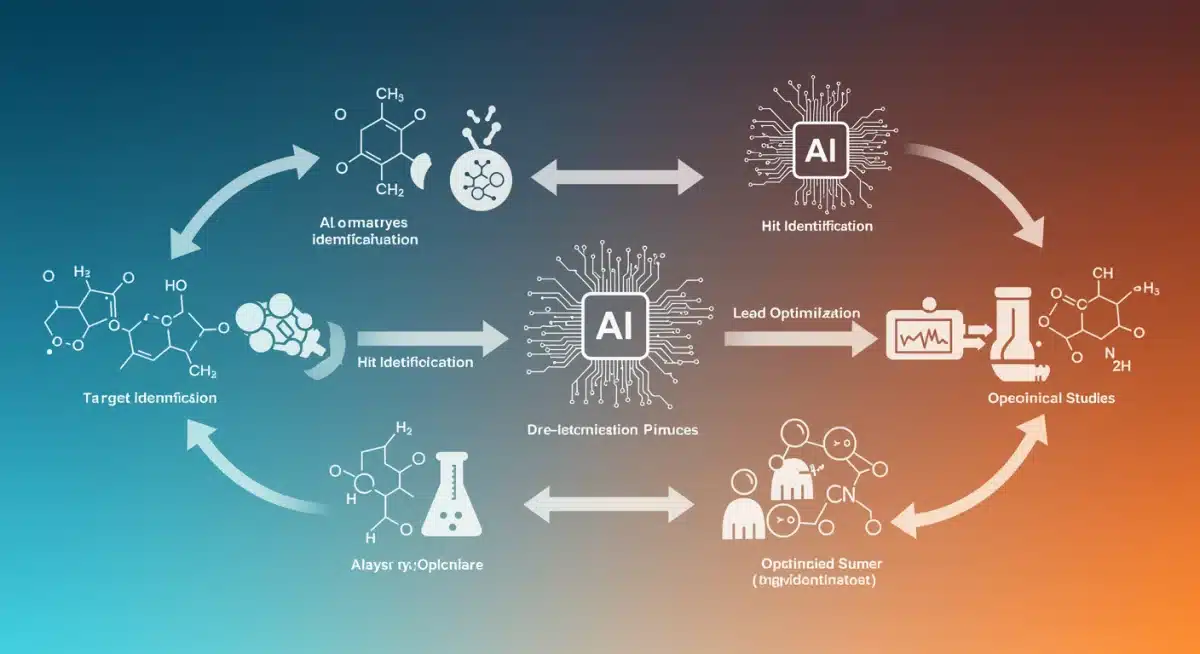

In summary, the rise of precision medicine, powered by AI, represents a monumental shift for early-stage biotech R&D. Startups that master AI-driven biomarker discovery and personalized therapy development will be at the forefront of delivering highly effective, patient-centric healthcare solutions, fundamentally changing how diseases are treated.
Optimized R&D Operations and Resource Allocation
The third critical shift for early-stage biotech R&D, significantly influenced by AI, revolves around the optimization of operational efficiency and resource allocation. Startups often operate with limited budgets and tight timelines, making every resource decision crucial. AI provides the tools to make these decisions smarter, more data-driven, and ultimately, more effective, thereby reducing waste and accelerating progress.
By automating mundane yet critical tasks, predicting equipment failures, and streamlining regulatory processes, AI enables biotech startups to focus their valuable human capital on high-level scientific inquiry and innovation. This operational overhaul is not just about cost-cutting; it’s about maximizing the return on every dollar invested in research and development, a vital consideration for companies in their nascent stages.
Predictive Maintenance and Laboratory Automation
AI’s ability to predict equipment needs and automate laboratory processes dramatically improves operational efficiency. This ensures that research continues uninterrupted and resources are utilized optimally.
- Equipment Monitoring: AI systems can monitor laboratory equipment for signs of wear and tear, predicting potential failures before they occur and scheduling preventive maintenance.
- Automated Experimentation: Robotics integrated with AI can perform repetitive experimental tasks, reducing human error and freeing up scientists for more complex analytical work.
- Inventory Management: AI optimizes the tracking and ordering of reagents and supplies, preventing stockouts and reducing waste.
Streamlined Data Management and Regulatory Compliance
Managing the vast amounts of data generated in biotech R&D, while ensuring regulatory compliance, is a significant challenge. AI offers robust solutions for both, transforming how startups handle information and navigate complex legal frameworks.
AI-powered data management systems can automatically organize, analyze, and secure research data, making it easily accessible and auditable. Furthermore, AI can assist in navigating the intricate landscape of regulatory requirements, flagging potential compliance issues and even generating necessary documentation. This not only reduces the administrative burden but also minimizes the risk of costly delays and penalties, allowing startups to bring their innovations to market faster.
In conclusion, AI is fundamentally reshaping R&D operations and resource allocation for early-stage biotech companies. By enabling predictive maintenance, automating laboratory tasks, and streamlining data management and regulatory compliance, AI empowers startups to operate with unprecedented efficiency and focus, ensuring their limited resources are channeled effectively towards groundbreaking discoveries.
Enhanced Collaboration and Knowledge Sharing
The fourth significant shift for early-stage biotech R&D, propelled by AI, is the profound enhancement of collaboration and knowledge sharing. In a field as complex and interdisciplinary as biotech, the ability to seamlessly share insights, data, and expertise is paramount. AI acts as a powerful facilitator, breaking down silos and fostering a more integrated research environment, which is particularly beneficial for startups often working with lean teams and external partners.
AI-driven platforms can connect researchers globally, allowing them to access diverse datasets, share experimental protocols, and co-develop hypotheses. This collaborative synergy not only accelerates problem-solving but also broadens the scope of potential discoveries. For startups, this means gaining access to a wider pool of knowledge and talent without necessarily expanding their internal headcount, providing a competitive edge in a fast-paced industry.
AI-Powered Research Networks and Platforms
AI is at the heart of developing sophisticated research networks and platforms that enable seamless interaction and data exchange among scientists. These platforms move beyond simple file sharing, offering intelligent tools for collaboration.
- Intelligent Search and Discovery: AI algorithms can index and make searchable vast amounts of scientific literature, experimental data, and internal reports, allowing researchers to quickly find relevant information.
- Automated Data Integration: AI tools can integrate disparate datasets from various sources, harmonizing formats and resolving inconsistencies, making cross-study analysis feasible.
- Collaborative Project Management: AI-powered project management tools can track progress, assign tasks, and identify bottlenecks in collaborative research projects, ensuring efficient workflow.
Facilitating Cross-Disciplinary Insights
Biotech R&D often requires insights from diverse scientific disciplines, including biology, chemistry, computer science, and engineering. AI is uniquely positioned to facilitate these cross-disciplinary insights, fostering innovation at the intersection of different fields.
By identifying connections and patterns across varied data types and scientific domains, AI can help researchers from different backgrounds understand each other’s work and collaborate more effectively. For instance, an AI system might highlight a chemical property relevant to a biological pathway that a biologist might not otherwise consider. This interdisciplinary fusion, catalyzed by AI, is crucial for developing truly novel therapeutic approaches and addressing complex biological challenges that single-domain expertise might miss.
In conclusion, AI’s role in enhancing collaboration and knowledge sharing is pivotal for early-stage biotech R&D. By establishing intelligent research networks and facilitating cross-disciplinary insights, AI empowers startups to leverage collective intelligence, accelerate innovation, and build stronger, more interconnected research ecosystems, ultimately leading to more impactful scientific outcomes.
Ethical Considerations and Responsible AI Development
As AI becomes increasingly integrated into early-stage biotech R&D, addressing ethical considerations and ensuring responsible AI development becomes paramount. The power of AI to transform drug discovery and personalized medicine comes with significant responsibilities, particularly for startups operating in a highly regulated and sensitive field. Ethical frameworks and robust governance are not just compliance issues; they are foundational to building trust and ensuring the sustainable adoption of AI technologies.
For biotech startups, this means proactively developing strategies to manage data privacy, algorithm bias, and the societal implications of their AI-driven innovations. Ignoring these aspects can lead to significant reputational damage, regulatory hurdles, and even undermine the scientific validity of their discoveries. Therefore, a commitment to ethical AI is not an afterthought but a core component of successful AI integration in R&D.
Addressing Data Privacy and Security
The use of vast datasets, often containing sensitive patient information, necessitates stringent measures for data privacy and security. AI systems must be designed with privacy-by-design principles to protect confidential data.
- Anonymization and Pseudonymization: Implementing techniques to obscure personal identifiers while retaining data utility for AI analysis.
- Secure Data Storage: Utilizing robust encryption and secure cloud infrastructure to protect sensitive biological and health data.
- Consent Management: Ensuring clear and informed consent processes for the collection and use of patient data in AI models.
Mitigating Algorithmic Bias and Ensuring Fairness
AI algorithms, if not carefully designed and trained, can perpetuate or even amplify existing biases present in their training data. In biotech, this could lead to health disparities, where certain demographic groups are underserved or misdiagnosed. Startups must actively work to mitigate these biases.
This involves using diverse and representative datasets, implementing fairness metrics in algorithm development, and conducting thorough validation studies across different populations. Transparency in how AI models make decisions, often referred to as explainable AI (XAI), is also crucial for building trust and ensuring accountability. By prioritizing fairness, biotech startups can ensure their AI-driven solutions benefit all patients equitably, avoiding the creation of new health inequities.
In conclusion, the ethical integration of AI and responsible development practices are non-negotiable for early-stage biotech R&D. By prioritizing data privacy, mitigating algorithmic bias, and ensuring transparency, startups can build trust, navigate regulatory complexities, and ultimately deliver AI-powered innovations that are both scientifically sound and ethically responsible, fostering a more equitable future in healthcare.
Navigating the Evolving Regulatory Landscape
The rapid advancement of AI in early-stage biotech R&D brings with it an evolving and increasingly complex regulatory landscape. For startups, understanding and navigating these regulations is crucial for successful market entry and sustained growth. Regulatory bodies worldwide are working to establish frameworks that ensure the safety, efficacy, and ethical deployment of AI-driven medical technologies, and these guidelines are constantly being updated.
Staying abreast of these changes is a significant challenge, but one that offers substantial rewards. Early adoption of best practices in regulatory compliance can streamline the approval process for AI-powered diagnostics and therapeutics, giving compliant startups a distinct advantage. Conversely, neglecting regulatory considerations can lead to costly delays, product recalls, and even market exclusion, posing an existential threat to nascent biotech companies.
Understanding FDA Guidelines for AI/ML in Healthcare
In the United States, the Food and Drug Administration (FDA) is actively developing guidance for AI and Machine Learning (AI/ML)-based medical devices. These guidelines are particularly relevant for biotech startups developing AI-powered diagnostics, predictive analytics tools, and drug discovery platforms.
- Software as a Medical Device (SaMD): Many AI applications in biotech fall under SaMD regulations, requiring rigorous validation and approval processes.
- Predetermined Change Control Plan: The FDA is encouraging developers to submit plans outlining how AI models will be updated and improved over time, ensuring ongoing safety and efficacy.
- Real-World Performance Monitoring: Post-market surveillance and continuous performance monitoring are becoming increasingly important for AI/ML-based devices, requiring robust data collection and analysis strategies.
Global Regulatory Harmonization and Challenges
While the FDA provides a benchmark, biotech startups must also consider the global regulatory landscape, which can vary significantly across different jurisdictions. Harmonization efforts are underway, but challenges remain, particularly concerning data governance and ethical standards.
Startups aiming for international markets need to develop flexible regulatory strategies that can adapt to diverse requirements. This often involves engaging with regulatory experts early in the R&D process and designing AI solutions with scalability and adaptability in mind. The ability to demonstrate transparency, explainability, and robustness of AI models will be key to gaining regulatory approval across different regions, ensuring broad market access for innovative biotech products.
In conclusion, navigating the evolving regulatory landscape is a critical aspect of AI integration in early-stage biotech R&D. By proactively understanding and adhering to guidelines from bodies like the FDA and preparing for global harmonization challenges, startups can significantly de-risk their development process, accelerate market entry, and establish themselves as trusted innovators in the AI-driven biotech space.
Investment Trends and Funding Opportunities in AI Biotech
The final key shift impacting early-stage biotech R&D is the dynamic evolution of investment trends and funding opportunities specifically targeting AI-driven biotech ventures. Investors are increasingly recognizing the transformative potential of AI in accelerating drug discovery, personalizing medicine, and optimizing R&D operations. This has led to a surge in venture capital and strategic partnerships focused on companies that effectively integrate AI into their core business model.
For early-stage biotech startups, understanding these trends is crucial for securing the necessary capital to fuel their innovations. The ability to articulate a clear AI strategy, demonstrate tangible progress, and highlight the competitive advantages gained through AI integration will be paramount in attracting investors. The funding landscape is becoming more sophisticated, with a preference for companies that can showcase not just scientific promise, but also a robust technological foundation.
Increased Venture Capital and Corporate Investments
Venture capital firms and large pharmaceutical companies are actively seeking out and investing in biotech startups that are pioneering AI applications. This influx of capital is driving rapid growth and innovation in the sector.
- Specialized AI Biotech Funds: The emergence of venture capital funds specifically dedicated to AI in biotech signals a strong investor appetite for this niche.
- Strategic Pharma Partnerships: Major pharmaceutical companies are forming alliances with AI biotech startups to leverage their technological expertise and accelerate their own pipelines.
- Early-Stage Seed Funding: A growing number of angel investors and seed funds are targeting AI-driven biotech at very early stages, recognizing the potential for high returns.
Demonstrating ROI and Scalability of AI Solutions
To attract and secure funding, early-stage biotech startups must effectively demonstrate the return on investment (ROI) and scalability of their AI solutions. Investors are looking for clear evidence that AI can not only accelerate R&D but also lead to commercially viable products and sustainable business models.
This involves presenting compelling data on how AI reduces costs, shortens development timelines, improves success rates, and opens up new market opportunities. Startups should also highlight the scalability of their AI platforms, demonstrating how their technology can be applied to multiple disease areas or therapeutic modalities. A strong business case, supported by robust scientific data and a clear path to commercialization, will be essential for securing the significant capital required to bring AI-powered innovations from the lab to the patient.
In conclusion, the evolving investment landscape for AI biotech presents both immense opportunities and strategic challenges for early-stage startups. By understanding investor priorities, showcasing the ROI and scalability of their AI solutions, and actively seeking out specialized funding, biotech companies can secure the capital needed to drive their groundbreaking R&D efforts and bring transformative therapies to market, solidifying AI’s central role in the future of biotech.
| Key Shift | Brief Description |
|---|---|
| Accelerated Drug Discovery | AI drastically speeds up target identification, compound screening, and lead optimization, cutting discovery timelines. |
| Precision Medicine Emergence | AI enables personalized therapies through advanced biomarker discovery and patient stratification based on individual data. |
| Optimized R&D Operations | AI enhances efficiency via predictive maintenance, lab automation, and streamlined data/regulatory compliance. |
| Enhanced Collaboration | AI fosters global research networks and cross-disciplinary insights, accelerating collective innovation. |
Frequently Asked Questions About AI in Biotech R&D
AI accelerates drug discovery by rapidly analyzing vast biological datasets to identify novel targets, predicting molecular interactions, and designing new compounds computationally. This reduces experimental costs and timelines, allowing startups to bring potential therapies to preclinical stages much faster than traditional methods.
In precision medicine, AI helps early-stage biotech companies by identifying specific biomarkers and stratifying patient populations. By analyzing genomic and clinical data, AI allows for the development of highly targeted therapies and diagnostics tailored to individual patient profiles, improving treatment efficacy and reducing adverse effects.
AI optimizes R&D operations through predictive maintenance for lab equipment, automation of repetitive tasks, and streamlined data management. It also assists with regulatory compliance by organizing information and flagging potential issues, ultimately reducing operational costs and allowing scientists to focus on core research.
Critical ethical considerations include ensuring data privacy and security, particularly with sensitive patient information. Mitigating algorithmic bias is also essential to prevent health disparities and ensure fair outcomes across diverse populations. Transparency in AI decision-making (explainable AI) helps build trust and accountability in the biotech sector.
Investment in AI biotech startups is booming, with increased venture capital and corporate investments, including specialized funds. Startups demonstrating clear ROI and scalability for their AI solutions are particularly attractive to investors. Strategic partnerships with large pharmaceutical companies are also a growing trend, providing significant funding and resources.
Conclusion
The integration of artificial intelligence is fundamentally reshaping early-stage biotech R&D, presenting both immense opportunities and strategic imperatives for startups. The next 12 months will solidify AI’s role in accelerating drug discovery, enabling precision medicine, optimizing operational efficiencies, enhancing collaboration, and influencing investment flows. For biotech startups, embracing these shifts is not merely an option but a strategic necessity to remain competitive and drive groundbreaking innovations. Those that proactively adapt to AI-driven methodologies, navigate the evolving regulatory landscape with diligence, and prioritize ethical considerations will be best positioned to lead the charge in the next era of biotechnology, delivering transformative solutions to patients worldwide.