Maximize Your Biotech Event ROI: A 2026 US Guide

Measuring the ROI of Your 2026 US Biotech Event Attendance: A Step-by-Step Guide
Are you gearing up for the 2026 US biotech event season? The biopharmaceutical industry is a dynamic landscape, constantly evolving with groundbreaking discoveries and innovative technologies. Attending key industry events is no longer an option but a necessity for staying competitive, fostering partnerships, and showcasing your advancements. However, merely attending isn’t enough. The true challenge lies in accurately measuring the return on investment (ROI) of your participation. This comprehensive guide will walk you through a step-by-step process to quantify the financial impact and strategic value of your 2026 US biotech event attendance, ensuring every dollar spent contributes to your overarching business objectives. Understanding your biotech event ROI is paramount for future success.
Why Measuring Biotech Event ROI is Crucial for 2026 Success
The biotech sector is characterized by high stakes, significant R&D investments, and a relentless pursuit of innovation. Every expenditure, including event participation, must be justified and demonstrate tangible value. For 2026, as the industry continues its rapid growth, the competitive landscape will only intensify. Without a robust framework for measuring biotech event ROI, you risk misallocating resources, missing valuable opportunities, and failing to capitalize on the strategic advantages that well-executed event attendance can provide.
Consider the typical costs associated with attending a major US biotech event: registration fees, travel and accommodation, booth design and setup, marketing materials, staff salaries, and potential sponsorship packages. These can quickly add up to a substantial sum. Without clear objectives and a method to track their achievement, these investments can feel like a shot in the dark. A well-defined ROI measurement strategy transforms event attendance from a discretionary expense into a strategic investment, allowing you to:
- Optimize Future Budgets: Understand what works and what doesn’t to refine your spending for subsequent events.
- Justify Expenditure: Provide concrete data to stakeholders, demonstrating the value of event marketing and networking.
- Improve Engagement Strategies: Learn which activities and interactions yield the best results, enabling you to fine-tune your approach.
- Identify Best Practices: Pinpoint successful tactics that can be replicated and scaled across different events.
- Gain Competitive Advantage: By understanding your own performance, you can better benchmark against competitors and adapt your strategies.
In essence, measuring biotech event ROI isn’t just about financial accountability; it’s about strategic intelligence that drives continuous improvement and sustained growth in a highly competitive market.
Step 1: Defining Clear Objectives and Key Performance Indicators (KPIs) Before the Event
The foundation of any successful ROI measurement strategy begins long before the event doors open. Without clear, measurable objectives, you won’t know what to measure or whether your efforts were successful. For your 2026 US biotech event attendance, consider the following categories for objective setting:
Financial Objectives:
- Lead Generation: How many qualified leads do you aim to acquire? Define ‘qualified’ (e.g., specific budget, timeline, decision-making authority).
- Sales Pipeline Growth: What percentage increase in your sales pipeline value do you expect directly from event interactions?
- New Customer Acquisition: How many new customers do you anticipate converting within a specific timeframe post-event?
- Partnership/Collaboration Agreements: What is the target number or value of potential partnership discussions initiated?
- Media Coverage Value: If PR is a goal, what is the estimated advertising value equivalent of desired media mentions?
Non-Financial/Strategic Objectives:
- Brand Awareness & Perception: Increase brand recognition among a target audience by X%. Improve brand perception scores (e.g., innovation, trustworthiness) by Y%.
- Thought Leadership: Secure speaking slots, participate in panel discussions, or host workshops to establish expertise. Quantify this by the number of engagements or audience reach.
- Networking & Relationship Building: Connect with a specific number of key opinion leaders (KOLs), potential investors, or strategic partners.
- Market Intelligence: Gather insights on competitor activities, emerging trends, and unmet market needs. Quantify by the number of insights captured and analyzed.
- Talent Acquisition: Identify and engage with a target number of potential candidates for key roles within your organization.
Once your objectives are defined, translate them into specific, measurable, achievable, relevant, and time-bound (SMART) KPIs. For instance, instead of ‘increase leads,’ aim for ‘generate 50 qualified leads for our new gene therapy platform with an average deal size potential of $500k within three months post-event.’ This specificity is vital for accurate biotech event ROI calculation.
Step 2: Pre-Event Planning & Preparation for Data Capture
Effective data capture is the backbone of accurate ROI measurement. Your pre-event planning should meticulously lay out how you will collect all necessary information. This involves both technological and human elements.
CRM Integration & Lead Scoring:
- Ensure your CRM system is ready to track event-specific leads. Create custom fields to capture source (event name), interaction type (booth visit, meeting, presentation), and lead quality scores.
- Develop a standardized lead scoring system to prioritize follow-ups and distinguish between casual inquiries and high-potential prospects.
Dedicated Event App/Tools:
- Utilize event apps for scheduling meetings, tracking attendee interests, and even conducting quick surveys.
- Implement badge scanning technology to efficiently capture contact information. Ensure seamless integration with your CRM.
Team Training:
- Train your event staff on lead capture protocols, consistent data entry, and using any provided technology. Emphasize the importance of collecting detailed notes from every interaction.
- Equip staff with specific questions to qualify leads and gather relevant information aligned with your objectives.
Pre-Event Surveys & Benchmarking:
- If brand awareness or perception is a goal, conduct a pre-event survey among a target audience to establish baseline metrics.
- Research industry benchmarks for event attendance, lead conversion rates, and typical deal cycles in biotech to set realistic expectations for your biotech event ROI.
Marketing & Communication Tracking:
- Use unique landing pages, tracking URLs, and specific hashtags for all pre-event marketing campaigns to measure their effectiveness in driving event interest and attendance.
- Plan your content strategy (presentations, whitepapers, demos) to align with specific objectives and ensure you have a mechanism to track engagement with this content.
Step 3: During the Event – Executing for Maximum Data & Engagement
The event itself is where your meticulous planning comes to fruition. Your focus should be on maximizing valuable interactions and ensuring all data points are captured effectively.
Engaging Interactions:
- Quality over Quantity: Encourage your team to have meaningful, in-depth conversations rather than just collecting business cards.
- Personalized Follow-up Scheduling: Where possible, schedule immediate follow-up calls or meetings directly at the event.
- Interactive Demos & Presentations: Use engaging visuals and interactive elements to capture attention and provide a memorable experience. Track attendance and engagement for these sessions.
Consistent Data Capture:
- Real-time Lead Entry: Utilize mobile CRM access or dedicated lead capture apps to enter information as interactions happen.
- Detailed Notes: Stress the importance of adding comprehensive notes for each lead – their specific interests, pain points, timeline, and next steps.
- Qualitative Feedback: Encourage staff to record qualitative observations about attendees, market trends, and competitor activities.
Booth/Venue Analytics:
- If applicable, use foot traffic sensors or Wi-Fi analytics to understand booth visitor patterns and peak times.
- Observe which marketing materials or product demonstrations garner the most interest.
Social Media Monitoring:
- Actively monitor event hashtags and mentions related to your brand. Track engagement metrics (likes, shares, comments) on your social posts.
- Engage with attendees and influencers online to extend your reach and capture digital interactions.
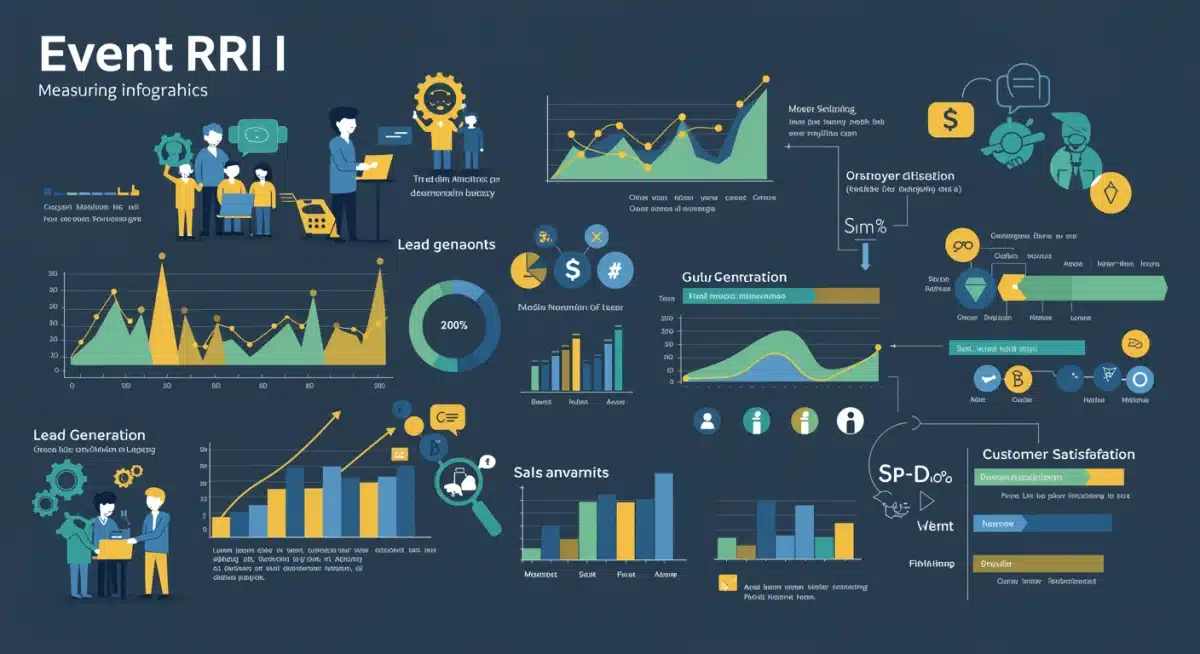
By maintaining a vigilant approach to data collection during the event, you build a rich dataset that will be indispensable for calculating your biotech event ROI accurately.
Step 4: Post-Event Analysis & ROI Calculation
The real work of measuring ROI begins after the event concludes. This phase involves consolidating data, performing calculations, and attributing outcomes to your event participation.
Data Consolidation & Cleaning:
- Merge all collected data from various sources (CRM, event app, social media, surveys).
- Cleanse the data to remove duplicates, correct errors, and standardize formats.
Financial ROI Calculation:
The fundamental formula for ROI is:
ROI = ((Total Monetary Value of Gains - Total Costs) / Total Costs) * 100%
Calculating Total Monetary Value of Gains:
- Sales Revenue: Track which leads generated at the event eventually convert into paying customers. Attribute a portion of the revenue from these sales directly to the event. This might involve multiplying the number of converted leads by your average deal size or the specific revenue generated.
- Pipeline Value: Assign a monetary value to the qualified leads and opportunities generated. This can be based on historical conversion rates and average deal sizes. For example, if 100 qualified leads were generated, and your historical conversion rate is 10% with an average deal size of $100,000, then the pipeline value is $1,000,000.
- Partnership Value: Estimate the potential financial value of any partnerships or collaborations initiated. This can be more complex but crucial for biotech.
- Media & PR Value: If PR was a goal, quantify the advertising value equivalent (AVE) of media mentions or the reach of social media campaigns.
Calculating Total Costs:
- Direct Costs: Booth rental, design, setup, shipping, electricity, internet, registration fees, sponsorship fees, marketing materials production.
- Travel & Accommodation: Flights, hotels, ground transportation for all attending staff.
- Personnel Costs: Salaries and benefits for staff working at the event, including travel time.
- Pre- & Post-Event Marketing: Costs associated with promoting your attendance and follow-up campaigns.
- Technology & Tools: Lead scanning apps, CRM subscriptions (prorated for event use), survey tools.
Attributing Non-Financial Gains:
- Brand Awareness: Compare post-event survey results with pre-event benchmarks. Track website traffic, social media mentions, and search engine visibility related to your brand.
- Thought Leadership: Quantify the reach of your presentations, downloads of your materials, and positive feedback received.
- Networking: Tally the number of meaningful connections made with KOLs, investors, and potential partners.
- Market Intelligence: Summarize key insights gathered about competitors, industry trends, and technological advancements.
- Talent Acquisition: Track the number of qualified candidates identified and the progress of their recruitment.
Remember that the sales cycle in biotech can be long. Your initial ROI calculation might be preliminary, requiring ongoing tracking over several months to capture the full financial impact. This long-term perspective is essential for accurate biotech event ROI assessment.
Step 5: Follow-up and Nurturing for Sustained ROI
Generating leads and making connections at a biotech event is only half the battle. The true ROI is realized through effective post-event follow-up and nurturing. A robust follow-up strategy ensures that initial interest translates into tangible business outcomes.
Immediate & Personalized Follow-up:
- Speed is Key: Aim to follow up with high-priority leads within 24-48 hours. The longer you wait, the colder the lead becomes.
- Personalized Communication: Reference specific conversations, shared interests, or questions asked during the event. Avoid generic mass emails.
- Tailored Content: Send relevant resources, whitepapers, case studies, or presentation slides that address the lead’s specific needs or interests.
Segmented Nurturing Campaigns:
- Categorize Leads: Segment your leads based on their qualification score, expressed interest, and potential value.
- Automated Nurturing: Implement automated email sequences for different lead segments, providing valuable content over time to keep your brand top-of-mind.
- Sales Team Hand-off: Establish clear protocols for when and how qualified leads are handed off to the sales team for direct engagement. Ensure the sales team has access to all event notes.
Relationship Management for Strategic Connections:
- For KOLs, investors, and strategic partners, assign dedicated relationship managers to cultivate these connections over the long term.
- Schedule regular check-ins, invite them to exclusive webinars, or share early access to new research.
Feedback Loop for Improvement:
- Gather feedback from your sales team on the quality of leads generated at the event and their conversion rates.
- Use this feedback to refine your lead scoring criteria, pre-event targeting, and in-event engagement strategies for future events. This iterative process is crucial for continuously improving your biotech event ROI.
Step 6: Reporting and Future Strategy Optimization
The final step involves compiling your findings into a comprehensive report and using these insights to inform your future event strategy. This closed-loop process ensures continuous improvement and maximizes your biotech event ROI over time.
Comprehensive ROI Report:
- Executive Summary: Provide a high-level overview of the event’s performance, key achievements, and overall ROI.
- Detailed Financial Analysis: Present the full cost breakdown and all quantifiable gains, clearly showing the ROI calculation.
- Non-Financial Impact: Report on brand awareness improvements, thought leadership achievements, networking successes, and market intelligence gathered. Use charts, graphs, and qualitative examples.
- Lead Generation & Conversion: Detail the number of leads generated, their quality, conversion rates at different stages, and the revenue attributed to the event.
- Lessons Learned: Document what went well, what could be improved, and unexpected challenges or opportunities.
- Recommendations: Offer actionable recommendations for future event participation, including budget adjustments, strategy changes, and new tactics.
Benchmarking & Trend Analysis:
- Compare the current event’s performance against historical data and industry benchmarks. Identify trends in lead quality, conversion rates, and overall ROI.
- Analyze which types of events (e.g., large conferences, specialized workshops, virtual summits) yield the best returns for your specific objectives.
Strategic Adjustments for 2026 and Beyond:
- Based on your ROI report, make informed decisions about which 2026 US biotech events to attend, how much to invest, and what objectives to prioritize.
- Optimize your booth design, presentation content, and team roles based on past performance.
- Refine your lead nurturing sequences and sales processes to maximize the conversion of event-generated leads.
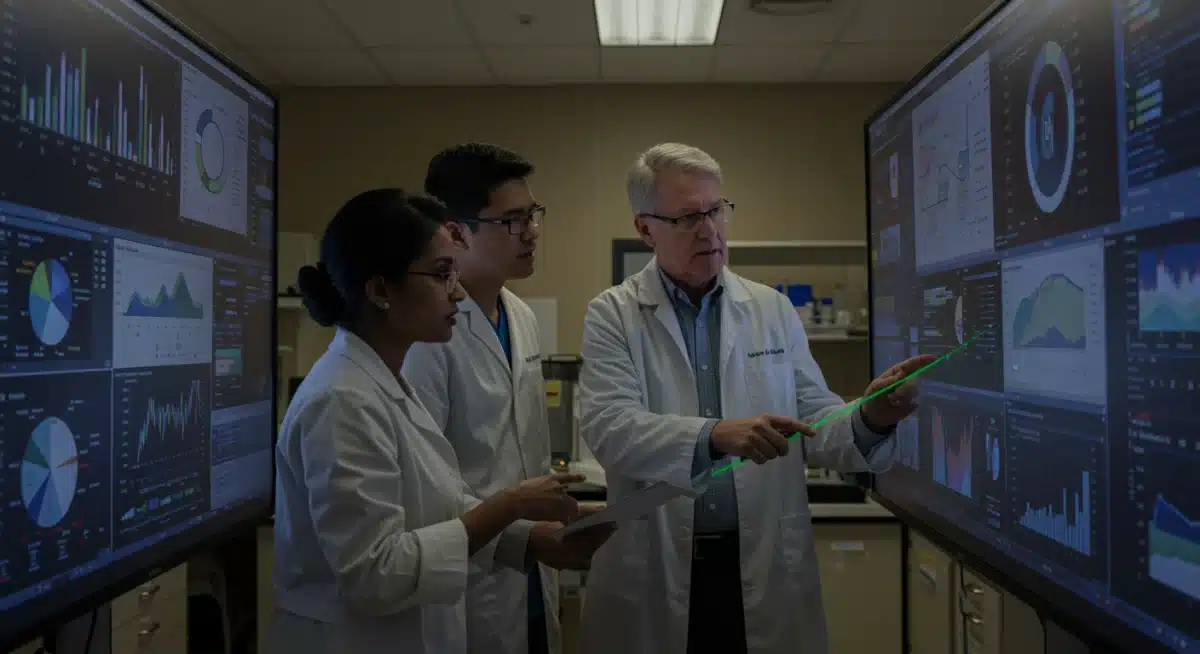
By diligently following these steps, you transform event attendance from a speculative endeavor into a data-driven, strategically optimized component of your overall business growth. This systematic approach to measuring biotech event ROI will be your compass in navigating the competitive and opportunity-rich landscape of the 2026 US biotech industry.
Advanced Considerations for Maximizing Biotech Event ROI
Beyond the fundamental steps, several advanced strategies can further enhance your ability to measure and maximize your biotech event ROI. These considerations delve deeper into the nuances of the industry and leverage more sophisticated analytical approaches.
Multi-Touch Attribution Models:
In the complex sales cycles typical of biotech, a single event rarely accounts for 100% of a deal’s origin. Implement multi-touch attribution models (e.g., linear, time decay, U-shaped) to understand how event attendance contributes alongside other marketing efforts (webinars, content marketing, direct outreach). This provides a more realistic view of the event’s influence on the customer journey and helps in allocating credit appropriately across different channels. Understanding the fractional contribution of each touchpoint can significantly refine your perception of biotech event ROI.
Lifetime Value (LTV) of Event-Generated Customers:
Instead of just focusing on initial sales revenue, consider the long-term value of customers acquired through events. Biotech deals often involve recurring revenue, extensive partnerships, or future product purchases. Calculate the estimated Lifetime Value (LTV) for customers whose initial contact originated from an event. A higher LTV for event-generated customers can drastically increase the perceived biotech event ROI, even if initial conversion numbers seem modest.
Competitive Intelligence Integration:
Events are prime opportunities for gathering competitive intelligence. Beyond just tracking your own performance, analyze competitor activities, product launches, messaging, and booth engagement. Integrate these insights into your strategic planning. While not a direct financial ROI, understanding the competitive landscape allows for better market positioning, which indirectly impacts future revenue and market share, thus contributing to an overall strategic biotech event ROI.
Sentiment Analysis of Social Media and PR:
Beyond just tracking mentions and reach, employ sentiment analysis tools to gauge the public and industry perception of your brand during and after the event. Positive sentiment can enhance brand equity, attract talent, and foster trust, all of which have long-term financial benefits. Monitoring sentiment helps you understand the qualitative impact of your event presence, adding another layer to your biotech event ROI assessment.
Employee Engagement and Morale:
While difficult to quantify directly in financial terms, the impact of events on employee morale, team cohesion, and professional development should not be overlooked. Attending events can boost employee motivation, provide learning opportunities, and foster a sense of belonging to a cutting-edge industry. Engaged employees are more productive and innovative, indirectly contributing to your company’s success and ultimately influencing your overall biotech event ROI.
Scenario Planning and Risk Assessment:
For future events, engage in scenario planning based on past ROI data. What if lead quality drops by 10%? What if a key competitor launches a similar product? By anticipating different outcomes, you can develop contingency plans and adjust your strategies to mitigate risks and capitalize on opportunities, ensuring a more resilient approach to achieving your desired biotech event ROI.
Post-Event Content Repurposing and Amplification:
Maximize the value of your event content (presentations, demos, interviews) by repurposing it into blog posts, webinars, social media snippets, and e-books. This extends the reach and longevity of your event presence well beyond the event dates, generating leads and brand awareness over a longer period, thereby enhancing the overall biotech event ROI from your initial investment.
By incorporating these advanced considerations, your organization can move beyond basic ROI calculations to a more holistic and sophisticated understanding of the true value derived from your 2026 US biotech event attendance. This comprehensive approach ensures that every event is not just an expense, but a powerful engine for strategic growth and innovation.
Conclusion: Mastering Your Biotech Event ROI in 2026
The 2026 US biotech event landscape promises to be a vibrant arena of innovation, collaboration, and intense competition. For your organization to truly thrive, merely participating is insufficient. A rigorous, data-driven approach to measuring biotech event ROI is not just a best practice; it’s a strategic imperative. By meticulously defining objectives, planning for robust data capture, executing with precision, and conducting thorough post-event analysis and follow-up, you transform your event attendance from a potential cost center into a powerful engine for growth.
Remember, the journey to maximizing your biotech event ROI is iterative. Each event provides invaluable data and lessons learned that should inform your strategy for the next. Embrace a culture of continuous improvement, leveraging insights from every interaction, every lead, and every connection made. As the biotech industry pushes the boundaries of science and medicine, your approach to event marketing should be equally forward-thinking and analytical.
By committing to this step-by-step guide and integrating advanced analytical considerations, your team will not only justify event expenditures but also unlock new avenues for partnership, innovation, and market leadership. Make your 2026 US biotech event attendance a resounding success by mastering the art and science of ROI measurement, ensuring every investment yields a significant and measurable return for your organization.