Remote Work in US Biotech: 2026 Opportunities & Challenges

Remote work in US biotech is rapidly transforming the industry, offering unprecedented flexibility and access to talent while presenting unique challenges in collaboration, regulation, and infrastructure for 2026.
The landscape of the US biotech industry is undergoing a profound transformation, with Remote Work in US Biotech: Opportunities and Challenges for 2026 (RECENT UPDATES) emerging as a pivotal factor. As we approach 2026, the integration of remote work models is not merely a temporary adjustment but a fundamental shift redefining how scientific discovery, development, and commercialization occur. This article delves into the intricate dynamics, exploring both the immense potential and the significant hurdles that companies and professionals face in this evolving environment. Are you ready to navigate this new era of biotech innovation?
The evolving landscape of remote work in US biotech
The US biotech sector, historically tethered to physical labs and corporate campuses, has witnessed an accelerated adoption of remote work practices. This shift, initially driven by global events, has rapidly matured into a strategic advantage for many organizations. The ability to tap into a wider talent pool, reduce operational overheads, and offer greater flexibility to employees has made remote work an attractive proposition.
However, this evolution is not without its complexities. The very nature of biotech, with its reliance on hands-on experimentation and stringent regulatory compliance, poses unique challenges to fully remote or hybrid models. Companies are now tasked with balancing the benefits of distributed teams against the critical need for secure data handling, collaborative research, and maintaining a strong company culture.
Technological enablers and infrastructure
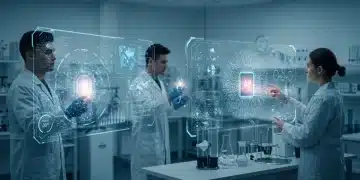
The backbone of successful remote work in biotech lies in robust technological infrastructure. Advanced digital collaboration tools, secure cloud computing platforms, and high-speed internet are no longer luxuries but essential components. These technologies facilitate seamless communication, shared data access, and remote monitoring of certain experimental processes, enabling continuity even when teams are geographically dispersed.
- Secure cloud platforms: Essential for data storage, analysis, and sharing while ensuring compliance with HIPAA, GDPR, and other regulations.
- Advanced communication tools: Video conferencing, project management software, and instant messaging platforms keep distributed teams connected and productive.
- Remote lab monitoring: Technologies that allow scientists to monitor experiments, analyze data, and even control certain lab equipment remotely.
The ongoing development of AI and machine learning also plays a crucial role, allowing for automated data analysis and predictive modeling, which can be performed off-site, further enhancing the feasibility of remote scientific contributions. The confluence of these technological advancements is reshaping how biotech research and development are conducted, making remote engagement increasingly viable.
In conclusion, the evolving landscape of remote work in US biotech is a testament to the industry’s adaptability. While technology provides the necessary tools, the strategic integration and thoughtful implementation of these resources are paramount to harnessing the full potential of a distributed workforce, setting the stage for future innovation.
Opportunities for talent acquisition and retention
One of the most significant advantages of embracing remote work in the US biotech industry is its profound impact on talent acquisition and retention. By removing geographical barriers, companies can access a much broader pool of skilled professionals, previously limited by relocation constraints or local market saturation. This expanded reach is critical in a highly specialized field where expertise is often scarce.
The ability to offer flexible work arrangements also serves as a powerful magnet for top talent, particularly those seeking a better work-life balance or facing personal circumstances that preclude traditional office-based roles. This flexibility translates into higher job satisfaction and, consequently, improved retention rates, reducing the costly and time-consuming process of continuously recruiting and training new employees.
Expanding the talent pool globally
While the focus remains on US biotech, the principles of remote work inherently allow for a global talent search, bringing diverse perspectives and specialized skills that might not be available domestically. This global perspective can enrich research, accelerate innovation, and foster a more inclusive work environment.
- Access to niche expertise: Companies can hire specialists in rare fields without requiring relocation.
- Increased diversity: Remote work fosters a more diverse workforce by removing geographical and sometimes socioeconomic barriers.
- Reduced competition in local markets: Less direct competition for talent in expensive biotech hubs.
Moreover, offering remote options can significantly differentiate a company in a competitive job market. Biotech professionals, like those in other high-tech sectors, increasingly value autonomy and flexibility. Companies that provide these benefits are often seen as more progressive and employee-centric, enhancing their employer brand.
In summary, remote work presents a golden opportunity for US biotech firms to attract and retain the best and brightest. By strategically leveraging remote capabilities, companies can not only fill critical roles more efficiently but also cultivate a more engaged and satisfied workforce, ultimately contributing to long-term success and innovation.
Challenges in maintaining collaboration and innovation
Despite the undeniable benefits, remote biotech work US also introduces significant challenges, particularly in fostering seamless collaboration and sustaining a high level of innovation. Biotech thrives on spontaneous interactions, whiteboard sessions, and the informal exchange of ideas that often occur in shared physical spaces. Replicating this dynamic effectively in a remote setting requires deliberate strategies and robust tools.
Maintaining team cohesion and a shared sense of purpose can also be more difficult when individuals are geographically dispersed. Informal communication, which often sparks new ideas and strengthens team bonds, tends to diminish without physical proximity. This necessitates a proactive approach to communication and team-building activities in a remote environment.
Overcoming communication barriers
Effective communication is the bedrock of any successful team, and even more so in a remote setup. Without the visual cues and immediate feedback of in-person interactions, misunderstandings can arise more easily. Companies must invest in clear communication protocols and utilize a variety of tools to ensure messages are conveyed accurately and efficiently.
- Structured virtual meetings: Regular, well-facilitated virtual meetings are crucial for progress updates and brainstorming.
- Dedicated collaboration platforms: Tools that allow for real-time document editing, shared whiteboards, and project tracking.
- Asynchronous communication strategies: Utilizing tools like Slack or Microsoft Teams for quick questions and updates without requiring immediate responses.
Innovation, often a serendipitous outcome of diverse minds colliding, needs to be intentionally cultivated in a remote context. This involves creating virtual spaces for informal discussions, encouraging cross-functional virtual teams, and providing platforms for sharing early-stage ideas without fear of judgment. Leadership plays a vital role in modeling collaborative behaviors and setting expectations for engagement.
Ultimately, while challenges in collaboration and innovation exist, they are not insurmountable. Through strategic planning, investment in appropriate technologies, and a strong emphasis on intentional communication, US biotech companies can maintain and even enhance their collaborative and innovative spirit in a remote work environment.


Ensuring data security and regulatory compliance
The biotech industry operates under stringent regulatory frameworks, particularly concerning data privacy, intellectual property, and patient information. The shift to remote biotech work US introduces new layers of complexity in ensuring robust data security and maintaining compliance with these regulations. Protecting sensitive research data and patient records from cyber threats and unauthorized access becomes paramount when employees are working from various locations and potentially diverse network environments.
Companies must implement comprehensive security protocols and educate their remote workforce on best practices to prevent breaches. Non-compliance can lead to severe penalties, reputational damage, and loss of trust, making it a critical area of focus for any biotech firm embracing remote models.
Key security measures for remote biotech operations
To mitigate risks, biotech companies must adopt a multi-faceted approach to security, encompassing technological solutions, policy implementation, and continuous employee training. The goal is to create a secure digital perimeter that extends to every remote workstation.
- Endpoint security: Ensuring all remote devices are equipped with up-to-date antivirus software, firewalls, and encryption.
- Multi-factor authentication (MFA): Implementing MFA for access to all sensitive systems and data to prevent unauthorized logins.
- Virtual Private Networks (VPNs): Requiring employees to use secure VPNs for all work-related internet traffic to encrypt data in transit.
- Regular security audits: Conducting frequent audits and penetration testing to identify and address vulnerabilities in the remote infrastructure.
Beyond technology, clear policies regarding data handling, secure communication channels, and incident response are essential. Employees must understand their responsibilities in safeguarding information and report any suspicious activity promptly. Regular training sessions on cybersecurity best practices and regulatory updates are also vital to keep the workforce informed and vigilant.
In conclusion, while remote work offers flexibility, it also amplifies the need for meticulous attention to data security and regulatory compliance in US biotech. By investing in robust security measures and fostering a culture of cybersecurity awareness, companies can confidently navigate the remote landscape while protecting their invaluable data and maintaining public trust.
Impact on company culture and employee well-being
The transition to remote biotech work US significantly impacts company culture and employee well-being, demanding a conscious effort from organizations to adapt and support their workforce. A strong company culture, often built on shared physical experiences and informal interactions, can be challenging to maintain when teams are distributed. Similarly, the boundaries between work and personal life can blur, potentially affecting employee mental health and overall well-being.
Companies must proactively design strategies that foster a sense of belonging, facilitate social connections, and provide adequate support for remote employees. Ignoring these aspects can lead to decreased morale, higher turnover rates, and a less productive workforce.
Strategies for fostering a positive remote culture
Building and sustaining a vibrant company culture in a remote or hybrid environment requires intentionality and creativity. It involves more than just virtual happy hours; it’s about creating meaningful opportunities for connection and professional development.
- Virtual team-building activities: Organizing online games, workshops, or virtual coffee breaks to encourage informal interaction.
- Regular check-ins and one-on-ones: Managers should conduct frequent, personalized check-ins to monitor employee well-being and provide support.
- Recognition and reward programs: Implementing virtual recognition programs to celebrate achievements and reinforce company values.
- Clear communication of values: Consistently communicating company mission, vision, and values to ensure alignment across the remote team.
Addressing employee well-being is equally crucial. This includes promoting work-life balance, offering mental health resources, and ensuring employees have ergonomically sound home office setups. Companies should also encourage breaks and discourage overwork, recognizing that the flexibility of remote work can sometimes lead to longer hours.
In conclusion, the impact of remote work on company culture and employee well-being in US biotech is profound. By prioritizing intentional culture-building initiatives and comprehensive well-being support, organizations can cultivate a resilient, engaged, and healthy remote workforce, ensuring long-term success and employee satisfaction.
The future outlook: hybrid models and strategic integration
Looking towards 2026 and beyond, the future of remote biotech work US appears to be dominated by hybrid models and strategic integration rather than an all-or-nothing approach. The nuanced demands of biotech research and development, coupled with the desire for flexibility, point towards a balanced approach where certain roles remain fully remote, others are office-based, and a significant portion adopts a hybrid schedule. This allows companies to leverage the best of both worlds: the benefits of in-person collaboration for critical lab work and the advantages of remote flexibility for analytical and administrative tasks.
Strategic integration means designing work models that are not just reactive but intentionally crafted to optimize productivity, foster innovation, and support employee well-being. This requires a deep understanding of which tasks are best performed remotely and which necessitate physical presence.
Designing effective hybrid work frameworks
Creating a successful hybrid model involves careful planning and continuous adaptation. It’s not a one-size-fits-all solution but rather a framework that needs to be tailored to the specific needs of different teams and projects within a biotech organization.
- Role-based assessment: Identifying which roles can be effectively performed remotely, partially remotely, or require full on-site presence.
- Flexible scheduling: Offering employees choices regarding their in-office days while ensuring team cohesion and collaboration.
- Equitable resource allocation: Ensuring remote and in-office employees have equal access to resources, opportunities, and career development.
- Technology for seamless transitions: Investing in technology that supports smooth transitions between remote and office work, such as hot-desking solutions and integrated communication systems.
The strategic integration of remote work also necessitates a re-evaluation of office spaces, transforming them into hubs for collaboration, innovation, and social connection rather than just places for individual work. This might involve more meeting rooms, innovation labs, and communal areas designed to facilitate interaction when teams are together.
Ultimately, the future outlook for remote work in US biotech is one of thoughtful evolution. By embracing hybrid models and strategically integrating remote capabilities, the industry can unlock new efficiencies, attract diverse talent, and continue to drive groundbreaking scientific advancements well into 2026 and beyond, adapting to the ever-changing demands of a globalized, digital world.
Navigating regulatory shifts and global talent competition
As remote biotech work US expands, navigating evolving regulatory landscapes and intensifying global talent competition becomes crucial for sustained growth and innovation. The regulatory environment is not static; governments and international bodies are continually updating guidelines related to data privacy, cross-border data transfer, and employment laws for remote workers. Biotech companies must stay abreast of these changes to ensure compliance, especially when engaging talent internationally or managing distributed teams across different states with varying regulations.
Simultaneously, the widespread adoption of remote work has intensified the competition for skilled biotech professionals on a global scale. Companies are no longer just competing with local firms but with organizations worldwide, all vying for the same limited pool of specialized talent. This necessitates innovative strategies for attraction and retention.
Adapting to global regulatory frameworks
Compliance in a remote, globalized context extends beyond national borders. Biotech firms must understand and adhere to diverse legal requirements, which can vary significantly from one jurisdiction to another. This complexity requires dedicated legal and HR expertise to mitigate risks.
- Cross-border data agreements: Ensuring legal frameworks are in place for data transfer and storage across national boundaries.
- International employment laws: Understanding labor laws, taxation, and social security obligations for employees in different countries.
- Staying informed on emerging regulations: Proactively monitoring changes in data privacy (e.g., GDPR, CCPA), intellectual property, and healthcare regulations.
In the face of global talent competition, US biotech companies need to offer competitive compensation packages, compelling career development opportunities, and a strong, inclusive company culture that resonates with professionals worldwide. Emphasizing the mission-driven nature of biotech work can also be a significant draw, appealing to individuals passionate about making a difference.
Moreover, investing in continuous learning and development for existing employees can help retain talent and upskill the workforce, reducing reliance on external hiring. Creating a supportive and flexible work environment, as discussed previously, also plays a critical role in distinguishing an organization in the global marketplace.
In conclusion, navigating the dual challenges of regulatory shifts and global talent competition is vital for the future success of remote work in US biotech. By proactively addressing compliance issues and strategically enhancing their employer brand, companies can secure their position as leaders in the global biotech landscape.
Ethical considerations and social impact of remote biotech
The expanding scope of remote biotech work US also brings forth important ethical considerations and has a significant social impact, extending beyond the immediate operational benefits. As biotech companies increasingly rely on distributed teams, questions arise regarding equitable access to advanced scientific infrastructure, the potential for digital divides, and the ethical management of research data in a decentralized environment. The societal implications of how this shift affects local economies, urban planning, and the demographics of scientific communities are also gaining prominence.
Ensuring that the benefits of remote work are shared broadly and that the industry continues to act responsibly in its scientific pursuits, regardless of geographical distribution, is a growing ethical imperative. This requires a thoughtful approach to corporate social responsibility and inclusive practices.
Addressing the digital divide and equitable access
While remote work offers flexibility, it relies heavily on access to reliable internet, suitable home office environments, and digital literacy. Not all individuals possess these prerequisites, potentially exacerbating existing inequalities within the scientific community.
- Providing technology stipends: Offering financial support to employees for home office setup and internet access.
- Digital literacy training: Ensuring all employees are proficient with the necessary remote work tools and platforms.
- Promoting inclusive hiring practices: Actively seeking talent from diverse backgrounds, including those in regions with developing infrastructure, and providing support to bridge gaps.
Beyond internal equity, the social impact of remote biotech extends to broader community development. The decentralization of jobs can revitalize smaller towns and rural areas by bringing high-skill employment opportunities. However, it also poses challenges for traditional biotech hubs, which might see a reduction in local economic activity.
Ethical data management in a remote context is another critical area. With data potentially accessed and stored across various locations, ensuring the integrity, privacy, and ethical use of sensitive biological and patient data becomes even more complex. Companies must reinforce their ethical guidelines and provide clear protocols for secure data handling in all remote operations.
In summary, the ethical considerations and social impact of remote biotech work are multifaceted. By proactively addressing issues of equitable access, fostering inclusive practices, and upholding stringent ethical standards for data management, the US biotech industry can ensure that its evolution towards remote models benefits not only the companies but also society at large, promoting a more just and sustainable scientific future.
| Key Aspect | Brief Description |
|---|---|
| Talent Acquisition | Remote work expands access to a wider, more diverse talent pool, reducing geographical limitations for specialized roles in biotech. |
| Collaboration Barriers | Maintaining spontaneous innovation and team cohesion remotely requires advanced tools and intentional communication strategies. |
| Data Security & Compliance | Robust cybersecurity measures and adherence to evolving regulations are critical for protecting sensitive biotech data in remote settings. |
| Hybrid Model Future | The industry is moving towards strategic hybrid models, balancing on-site lab work with remote analytical and administrative tasks for optimal efficiency. |
Frequently asked questions about remote work in US biotech
Roles heavily involved in data analysis, bioinformatics, regulatory affairs, medical writing, clinical trial management, and certain aspects of R&D planning are highly suitable for remote work. Lab-based experimental roles typically require on-site presence, though some monitoring can be remote.
Companies implement multi-factor authentication, secure VPNs, endpoint security software, and cloud-based platforms with robust encryption. Regular employee training on cybersecurity best practices and adherence to data privacy regulations like HIPAA are also crucial to prevent breaches.
Key challenges include replicating spontaneous collaboration, fostering informal idea exchange, and maintaining team cohesion. Companies address this with structured virtual meetings, dedicated collaboration platforms, and intentional virtual team-building activities to stimulate creativity.
While remote work might decentralize some roles, traditional biotech hubs are unlikely to decline entirely. They will likely evolve into centers for critical lab infrastructure, specialized equipment, and in-person collaboration, complementing a more distributed workforce rather than being replaced.
Maintaining strong culture remotely requires intentionality. Strategies include regular virtual team-building events, frequent one-on-one check-ins, transparent communication of company values, and recognition programs to celebrate achievements and foster a sense of belonging among distributed employees.
Conclusion
The trajectory of remote work in US biotech towards 2026 is one of dynamic adaptation and strategic evolution. While the opportunities for enhanced talent acquisition, operational flexibility, and reduced overheads are significant, the industry must diligently address the inherent challenges related to maintaining collaborative innovation, ensuring stringent data security, and nurturing a strong company culture. The future points towards sophisticated hybrid models that judiciously blend the advantages of remote flexibility with the necessity of on-site scientific work. By proactively navigating regulatory complexities, embracing technological advancements, and prioritizing employee well-being, US biotech can harness the full potential of a distributed workforce, driving groundbreaking discoveries and sustained growth in the years to come.