Top US Biotech Partnering Conferences 2026: Financial Perspective

The Top 3 US Biotech Partnering Conferences for Small and Mid-Cap Companies in Late 2026: A Financial Perspective
The biotechnology sector continues to be a dynamic and high-growth industry, characterized by rapid innovation, significant capital requirements, and the constant pursuit of strategic alliances. For small and mid-cap biotech companies, securing partnerships and funding is not merely an option but a critical imperative for survival and growth. As we look ahead to late 2026, a series of premier US biotech partnering conferences will serve as pivotal arenas for these crucial interactions. This article delves into the top three such events, offering a comprehensive financial perspective designed to help small and mid-cap companies maximize their return on investment (ROI) and forge impactful collaborations. Understanding the strategic value and financial implications of attending these Biotech Partnering Conferences 2026 is paramount for any company aiming to thrive in the competitive landscape.
The decision to attend a partnering conference is often weighed against significant costs, including registration fees, travel, accommodation, and the opportunity cost of executive time. However, the potential for securing transformative deals, attracting investment, and gaining market intelligence far outweighs these expenses when approached strategically. For small and mid-cap companies, these conferences are not just networking events; they are concentrated periods of intense business development, investor relations, and strategic planning. The focus here is not merely on attendance but on effective engagement, targeted outreach, and the meticulous preparation required to convert opportunities into tangible financial gains. We will explore how to best leverage these platforms, from pre-conference planning to post-conference follow-up, all through a lens of financial optimization and strategic growth.
Why Biotech Partnering Conferences are Financially Crucial for Small and Mid-Cap Companies
For emerging biotech firms, access to capital and strategic partnerships can dictate the pace of research and development, clinical trials, and ultimately, market entry. Unlike larger pharmaceutical companies with extensive internal resources, small and mid-cap biotechs often rely on external collaborations to mitigate risk, share costs, and accelerate pipeline progression. This is where Biotech Partnering Conferences 2026 become indispensable. These events offer a highly concentrated environment for:
- Accessing Capital: From venture capitalists and private equity firms to institutional investors and corporate VCs, a diverse range of funding sources attends these conferences specifically seeking promising investment opportunities. For small and mid-cap companies, this direct access can bypass lengthy traditional fundraising processes.
- Forming Strategic Alliances: Partnerships can take various forms, including co-development agreements, licensing deals, research collaborations, and mergers & acquisitions. These alliances provide not only financial injections but also access to larger companies’ expertise, infrastructure, and market reach, which are critical for scaling operations and validating technologies.
- Market Intelligence and Competitive Analysis: Beyond direct deal-making, these conferences are rich sources of information. Companies can gauge market trends, understand competitor strategies, identify unmet medical needs, and fine-tune their own strategic direction based on industry insights.
- Visibility and Brand Building: Presenting at these events, whether through formal presentations or one-on-one meetings, significantly raises a company’s profile within the biotech ecosystem, attracting potential partners, investors, and talent.
- Efficiency in Business Development: The sheer volume of pre-scheduled meetings and spontaneous interactions at a conference can condense months of individual outreach into a few highly productive days, offering an unparalleled efficiency in business development efforts.
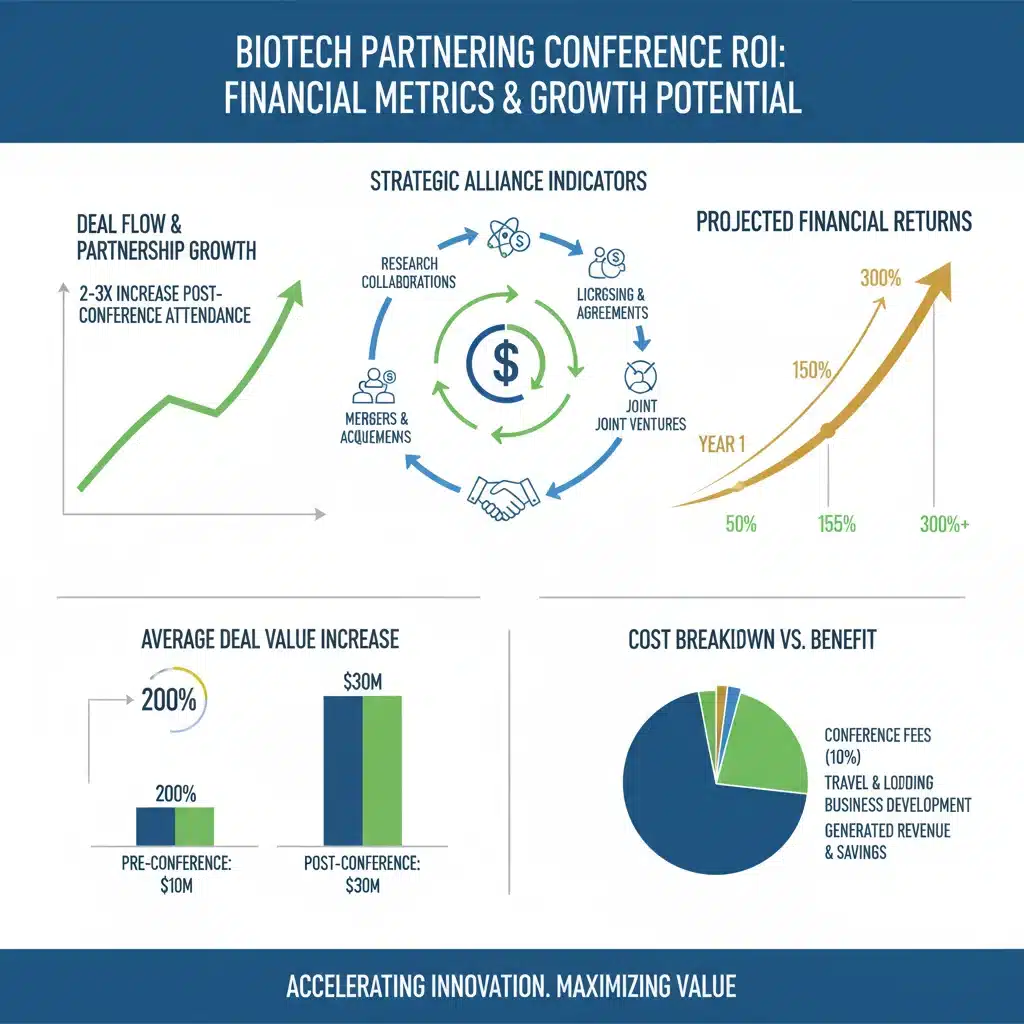
The financial return on investment from these conferences is not always immediately quantifiable but can manifest in accelerated drug development timelines, increased valuation, successful capital raises, and reduced operational burn rate through shared development costs. Therefore, a strategic approach to attending these Biotech Partnering Conferences 2026 is not just about showing up, but about a meticulously planned and executed engagement strategy.
Key Considerations for Maximizing Financial ROI at Biotech Partnering Conferences
Before diving into the specifics of the top conferences, it’s crucial to understand the overarching strategies that will ensure a strong financial return from participation. These considerations apply broadly to any significant industry event but are particularly pertinent for the high-stakes environment of biotech partnering.
1. Pre-Conference Preparation: The Foundation of Success
The success of any partnering conference hinges significantly on the preparation undertaken months in advance. This phase is critical for small and mid-cap companies, as their resources are often more limited, making efficient use of time and capital paramount.
- Define Clear Objectives: What specific financial or strategic outcomes are you seeking? Is it a Series A funding round, a licensing deal for a specific asset, a co-development partner, or market validation? Clear, measurable objectives will guide your entire conference strategy.
- Targeted Research: Identify potential partners and investors well before the event. Leverage conference databases, industry reports, and professional networks to pinpoint companies or individuals whose interests align with your offerings. Focus on quality over quantity for meetings.
- Compelling Materials: Prepare concise, impactful executive summaries, pitch decks, and data packages. These materials should highlight your scientific innovation, clinical progress, market potential, and most importantly, the financial opportunity for a partner or investor. Ensure your intellectual property (IP) is well-protected and clearly articulated.
- Financial Projections and Valuation: Be prepared to discuss your financial model, burn rate, fundraising needs, and valuation expectations. Transparency and realism are key to building trust and credibility. Understand different deal structures (e.g., upfront payments, milestones, royalties) and their financial implications.
- Team Selection and Training: Send the right team members – those who are knowledgeable about the science, business, and financial aspects of your company. Ensure they are well-versed in your messaging and capable of engaging in high-level discussions.
2. During-Conference Engagement: Executing the Strategy
Once at the conference, execution is everything. The intensity of these events demands focus and adaptability.
- Strategic Meeting Scheduling: Utilize the conference’s partnering platform to schedule one-on-one meetings. Prioritize meetings with high-potential targets identified during pre-conference research. Be punctual and prepared for every meeting, having reviewed the other party’s profile.
- Effective Pitching: Deliver a concise yet compelling pitch that clearly articulates your value proposition, highlights your competitive advantages, and outlines the specific partnership or investment opportunity. Be ready to answer tough questions about your data, market, and financial projections.
- Networking Beyond Scheduled Meetings: Many valuable connections are made organically. Attend plenary sessions, workshops, and social events. These informal settings can often lead to unexpected opportunities and insights.
- Active Listening and Information Gathering: Pay close attention to what potential partners or investors are looking for. This can help you tailor your approach and refine your value proposition. Gather competitive intelligence from presentations and discussions.
- Documentation: Keep detailed notes of all meetings, including key discussion points, action items, and next steps. This is crucial for effective follow-up and internal reporting.
3. Post-Conference Follow-up: Sustaining Momentum
The conference itself is just the beginning. The real work of converting connections into collaborations happens afterward.
- Prompt and Personalized Follow-up: Send personalized follow-up emails within 24-48 hours, referencing specific discussion points. Attach any requested materials and propose concrete next steps.
- Nurturing Relationships: Building partnerships takes time. Maintain regular communication, provide updates on your progress, and continue to demonstrate value.
- Internal Debrief and Analysis: Conduct an internal review of the conference. What went well? What could be improved? Analyze the quality of leads generated and assess progress against your initial objectives. Quantify potential ROI where possible.
- Pipeline Management: Integrate new leads into your business development pipeline and assign clear responsibilities for follow-up.
The Top 3 US Biotech Partnering Conferences for Small and Mid-Cap Companies in Late 2026
While the exact dates and locations for late 2026 may shift slightly, the following conferences consistently rank as essential for small and mid-cap biotech companies seeking strategic financial opportunities. These events are renowned for their high-quality attendees, structured partnering systems, and proven track record of facilitating deals.
1. BIO-Europe Spring / Fall (US Edition if applicable or highly attended by US firms)
While BIO-Europe typically has a strong European focus, its reach is undeniably global, attracting a significant number of US-based small and mid-cap companies and investors. Often, specific editions or dedicated US tracks within these conferences cater to the American market, or US companies travel extensively to participate. Assuming a strong US presence or a dedicated US event in late 2026, BIO-Europe remains a powerhouse for partnering.
Financial Perspective:
- Broad Investor Base: Attracts a wide array of global investors, including venture capital firms, corporate VCs, and institutional investors, all actively seeking early to mid-stage biotech opportunities. This diversity can lead to competitive funding offers.
- Extensive Partnering Opportunities: The conference’s one-on-one partnering system is highly efficient, facilitating thousands of meetings. This maximizes the chances of finding suitable co-development, licensing, or M&A partners, potentially leading to significant upfront payments, milestone achievements, and royalty streams.
- Market Validation: Success in securing meetings and expressing interest from multiple parties can serve as a strong market validation signal, potentially increasing a company’s valuation and attracting further investor interest.
- Global Reach: While focusing on US companies, the global nature of BIO-Europe means exposure to international markets and potential partners, diversifying revenue streams and market access.
- Cost-Benefit Analysis: The high registration fees are often justified by the sheer volume and quality of potential interactions. Companies must ensure they have a strong value proposition to stand out among the large number of attendees and make their investment worthwhile.
Strategic Tip for Small/Mid-Caps: Leverage the robust partnering platform to its fullest. Start scheduling meetings months in advance. Your profile should clearly articulate your financial needs and partnership propositions to attract the right kind of attention.
2. Biotech Showcase (Typically held in January, but often has smaller, focused events later in the year or follow-up opportunities)
While the main Biotech Showcase is usually in early January alongside JP Morgan, smaller, more focused versions or satellite events often occur throughout the year, particularly in major biotech hubs like Boston or San Francisco. These provide invaluable, more intimate settings for small and mid-cap companies. Assuming such an event in late 2026, it would be a prime target.
Financial Perspective:
- Investor-Centric Focus: Biotech Showcase is explicitly designed to connect private and public companies with investors and potential partners. Its structure heavily favors investor presentations and one-on-one meetings.
- Early-Stage Capital Access: Particularly strong for companies seeking seed, Series A, or Series B funding. The environment is conducive to explaining complex scientific concepts to a financially savvy audience.
- Showcasing Innovation: Provides a platform for companies to present their scientific breakthroughs and clinical data to a highly engaged audience, which can directly influence investor decisions and partnership interest. This direct exposure can lead to term sheet discussions much faster than traditional outreach.
- Competitive Landscape Insight: Being present at such a concentrated event allows for real-time gauging of investor sentiment and competitive activity, which can inform financial strategy and valuation expectations.
- Networking with Analysts: Often attended by biotech analysts, offering opportunities for small and mid-cap public companies to improve analyst coverage and investor relations, directly impacting stock performance and access to public capital.
Strategic Tip for Small/Mid-Caps: Perfect your investor pitch. Focus on clearly articulating your science, clinical path, market opportunity, and the financial returns for investors. Practice your presentation rigorously.

3. BIO Investor Forum (Typically Fall)
The BIO Investor Forum, usually held in the fall, is another critical event for private and emerging public companies. It focuses specifically on connecting innovative biotech companies with the investment community. This conference is tailored for companies seeking to raise private capital or engage with public market investors.
Financial Perspective:
- Dedicated Investor Audience: The BIO Investor Forum is almost exclusively focused on investors, making it highly efficient for fundraising. Attendees include venture capitalists, private equity, public market investors, and investment bankers.
- Private and Public Company Focus: While excellent for private companies seeking to raise capital, it also provides a valuable platform for small and mid-cap public companies to engage with new and existing investors, potentially boosting stock liquidity and valuation.
- Pitching Opportunities: Companies often have opportunities for formal presentations, which can significantly raise their profile and attract investor interest. These presentations are often followed by dedicated one-on-one meetings.
- Valuation Benchmarking: The forum provides an excellent environment for understanding current market valuations and investor appetites, helping companies to calibrate their own financial expectations and terms for fundraising.
- Direct Feedback: The direct interaction with a concentrated group of investors offers invaluable feedback on a company’s business model, scientific approach, and financial strategy. This feedback can be instrumental in refining future capital-raising efforts.
Strategic Tip for Small/Mid-Caps: Emphasize your financial ask and the potential ROI for investors. Have a clear understanding of your company’s valuation and be able to defend it with robust data and market analysis.
Beyond the Top 3: Other Notable Events and Regional Opportunities
While the aforementioned conferences are national and international in scope, small and mid-cap companies should also consider regional biotech partnering events. These often offer a more focused, less overwhelming environment with lower attendance costs and can be excellent for building local networks and attracting regional investors. Examples include:
- Keystone Symposia: While primarily scientific, some symposia include industry partnering tracks.
- Regional Bio Associations’ Annual Meetings: Organizations like MassBio, BioNJ, California Life Sciences, and others host events that often include partnering sessions.
- Specific Disease Area Conferences: If your company focuses on a niche, attending disease-specific conferences (e.g., oncology, rare diseases) can connect you with highly specialized investors and strategic partners within that domain.
The financial benefit of regional events often lies in their cost-effectiveness and the ability to cultivate deeper relationships within a specific geographic or therapeutic ecosystem. For companies with limited travel budgets, these can be a highly efficient alternative or supplement to larger national events.
The Evolving Landscape of Biotech Partnering in 2026
As we approach late 2026, the biotech partnering landscape will continue to evolve. Trends such as the increasing importance of AI and machine learning in drug discovery, personalized medicine, gene therapies, and advanced diagnostics will shape the types of partnerships and investments sought. Small and mid-cap companies that can clearly articulate their competitive advantage in these emerging areas will likely attract significant interest.
Furthermore, the global economic climate and interest rate environment will continue to influence investor appetite and deal terms. Companies must remain agile, adaptable, and well-informed about macroeconomic trends that could impact their fundraising and partnering strategies. The ability to demonstrate a clear path to commercialization, robust clinical data, and a strong intellectual property portfolio will remain paramount, irrespective of market conditions.
Finally, the growing emphasis on Environmental, Social, and Governance (ESG) factors in investment decisions will also play a role. Companies that can demonstrate a commitment to ethical practices, diversity, and sustainability may find themselves more attractive to certain investor segments. Integrating ESG considerations into your narrative can become a competitive advantage at these Biotech Partnering Conferences 2026.
Conclusion: Strategic Investment in Future Growth
For small and mid-cap biotech companies, attending the right Biotech Partnering Conferences 2026 is more than just an expense; it is a strategic investment in their future. The opportunities to secure vital funding, forge transformative alliances, and gain invaluable market insights are unparalleled. Success, however, is not guaranteed merely by attendance. It requires rigorous pre-conference preparation, strategic engagement during the event, and persistent follow-up afterward. By meticulously planning their approach and focusing on clear financial and strategic objectives, small and mid-cap companies can significantly enhance their chances of converting these high-stakes conferences into tangible growth and lasting success.
The financial health and long-term viability of these innovative companies often hinge on their ability to navigate the complex world of partnerships and investments. These conferences provide the concentrated ecosystem where such critical connections are made. Therefore, understanding their structure, preparing diligently, and engaging effectively are the cornerstones of maximizing the financial return on what can be one of the most impactful business development activities in the biotech calendar.