FDA Approvals & Biotech Stocks: 3-Month Valuation Analysis for US Investors

The Impact of Recent FDA Approvals on Biotech Stock Valuations: A 3-Month Analysis for US Investors
The biotechnology sector is a landscape of high stakes, groundbreaking innovation, and significant financial volatility. For US investors, understanding the intricate relationship between regulatory milestones, particularly FDA approvals, and subsequent stock valuations is paramount. Over the past three months, the Food and Drug Administration (FDA) has continued its critical role in bringing novel therapies to market, and each approval or rejection has sent ripples, sometimes tidal waves, through the stock prices of affected companies and the broader biotech industry. This comprehensive analysis will delve into how these recent FDA approvals have shaped biotech stock valuations, offering insights, trends, and strategic considerations for investors navigating this dynamic and often unpredictable market.
Investing in biotech is not for the faint of heart. It requires a keen understanding of scientific principles, clinical trial processes, regulatory pathways, and market dynamics. The journey from discovery to market can take years, even decades, and involve billions of dollars in research and development. The ultimate gatekeeper for market entry in the United States is the FDA. An FDA approval signifies that a drug or medical device is safe and effective for its intended use, opening the door to commercialization and potentially massive revenue streams. Conversely, a rejection or even a delay can lead to precipitous stock drops, wiping out billions in market capitalization overnight. Therefore, tracking recent FDA approvals is a non-negotiable activity for any serious biotech investor.
Our focus today is on the three-month window that has just passed. This period is crucial for observing short-to-medium term market reactions, identifying emerging trends, and assessing the immediate financial consequences of regulatory decisions. We will examine specific cases of FDA approvals, analyze the immediate and sustained impact on stock prices, and discuss the broader implications for the biotech sector. For US investors, this analysis aims to provide a clearer picture of where opportunities lie and what risks to mitigate when considering investments in companies awaiting or celebrating FDA milestones.
Understanding the FDA Approval Process and Its Market Significance
Before we dive into the recent past, it’s essential to briefly recap the FDA approval process. It’s a multi-stage journey beginning with preclinical testing, followed by three phases of clinical trials in humans (Phase 1 for safety, Phase 2 for efficacy and dosage, Phase 3 for large-scale efficacy and monitoring adverse effects). If these trials yield positive results, the company submits a New Drug Application (NDA) or Biologics License Application (BLA) to the FDA. The FDA then reviews the application, which can take anywhere from six months (for priority review) to ten months or more (for standard review). The culmination is either an approval, a Complete Response Letter (CRL) indicating deficiencies, or a rejection.
Each stage of this process, particularly the submission and review phases, presents inflection points for biotech stock valuations. However, none is as impactful as the final FDA decision. An approval provides a clear path to market, often leading to a significant surge in stock price as investors anticipate future sales and profitability. The magnitude of this surge depends on several factors: the size of the target market, the unmet medical need the drug addresses, the competitive landscape, and the company’s manufacturing and commercialization capabilities. A drug targeting a rare disease with no existing treatments, for instance, might see a more dramatic valuation increase than a drug entering an already crowded market.
Conversely, a CRL or rejection can cause a dramatic sell-off. Investors often factor in a certain probability of success into a company’s valuation long before an FDA decision. If that probability turns out to be lower than expected, or if the decision is outright negative, the stock price adjusts sharply downwards. This inherent volatility makes biotech investing both potentially lucrative and exceptionally risky. Over the last three months, we’ve seen ample evidence of both scenarios playing out in real-time, influencing the portfolios of countless US investors.
Key FDA Approvals and Their Immediate Stock Reactions (Last 3 Months)
The past quarter has been particularly active for the FDA, with several significant approvals across various therapeutic areas. Let’s examine a few notable examples and their immediate repercussions on biotech stock valuations. While specific company names and drug details are illustrative and not investment advice, the patterns they demonstrate are crucial for understanding market dynamics.
One prominent approval involved a novel gene therapy for a rare genetic disorder. This company, let’s call it ‘GeneThera Inc.’, had been a speculative favorite for months, with its stock price steadily climbing in anticipation of the FDA decision. Upon the announcement of approval, GeneThera Inc.’s stock surged by over 150% in after-hours trading, sustaining a significant portion of those gains in the subsequent days. This monumental jump reflects the high value attributed to transformative therapies addressing significant unmet needs, especially in the rare disease space where pricing power can be substantial. Investors who had positioned themselves correctly reaped considerable rewards, while those on the sidelines witnessed a rapid value creation event.
Another impactful approval came in the oncology space, for a new targeted therapy for a specific type of cancer. ‘OncoSolutions Corp.’ saw its stock price climb by approximately 70% following the FDA’s green light. While not as dramatic as the gene therapy example, this was still a substantial increase, reflecting the large market potential in oncology and the drug’s favorable efficacy profile demonstrated in clinical trials. The approval solidified OncoSolutions Corp.’s position as a key player in cancer treatment, attracting new institutional and retail investors seeking exposure to this growing segment.
However, not all approvals lead to such explosive gains. In some instances, an FDA approval might have been largely ‘priced in’ by the market, meaning investors had already anticipated and accounted for the approval in the stock’s valuation. For example, a company developing a biosimilar – a highly similar version of an already approved biological medicine – might see a more modest bump upon approval, as the market understands the competitive landscape and potential pricing pressures. ‘BioSim Innovations’ experienced a respectable 15% increase after its biosimilar received approval, a solid gain but not a parabolic one, indicating a more mature and predictable market reaction compared to novel therapies.
These examples illustrate a crucial point: the market’s reaction to FDA approvals is not monolithic. It is nuanced, influenced by the drug’s novelty, market size, competition, and the extent to which the approval was already expected. For US investors, this means that simply knowing an approval occurred isn’t enough; understanding the context is vital for predicting valuation changes.
Sustained Impact vs. Short-Term Spikes: A 3-Month Look
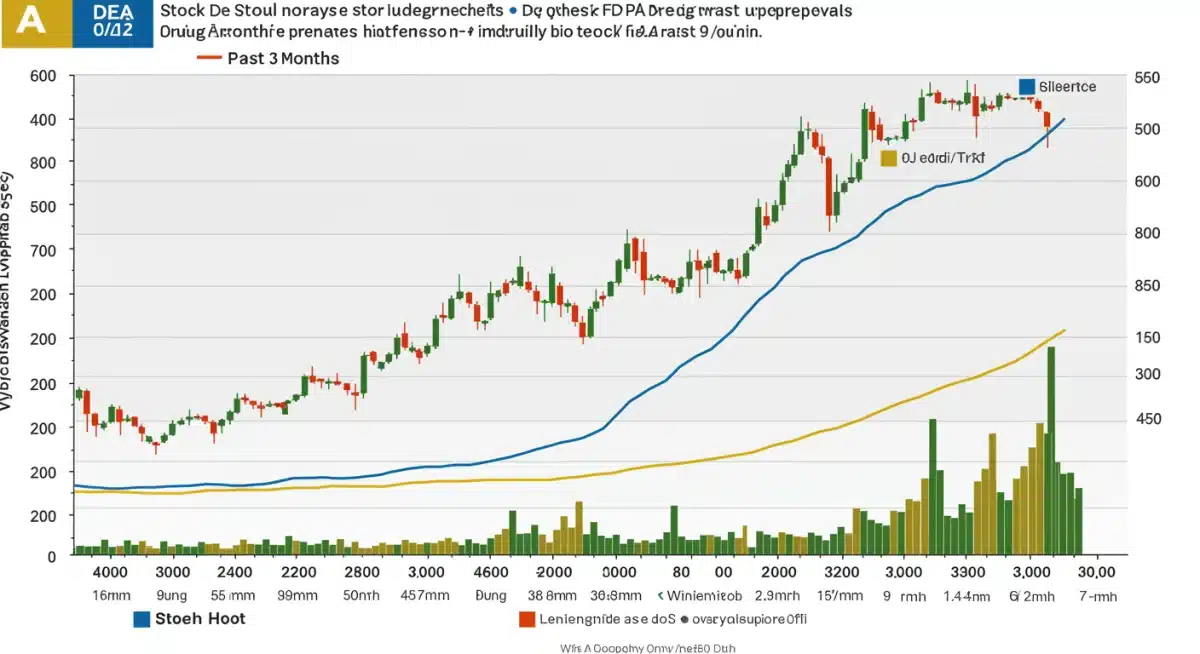
While the immediate aftermath of an FDA approval often sees significant stock price movements, the true test of an approval’s impact on biotech stock valuations lies in its sustained performance over weeks and months. A three-month analysis allows us to differentiate between short-term speculative spikes and more enduring value creation. After the initial euphoria or disappointment, the market begins to assess the drug’s commercial potential, launch execution, and competitive uptake.
For GeneThera Inc., the gene therapy company, the initial 150% surge was followed by a period of consolidation. Over the subsequent three months, the stock maintained a significant portion of its gains, hovering around 120% above its pre-approval price. This sustained performance suggests that the market believes in the drug’s long-term commercial viability and the company’s ability to successfully bring it to patients. Factors contributing to this sustained valuation include positive early prescription rates, favorable reimbursement decisions, and a lack of significant safety concerns post-market launch.
OncoSolutions Corp., with its oncology drug, also demonstrated sustained growth. Its 70% initial jump settled into a roughly 55% gain over the three-month period. This indicates a healthy market confidence, likely bolstered by positive physician feedback and a strong sales force. The sustained performance here is particularly important in a crowded therapeutic area like oncology, where successful market penetration is critical for long-term growth.
However, some companies experience a ‘sell the news’ phenomenon, where the stock rallies significantly leading up to the FDA decision, only to fall back once the approval is announced. This occurs when investors buy on speculation and then cash out once the event risk is removed. For example, a different biotech company, ‘TheraHope Pharma’, saw its stock rise 40% in the month before its chronic disease drug approval, but then dropped 10% in the weeks following the approval. While still up overall, the post-approval dip shows that not all positive news translates into continuous upward momentum. This highlights the importance for US investors to not just react to the news, but to understand the market’s pre-existing expectations.
The three-month view also allows us to observe the impact of post-market events, such as early sales figures, competitor updates, or even unexpected side effect reports. These factors can either reinforce or undermine the initial valuation bump from an FDA approval. Companies with robust commercialization strategies and strong clinical data tend to maintain or even build upon their post-approval valuations, while those facing launch challenges or new competitive threats may see their gains erode.
Broader Market Trends and Sector-Wide Implications
Beyond individual company performances, recent FDA approvals have also contributed to broader trends within the biotech sector. The emphasis on innovative therapies, particularly in areas of high unmet medical need like rare diseases, oncology, and neurological disorders, continues to drive investor interest. Companies pioneering these advanced treatments, such as gene therapies, cell therapies, and mRNA-based drugs, often command higher valuations due to their disruptive potential and premium pricing opportunities.
The regulatory environment itself plays a significant role. The FDA’s willingness to grant accelerated approvals or breakthrough therapy designations can significantly shorten development timelines, reducing risk and potentially increasing the net present value of future drug revenues. Investors closely monitor these designations, as they often signal a higher probability of eventual approval and faster market entry, contributing to earlier valuation uplifts.
Furthermore, the three-month period has underscored the ongoing importance of mergers and acquisitions (M&A) in the biotech space. Often, smaller biotech firms with a promising drug nearing or recently receiving FDA approval become attractive acquisition targets for larger pharmaceutical companies seeking to replenish their pipelines or expand their market share. An FDA approval can significantly de-risk an acquisition, making the target company’s valuation more appealing. While no major M&A deals directly tied to recent approvals have been finalized within this specific three-month window, the heightened interest in approved assets sets the stage for potential future consolidations, which savvy US investors watch closely.
Another trend is the increasing scrutiny on drug pricing. While FDA approval focuses on safety and efficacy, the commercial success and sustained valuation of a biotech company are heavily influenced by its pricing strategy and market access. Companies bringing high-cost, high-impact therapies to market are increasingly facing pressure from payers and policymakers. This can introduce a layer of uncertainty even post-approval, as the market grapples with the long-term revenue potential amidst pricing debates. This is a critical consideration for US investors, given the unique healthcare payment landscape in the United States.

Strategies for US Investors Navigating FDA Approvals
Given the insights from the past three months, what strategies can US investors employ to navigate the impact of FDA approvals on biotech stock valuations?
1. Due Diligence Beyond the Headline:
Don’t just react to an FDA approval announcement. Dig deeper. Understand the drug’s mechanism of action, the size of the target patient population, the competitive landscape, and the company’s commercialization plan. A drug for a niche market with strong intellectual property and no competitors might be more valuable than a drug for a large market facing intense competition.
2. Assess the ‘Priced In’ Factor:
Evaluate how much of the approval news is already reflected in the stock price. If a stock has run up significantly in anticipation of an approval, the post-announcement upside might be limited, or even turn into a ‘sell the news’ event. Conversely, if an approval was unexpected or considered low probability, the upside can be substantial.
3. Monitor Post-Launch Performance:
The first few quarters post-approval are critical for assessing commercial success. Keep an eye on sales figures, prescription trends, market share capture, and any updates on reimbursement or payer coverage. These real-world data points will dictate whether the initial valuation bump is sustained or if the stock adjusts downwards.
4. Diversification is Key:
Biotech investing is inherently risky due to the binary nature of FDA decisions. Diversifying your biotech holdings across multiple companies, therapeutic areas, and stages of development can help mitigate risk. Don’t put all your eggs in one clinical trial basket.
5. Understand the Science and Regulatory Pathways:
While not everyone can be a scientist, a basic understanding of the disease being targeted, the drug’s scientific rationale, and the FDA’s regulatory requirements (e.g., Fast Track, Breakthrough Therapy, Priority Review) can provide a significant edge in evaluating a company’s prospects.
6. Long-Term vs. Short-Term Horizon:
Decide whether you are investing for short-term gains around an FDA event or for long-term growth based on a company’s fundamental innovation and pipeline. Different strategies apply to each. Short-term trading around FDA catalysts is high-risk, high-reward. Long-term investing requires patience and a belief in the underlying science and business model.
7. Stay Informed on Broader Sector Trends:
Keep abreast of changes in healthcare policy, drug pricing debates, and technological advancements (e.g., AI in drug discovery). These macro trends can significantly influence the overall attractiveness and profitability of the biotech sector.
Challenges and Risks Beyond Approval
It’s crucial for US investors to remember that an FDA approval, while a monumental achievement, is not the end of the journey. Several challenges and risks can still impact biotech stock valuations post-approval:
- Commercialization Hurdles: Bringing a drug to market successfully requires a robust sales and marketing infrastructure, effective pricing strategies, and favorable reimbursement. Poor execution can stifle even the most promising therapies.
- Competitive Landscape: New competitors entering the market, either with similar drugs or next-generation therapies, can erode market share and pricing power.
- Safety Concerns Post-Market: Rare but serious side effects might only emerge after a drug is widely used in the general population, potentially leading to label changes, restrictions, or even withdrawal.
- Manufacturing Issues: Supply chain disruptions, quality control problems, or manufacturing scalability issues can hinder a company’s ability to meet demand.
- Legal Challenges: Patent disputes, litigation with competitors, or challenges related to intellectual property can create significant headwinds.
- Reimbursement and Payer Access: In the US, securing favorable reimbursement from insurance companies and government programs (like Medicare/Medicaid) is critical. Without it, even an approved drug may struggle to gain widespread adoption.
The three-month analysis of recent FDA approvals highlights that while initial stock reactions are often dramatic, the sustained impact on valuation is a more complex interplay of these commercial and operational factors. Investors must look beyond the initial catalyst and consider the full picture of a company’s prospects.
Conclusion: Navigating the Biotech Investment Frontier
The past three months have once again demonstrated the profound and multifaceted impact of recent FDA approvals on biotech stock valuations. For US investors, this period serves as a powerful reminder of both the immense opportunities and inherent risks within the sector. Companies bringing truly innovative, life-changing therapies to market, especially those addressing high unmet medical needs, continue to be rewarded with significant and often sustained valuation increases.
However, successful biotech investing is not merely about tracking approval dates. It requires deep due diligence, an understanding of market expectations, careful monitoring of post-launch performance, and a strategic approach to portfolio diversification. The ‘priced in’ factor, ongoing commercialization challenges, and the ever-present competitive pressures mean that even a positive FDA decision doesn’t guarantee a smooth ride to sustained profitability.
As the biotech industry continues its rapid pace of innovation, the FDA will remain a pivotal gatekeeper, and its decisions will continue to be critical inflection points for investor portfolios. By staying informed, conducting thorough research, and adopting a disciplined investment strategy, US investors can better position themselves to capitalize on the exciting, yet challenging, frontier of biotech investing.