Evaluating Early-Stage Biotech Startups: Unlocking 20x Potential by 2026

The biotechnology sector is a crucible of innovation, constantly pushing the boundaries of what’s possible in medicine, agriculture, and environmental science. For savvy investors, early-stage biotech startups represent a tantalizing opportunity for exponential returns, often dubbed ’20x potential.’ However, navigating this complex landscape requires a meticulous approach, robust due diligence, and a keen understanding of the unique challenges and triumphs inherent in life sciences ventures. As we look towards 2026, identifying these high-growth gems means understanding how to effectively evaluate biotech startups.
This comprehensive guide will equip you with the frameworks and critical considerations necessary to assess early-stage biotech companies, helping you discern potential breakthroughs from mere pipe dreams. We’ll delve into the scientific foundations, market dynamics, regulatory hurdles, and team capabilities that collectively determine a startup’s trajectory. Successfully evaluating biotech startups is not just about understanding the science; it’s about anticipating market needs, mitigating risks, and recognizing the visionary leadership that can translate groundbreaking research into tangible value.
The Allure of Early-Stage Biotech: Why 20x Potential?
The promise of early-stage biotech lies in its disruptive potential. A single successful drug, diagnostic, or therapeutic platform can revolutionize an industry, address unmet medical needs, and generate immense financial rewards. Unlike mature industries, where growth is often incremental, biotech offers the possibility of step-change advancements. This is precisely why investors are drawn to the prospect of 20x returns or more – the idea that a relatively small initial investment could multiply significantly if a company’s core technology proves successful and gains market traction.
However, this high reward comes with commensurately high risk. The journey from concept to commercialization in biotech is long, expensive, and fraught with scientific, clinical, and regulatory uncertainties. Therefore, the ability to accurately evaluate biotech startups at their nascent stages is paramount for mitigating these risks and maximizing the chances of identifying true game-changers.
Pillars of Evaluation: What to Look for in Early-Stage Biotech
When you set out to evaluate biotech startups, it’s crucial to adopt a multi-faceted approach. No single factor guarantees success, but a strong showing across several key areas significantly improves a company’s outlook. Here are the core pillars of evaluation:
1. Scientific Rigor and Innovation: The Core Technology
At the heart of every successful biotech startup is groundbreaking science. This is where you begin your deep dive when you evaluate biotech startups. You need to understand not just what the technology does, but how it works, why it’s better than existing solutions, and whether the underlying science is sound and reproducible.
- Novelty and Differentiation: Is the technology truly novel? Does it offer a significant improvement over current standards of care or existing solutions? Consider its ‘moat’ – what protects it from competitors? This could be intellectual property, unique biological insights, or proprietary methodologies.
- Mechanism of Action (MOA): A clear and well-understood MOA is critical, especially for therapeutic candidates. Does the startup have robust preclinical data (in vitro, in vivo) to support its proposed MOA? Is there a strong biological rationale?
- Validation Data: Scrutinize the data. Is it published in peer-reviewed journals? Has it been independently validated? Look for consistency, statistical significance, and relevance to human disease or application. Early-stage data can be preliminary, but it should be compelling enough to warrant further investment.
- Platform vs. Single Asset: Does the company have a platform technology that can generate multiple product candidates, or is it focused on a single asset? Platform technologies often offer a higher upside and diversified risk, as success with one asset can validate the entire platform.
- Reproducibility and Scalability: Can the scientific findings be reproduced reliably? Is the technology scalable for manufacturing or widespread application? This is often overlooked in early stages but becomes critical later on.
2. Unmet Medical Need and Market Opportunity
Even the most brilliant science won’t succeed without a significant market opportunity. When you evaluate biotech startups, assess the potential impact and commercial viability of their innovation.
- Disease Burden and Patient Population: For therapeutic companies, what is the prevalence and incidence of the disease they are targeting? Is it a rare disease (orphan drug designation often provides incentives) or a widespread condition? Understand the patient demographics and the severity of the unmet need.
- Current Treatment Landscape: What are the existing treatments? What are their limitations (efficacy, safety, cost, convenience)? Does the startup’s solution offer a significant advantage over these? Avoid ‘me-too’ products unless they have a clear, compelling differentiator.
- Market Size and Growth Potential: Estimate the total addressable market (TAM). How large is it, and how is it projected to grow? Be realistic. Early-stage projections can be optimistic, so ground them in verifiable data.
- Pricing and Reimbursement Potential: How might the product be priced? Will it be reimbursed by insurance providers? This is particularly critical for drugs and medical devices. Understanding the health economics early on can prevent significant hurdles down the line.
- Competitive Landscape: Who are the current and future competitors? How strong are their pipelines? What are their strengths and weaknesses? A thorough competitive analysis is vital.
3. Intellectual Property (IP) Strategy
In biotech, IP is king. A strong and defensible IP portfolio is crucial for attracting investment and protecting market share. When you evaluate biotech startups, pay close attention to their IP strategy.
- Patent Portfolio: What patents or patent applications does the company hold? Are they broad enough to cover the core technology and its applications? What is their geographic coverage? Are there any pending challenges or expiring patents?
- Freedom to Operate (FTO): Has the company conducted a thorough FTO analysis to ensure their technology does not infringe on existing patents held by others? This is a critical legal and commercial consideration.
- Trade Secrets: Beyond patents, are there valuable trade secrets (e.g., proprietary manufacturing processes, unique cell lines) that contribute to the company’s competitive advantage?
- Licensing Agreements: If the technology is licensed from an academic institution or another company, understand the terms of the agreement. Are they favorable? Are there any encumbrances?
4. The Team: Expertise and Execution
Even the best science can falter without the right team to execute. When you evaluate biotech startups, the quality and experience of the leadership and scientific teams are paramount.
- Scientific Founders: Who are the scientific founders? What is their track record in research, publications, and previous startup successes (or failures)? Their reputation and network can be invaluable.
- Management Team: Does the CEO have relevant industry experience, particularly in drug development, clinical trials, or commercialization? Is there a strong CFO, COO, and Chief Medical Officer (CMO) or Chief Scientific Officer (CSO)? Look for a blend of scientific acumen and business savvy.
- Advisory Board: A strong scientific advisory board (SAB) and board of directors (BOD) can provide critical guidance and open doors. Who are these individuals, and what expertise do they bring?
- Culture and Vision: While harder to quantify, a strong, collaborative, and resilient company culture is vital, especially in the face of inevitable setbacks. Does the team share a clear vision for the company’s future?
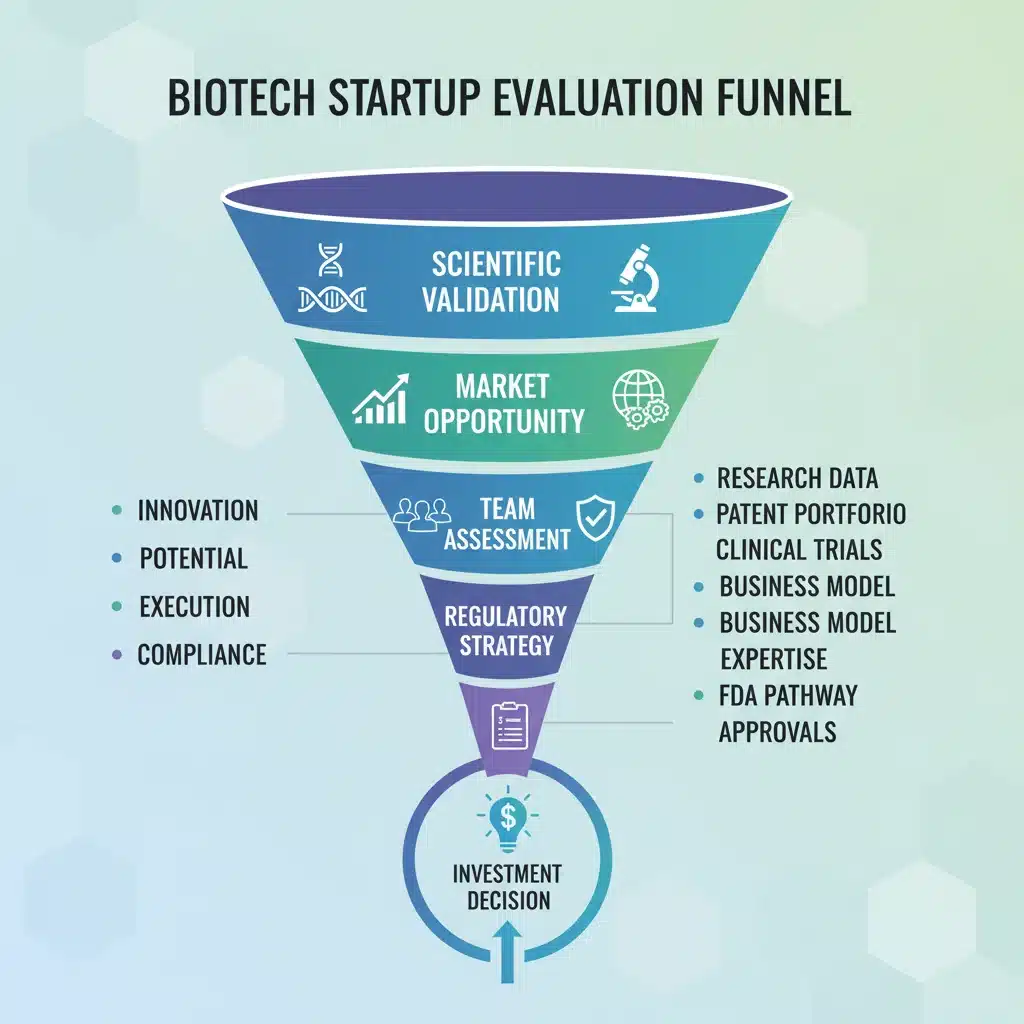
Navigating the Regulatory and Clinical Landscape
The path to market for biotech products, especially therapeutics, is heavily regulated. Understanding the regulatory strategy and clinical development plan is a non-negotiable part of how to evaluate biotech startups.
5. Regulatory Pathway and Strategy
- Regulatory Body: Which regulatory bodies will oversee the product (e.g., FDA in the US, EMA in Europe)?
- Designation Strategy: Does the company qualify for any expedited designations (e.g., Orphan Drug, Fast Track, Breakthrough Therapy, RMAT)? These can significantly accelerate development timelines and reduce costs.
- Pre-IND/IND Process: How advanced is their interaction with regulatory agencies? Have they had pre-IND meetings? Is an Investigational New Drug (IND) application in preparation or already filed?
- Manufacturing and CMC (Chemistry, Manufacturing, and Controls): How will the product be manufactured? Is there a clear plan for scaling up production while maintaining quality and consistency? CMC issues can delay or derail even promising programs.
6. Clinical Development Plan (for Therapeutics)
- Phase I/II/III Strategy: Is there a well-defined clinical trial strategy? What are the primary and secondary endpoints? Are they ambitious yet achievable?
- Trial Design and Endpoints: Are the trial designs robust and statistically sound? Do the endpoints align with regulatory requirements and clinical relevance?
- Patient Recruitment: How will patients be recruited for clinical trials? Is the target population accessible?
- Biomarkers: Does the company utilize biomarkers to identify responders, monitor efficacy, or stratify patients? Biomarkers can significantly de-risk clinical development.
- Safety Profile: What is the preliminary safety profile from preclinical studies? Are there any red flags?
Financials and Exit Strategy: The Business Side
While science is the engine, financials are the fuel. A strong financial plan and a clear vision for an exit are crucial when you evaluate biotech startups.
7. Financial Projections and Capital Needs
- Burn Rate and Runway: What is the company’s current burn rate? How much capital do they have, and how long will it last (runway)?
- Funding History: Who are the previous investors? What was the valuation at previous rounds? This provides insight into market perception and investor confidence.
- Future Fundraising: What are the future capital requirements to reach key milestones (e.g., IND filing, Phase I/II completion)? Is there a credible plan to raise this capital?
- Valuation: Is the current valuation reasonable given the stage of development, market opportunity, and risks? Biotech valuations can be highly subjective, so compare them to similar companies.
8. Exit Strategy
Investors want to know how they will realize their returns. When you evaluate biotech startups, consider the potential exit pathways.
- Acquisition by Big Pharma/Biotech: This is the most common exit for early-stage biotech. Which larger companies might be interested in acquiring this technology or asset? At what stage would an acquisition be most likely (e.g., after Phase II data, pre-commercial)?
- Initial Public Offering (IPO): Less common for very early-stage companies, but a potential pathway for those with highly promising assets and significant clinical progress.
- Strategic Partnerships/Licensing Deals: These can provide non-dilutive capital and validation, and sometimes precede an acquisition.
The Importance of Due Diligence: Beyond the Pitch Deck
A compelling pitch deck is just the beginning. Thorough due diligence is where the real work of how to evaluate biotech startups happens. This involves diving deep into every aspect discussed above.
- Scientific Due Diligence: Engage independent scientific experts to review data, protocols, and the scientific rationale. Challenge assumptions.
- Clinical Due Diligence: If applicable, consult with clinicians and regulatory experts to assess the clinical development plan and regulatory strategy.
- IP Due Diligence: Have patent attorneys conduct a thorough review of the patent portfolio and FTO.
- Financial and Legal Due Diligence: Review financial records, corporate governance, and any existing contracts or legal issues.
- Management Interviews: Conduct in-depth interviews with key management team members and scientific founders. Assess their competence, integrity, and passion.
- Reference Checks: Speak to former colleagues, mentors, and collaborators of the founders and key team members.

Identifying the ’20x Potential’ by 2026: A Forward-Looking Perspective
Achieving 20x returns by 2026 implies a company that is not just successful, but wildly successful within a relatively short timeframe. This requires a confluence of factors:
- Breakthrough Technology: The core innovation must be truly transformative, addressing a major unmet need with superior efficacy or safety.
- Rapid Clinical Progression: For therapeutics, swift and positive clinical trial results are paramount. Companies that can de-risk their assets quickly move faster towards commercialization or acquisition.
- Strategic Partnerships: Early strategic alliances with larger players can provide validation, funding, and access to resources, accelerating development.
- Strong IP Protection: A robust, broad, and defensible IP portfolio is essential to protect market share and attract acquirers.
- Exceptional Execution: The team must demonstrate an unparalleled ability to execute on their scientific, clinical, regulatory, and commercial plans.
- Favorable Market Dynamics: Operating in a market with high growth potential and receptive regulatory environments.
When you evaluate biotech startups with these criteria in mind, you’re not just looking for a good company; you’re searching for a paradigm shift.
Common Pitfalls to Avoid When Evaluating Biotech Startups
The biotech investment landscape is littered with failures. Recognizing common pitfalls can help you steer clear of costly mistakes:
- Over-reliance on Preliminary Data: Early preclinical data can be exciting but often doesn’t translate to human efficacy or safety. Be cautious and look for strong validation.
- Ignoring Regulatory Hurdles: Underestimating the complexity and cost of regulatory approval is a common error.
- Weak IP: A technology without strong, defensible intellectual property is vulnerable to competition.
- Lack of an Unmet Need: Developing a product that doesn’t address a critical medical gap will struggle to find market acceptance.
- Founder Myopia: Founders who are too attached to their original idea and unwilling to pivot or adapt can sink a company.
- Underfunded Pipeline: Biotech is capital-intensive. Companies that consistently run out of cash or struggle to raise subsequent rounds face existential threats.
- Poor Team Dynamics: Internal conflicts, lack of experience, or an inability to attract top talent are significant red flags.
Conclusion: The Art and Science of Biotech Investment
Successfully evaluating early-stage biotech startups for 20x potential by 2026 is both an art and a science. It requires a deep understanding of cutting-edge biology, a keen eye for market dynamics, rigorous financial analysis, and an astute assessment of human talent and leadership. By meticulously examining the scientific rigor, market opportunity, intellectual property, team capabilities, regulatory strategy, and financial viability, investors can significantly improve their chances of identifying the next generation of biotech giants.
The journey from a groundbreaking idea in a lab to a life-changing product on the market is long and challenging, but for those who master the art of how to evaluate biotech startups, the rewards can be truly transformative. Stay informed, remain skeptical, and always prioritize thorough due diligence. The future of medicine and significant investment opportunities await those prepared to navigate this exciting and complex frontier.