Biotech Sector Outlook 2024-2025: Key Trends & Investment Decisions

Biotech Sector Outlook for the Next 12 Months: Key Trends Driving US Investment Decisions
The biotechnology sector, a dynamic and ever-evolving landscape, continues to capture the attention of investors, innovators, and policymakers alike. As we navigate the complexities of global health challenges and scientific breakthroughs, understanding the biotech sector outlook for the coming year is paramount. The next 12 to 24 months are poised to be a period of significant transformation, marked by accelerated scientific discovery, evolving regulatory frameworks, and shifting investment paradigms. This comprehensive analysis delves into the key trends that are expected to shape the US biotech investment landscape, offering insights for strategic decision-making.
The US biotech industry remains a global powerhouse, driven by a robust ecosystem of academic research, venture capital funding, and a strong entrepreneurial spirit. However, the sector is not immune to macroeconomic pressures, geopolitical events, and the inherent risks associated with drug development. Therefore, a nuanced understanding of both opportunities and challenges is essential for anyone looking to engage with this high-growth sector. We will explore how advancements in genomic medicine, artificial intelligence, and new therapeutic modalities are not just pushing the boundaries of science but also creating lucrative investment opportunities and reshaping the competitive landscape.
This article aims to provide a detailed roadmap for investors, industry professionals, and enthusiasts by examining the current state of the biotech market, forecasting future directions, and highlighting the critical factors that will influence investment decisions in the near future. From the rise of personalized medicine to the increasing focus on sustainability and ethical considerations, the biotech sector is at a crossroads, promising both unprecedented progress and new complexities.
The Current State of the Biotech Market: A Snapshot of Resilience and Innovation
Despite recent market volatility and a more cautious investment environment compared to the pandemic-fueled boom, the biotech sector has demonstrated remarkable resilience. Innovation continues at an unprecedented pace, with new drug approvals, groundbreaking research, and technological advancements consistently emerging from US-based companies and institutions. The biotech sector outlook is fundamentally strong, underpinned by an aging global population, increasing demand for novel therapies, and a deeper understanding of disease mechanisms.
Investment Landscape and Funding Trends
The investment landscape in biotech has seen a recalibration. While the mega-rounds of funding might have decreased from their peak, strategic investments are still robust, particularly in areas with high unmet medical needs and clear paths to commercialization. Venture capital firms are increasingly focusing on early-stage companies with disruptive technologies and strong scientific foundations. Public markets, while more selective, continue to reward companies that demonstrate clinical progress and have diversified pipelines. Mergers and acquisitions (M&A) activities are also picking up, as larger pharmaceutical companies seek to replenish their pipelines and acquire innovative platforms.
Biotech companies are also exploring alternative funding mechanisms, including partnerships with established pharmaceutical giants, government grants, and non-dilutive financing. This diversified approach to funding reflects a mature sector adapting to changing economic conditions. The emphasis is now shifting towards companies that can demonstrate not just scientific promise, but also a clear value proposition, efficient capital utilization, and a realistic regulatory strategy. This shift indicates a more discerning investor base, which ultimately benefits the long-term health and sustainability of the biotech sector outlook.
Regulatory Environment and Policy Impacts
The regulatory environment, primarily driven by the U.S. Food and Drug Administration (FDA), plays a pivotal role in shaping the biotech sector. Recent FDA initiatives aimed at streamlining drug approval processes for certain breakthrough therapies, coupled with a continued focus on patient safety and efficacy, will influence market dynamics. The biotech sector outlook is also sensitive to policy discussions around drug pricing, intellectual property rights, and healthcare reform. These factors can significantly impact the profitability and investment attractiveness of biotech ventures.
Furthermore, global regulatory harmonization efforts, albeit slow, are becoming increasingly important for companies aiming for international market penetration. Understanding and navigating these complex regulatory landscapes is a key determinant of success for biotech companies. The ability to efficiently move through clinical trials and secure regulatory approvals is a major de-risking factor for investors and a critical component of a positive biotech sector outlook.
Key Trends Shaping the Biotech Sector Outlook
Several transformative trends are at the forefront of the biotech revolution, promising to reshape healthcare and create significant investment opportunities. These trends are not isolated but often converge, leading to synergistic advancements.
1. Genomic Medicine and Gene Editing
Genomic medicine, encompassing gene therapy, cell therapy, and gene editing technologies like CRISPR, continues to be a cornerstone of biotech innovation. The potential to cure previously intractable genetic diseases by correcting the underlying genetic defects is immense. Recent approvals of gene therapies for rare diseases have validated the scientific principles and commercial viability of this field. The biotech sector outlook for genomic medicine is exceptionally bright, with continued advancements in delivery mechanisms, expanded therapeutic applications, and improved safety profiles.
Investment in this area remains robust, with a focus on improving efficacy, reducing costs, and expanding the range of treatable conditions. The ethical considerations surrounding gene editing are also a significant, ongoing discussion, and public acceptance will play a role in its broader adoption. Companies that can navigate these scientific, regulatory, and ethical complexities are well-positioned for growth.
2. Artificial Intelligence and Machine Learning in Drug Discovery
The integration of Artificial Intelligence (AI) and Machine Learning (ML) into drug discovery and development pipelines is revolutionizing the industry. AI algorithms can analyze vast datasets of biological information, identify novel drug targets, predict molecular interactions, and optimize drug candidates more efficiently than traditional methods. This accelerates the notoriously long and expensive drug development process, offering a significant competitive advantage.
The impact of AI on the biotech sector outlook is profound. It promises to reduce R&D costs, shorten time-to-market, and increase the success rate of clinical trials. Companies leveraging AI and ML are attracting substantial investment, both from traditional biotech investors and tech-focused venture capital funds. The ability to harness the power of data through AI will be a distinguishing factor for leading biotech firms in the coming years.
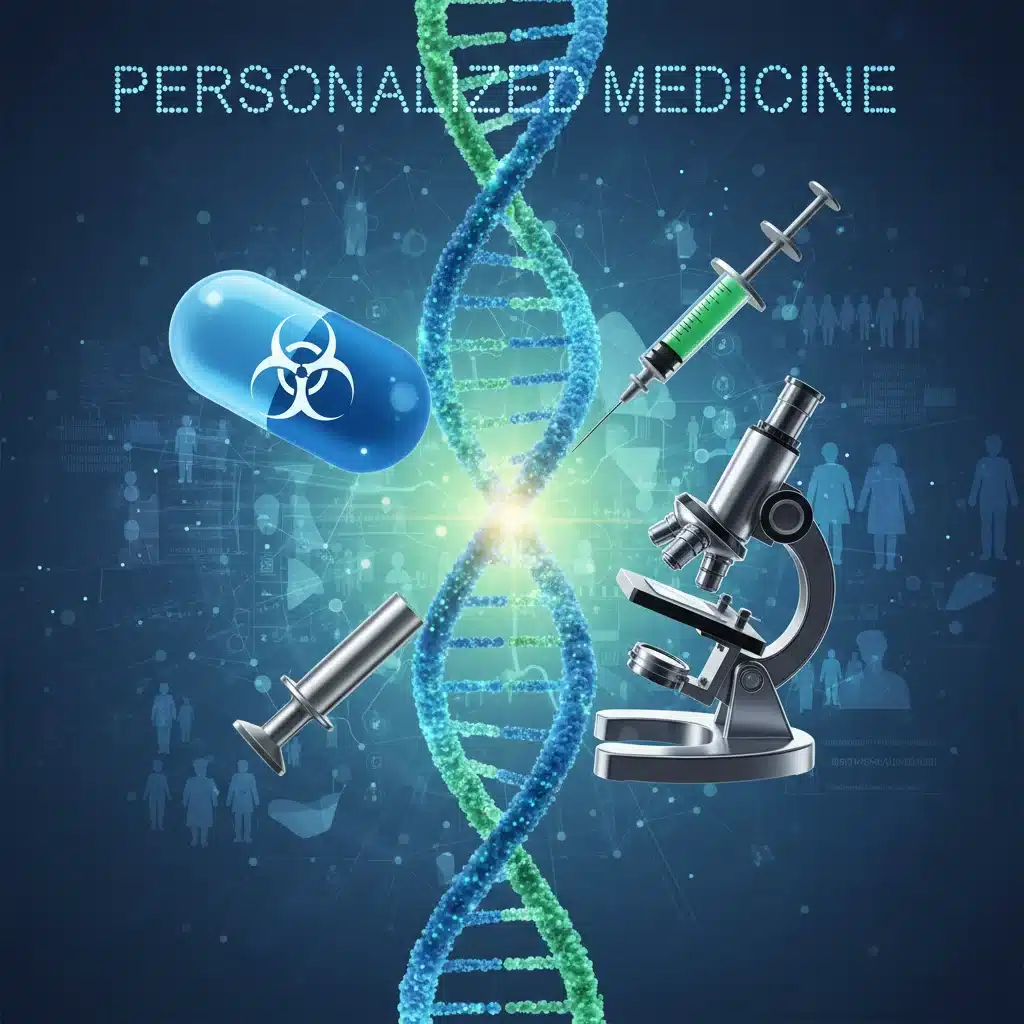
3. Personalized Medicine and Targeted Therapies
The shift from a ‘one-size-fits-all’ approach to medicine towards personalized and precision therapies is a defining trend. Advances in diagnostics, genomics, and bioinformatics enable healthcare providers to tailor treatments to an individual’s unique genetic makeup and disease profile. This leads to more effective treatments with fewer side effects, particularly in areas like oncology and rare diseases.
Personalized medicine is not just about drug development; it also involves companion diagnostics, digital health solutions, and data analytics. The biotech sector outlook for personalized medicine is driven by its potential to improve patient outcomes dramatically and create highly valuable niche markets. Investors are keenly watching companies that can integrate these various components to offer comprehensive, patient-centric solutions.
4. Biomanufacturing and Sustainable Biotech
Beyond drug development, biotechnology is increasingly being applied to industrial processes, agriculture, and environmental solutions. Biomanufacturing, which utilizes biological systems to produce materials, chemicals, and energy, is gaining traction as a sustainable alternative to traditional industrial methods. This includes everything from producing sustainable plastics to cultivating lab-grown meat.
The growing global emphasis on sustainability and circular economy principles positions biomanufacturing as a key area for future growth. The biotech sector outlook in this domain is fueled by consumer demand for eco-friendly products and corporate commitments to reduce carbon footprints. This diversification of biotech applications opens up new avenues for investment beyond traditional pharmaceuticals.
5. Digital Health and Telemedicine Integration
The convergence of digital technologies with healthcare, often referred to as digital health, continues to expand. This includes wearable devices, remote monitoring, mobile health applications, and telemedicine platforms. While not strictly ‘biotech’ in the traditional sense, digital health solutions are increasingly integrated with biotech products, enhancing drug delivery, patient adherence, and real-world data collection.
For the biotech sector outlook, digital health offers opportunities to improve clinical trial efficiency, provide better post-market surveillance, and create more holistic patient care models. Partnerships between biotech companies and digital health innovators are becoming more common, aiming to create synergistic solutions that leverage the strengths of both fields.
6. Microbiome Therapeutics
Research into the human microbiome – the trillions of microorganisms living in and on our bodies – has revealed its profound impact on health and disease. This understanding is paving the way for a new class of therapeutics that modulate the microbiome to treat a wide range of conditions, from gastrointestinal disorders to autoimmune diseases and even neurological conditions.
The biotech sector outlook for microbiome therapeutics is in its relatively early stages but holds immense promise. Companies are exploring live biotherapeutic products, fecal microbiota transplants, and small molecules that target microbial pathways. As our understanding of the microbiome deepens, so too will the opportunities for developing innovative and effective treatments.
Challenges and Risks in the Biotech Sector
While the opportunities are vast, the biotech sector is not without its challenges and risks. Investors must carefully consider these factors when evaluating potential investments.
High R&D Costs and Long Development Timelines
Drug development is notoriously expensive and time-consuming. Bringing a new drug from discovery to market can cost billions of dollars and take over a decade. The high failure rate in clinical trials adds to the financial risk. This inherent characteristic of the industry means that biotech investments often require significant capital and a long-term perspective.
Regulatory Hurdles and Market Access
Navigating the complex regulatory pathways of the FDA and other global agencies is a major challenge. Approval is never guaranteed, and even after approval, market access and reimbursement policies can significantly impact a drug’s commercial success. Changes in regulatory requirements or delays in approval processes can have substantial financial implications for biotech companies.
Intellectual Property Protection
The success of biotech companies heavily relies on strong intellectual property (IP) protection, primarily patents. However, the landscape of IP law is constantly evolving, and challenges to patents are common. Loss of key IP can severely impact a company’s competitive position and future revenue streams. Maintaining a robust IP portfolio is crucial for sustaining a positive biotech sector outlook for individual companies.
Competition and Pricing Pressures
The biotech market is highly competitive, with numerous companies vying for market share. The development of biosimilars and generics also adds competitive pressure once patent protection expires. Furthermore, public and governmental scrutiny over drug pricing continues to intensify, leading to potential price controls and reimbursement challenges that can affect profitability.

US Investment Decisions: Navigating the Biotech Landscape
For investors looking to capitalize on the promising biotech sector outlook, strategic decision-making is key. Here are some considerations for US investment decisions:
Due Diligence and Scientific Rigor
Thorough due diligence is paramount. Investors must assess the scientific merit of a company’s technology, the strength of its preclinical and clinical data, and the expertise of its scientific team. Understanding the underlying biology and the competitive landscape for specific indications is critical.
Management Team and Business Strategy
A strong management team with a proven track record in drug development and commercialization is a significant asset. A clear and executable business strategy, including a robust clinical development plan, regulatory strategy, and commercialization roadmap, is essential for de-risking investments.
Pipeline Diversity and Risk Mitigation
Companies with diversified pipelines across different therapeutic areas or stages of development are often less risky than those with a single asset. A diversified pipeline can mitigate the impact of a clinical trial failure and provide multiple shots on goal. Investors should also consider the stage of development – early-stage investments offer higher potential returns but also higher risk, while late-stage assets are closer to market but may have lower upside.
Market Opportunity and Unmet Medical Needs
Focusing on companies addressing large market opportunities and significant unmet medical needs can lead to higher returns. Therapies for rare diseases, oncology, neurological disorders, and autoimmune conditions often command premium pricing due to their transformative impact on patients’ lives.
Partnerships and Collaborations
Strategic partnerships with larger pharmaceutical companies can validate a biotech’s technology, provide non-dilutive funding, and offer access to extensive development and commercialization resources. These collaborations can be a strong indicator of a company’s potential and can significantly impact the biotech sector outlook for that specific entity.
Exit Strategies
Investors should also consider potential exit strategies, whether through an initial public offering (IPO), acquisition by a larger pharmaceutical company, or other liquidity events. The current M&A environment and public market appetite for biotech will influence these decisions.
The Future of Biotech: A Long-Term Perspective
Looking beyond the immediate 12-24 month horizon, the long-term biotech sector outlook remains incredibly promising. The pace of scientific discovery is unlikely to slow down, and our ability to understand and manipulate biological systems will continue to advance. Emerging areas such as synthetic biology, advanced diagnostics, and regenerative medicine are poised to create entirely new industries and therapeutic paradigms.
The convergence of biotechnology with other fields, such as nanotechnology, quantum computing, and advanced materials science, will unlock further potential. This interdisciplinary approach is fostering a new era of innovation, where solutions to complex health and environmental challenges are within reach. The demographic shifts of an aging global population will continue to drive demand for innovative healthcare solutions, ensuring a sustained need for biotech advancements.
Furthermore, the increasing global interconnectedness means that breakthroughs in one region can rapidly disseminate and benefit patients worldwide. International collaborations in research and development, as well as global regulatory alignment, will become increasingly important for maximizing the impact of biotech innovations. The ethical and societal implications of these advancements will also continue to be a critical area of discussion, shaping public perception and policy.
Investing in biotech is not merely about financial returns; it is also about contributing to human well-being and solving some of the most pressing global challenges. The sector embodies the spirit of innovation and the relentless pursuit of knowledge to improve lives. As such, the long-term positive trajectory of the biotech sector outlook is not just a projection, but a testament to humanity’s ongoing quest for a healthier and more sustainable future.
Conclusion: A Dynamic and Rewarding Frontier
The biotech sector outlook for the next 12 to 24 months presents a landscape rich with opportunities and challenges. While macroeconomic headwinds and regulatory complexities demand careful navigation, the underlying drivers of innovation – genomic medicine, AI, personalized therapies, and sustainable biomanufacturing – continue to propel the industry forward. US investment decisions in this sector will be guided by a thorough understanding of scientific rigor, market dynamics, and a clear vision for long-term impact.
For those willing to undertake the necessary due diligence and embrace the inherent risks, the biotech sector offers the potential for significant financial rewards and, more importantly, the chance to be part of a transformative journey that is redefining healthcare and our relationship with the biological world. The next phase of biotech evolution promises to be as exciting and impactful as any before it, solidifying its position as a critical engine of progress and a compelling frontier for investment.