Biotech Investing Strategies Q2 2026: Maximizing Returns

Biotech Investing Strategies for Q2 2026: Maximizing Returns Amidst Market Volatility
The biotechnology sector, a crucible of scientific innovation and financial opportunity, continues to captivate investors with its potential for groundbreaking discoveries and substantial returns. As we navigate into Q2 2026, the landscape of biotech investing strategies is more complex and dynamic than ever. Market volatility, driven by global economic shifts, regulatory changes, and the inherent risks of drug development, demands a sophisticated and adaptive approach. This comprehensive guide will delve into the critical biotech investing strategies necessary to not only weather the storms but to thrive and maximize returns in this exhilarating domain.
Understanding the nuances of the biotech market is paramount. Unlike traditional industries, biotechnology is characterized by long development cycles, high research and development (R&D) costs, and significant regulatory hurdles. However, the rewards for successful innovation can be astronomical, with new treatments and cures addressing unmet medical needs and transforming healthcare. For investors, this translates into a unique set of challenges and opportunities that require careful consideration.
Q2 2026 is poised to be a pivotal period. We are witnessing an acceleration in technological advancements, particularly in areas like gene editing, AI-driven drug discovery, and personalized medicine. These innovations are not just scientific marvels; they are powerful drivers of economic value, creating new market segments and disrupting existing paradigms. Therefore, any effective biotech investing strategies must account for these transformative trends.
This article aims to provide actionable insights for both seasoned biotech investors and newcomers. We will explore macroeconomic factors influencing the sector, identify high-growth sub-sectors, discuss risk mitigation techniques, and outline specific strategies for portfolio construction and management. Our goal is to equip you with the knowledge to make informed decisions and capitalize on the immense potential of the biotech industry in Q2 2026 and beyond.
Understanding the Current Biotech Landscape in Q2 2026
Before diving into specific biotech investing strategies, it’s crucial to grasp the prevailing market conditions. Q2 2026 is shaped by a confluence of factors that are both challenging and opportunistic. Global economic indicators, while showing signs of stabilization in some regions, remain uncertain in others. Inflationary pressures, interest rate policies, and geopolitical events can all have a significant ripple effect on investor sentiment and capital allocation within the biotech sector.
From a scientific perspective, the pace of innovation is relentless. Breakthroughs in CRISPR gene editing, mRNA technology, and CAR T-cell therapies continue to redefine the boundaries of medicine. These advancements are not isolated; they often build upon each other, creating synergistic opportunities for companies at the forefront of research. The regulatory environment also plays a critical role. Agencies like the FDA (U.S.), EMA (Europe), and PMDA (Japan) are constantly evaluating new frameworks for expedited approvals, real-world evidence utilization, and pricing mechanisms. Staying abreast of these regulatory shifts is a cornerstone of effective biotech investing strategies.
Furthermore, the M&A (Mergers and Acquisitions) landscape remains active. Larger pharmaceutical companies often look to acquire promising biotech firms to bolster their pipelines and gain access to innovative technologies. These M&A activities can lead to significant premiums for target companies, offering lucrative exit strategies for early investors. However, they also introduce an element of speculation and can impact the valuation of competitors.
Another key trend is the increasing integration of artificial intelligence (AI) and machine learning (ML) into drug discovery and development. AI is revolutionizing everything from target identification and compound screening to clinical trial design and patient stratification. Companies that effectively leverage AI are demonstrating enhanced efficiency, reduced costs, and accelerated timelines, making them attractive prospects for those employing forward-thinking biotech investing strategies.
Key Drivers and Headwinds
Drivers:
- Demographic Shifts: An aging global population and increasing prevalence of chronic diseases continue to fuel demand for new and improved healthcare solutions.
- Technological Advancements: Rapid progress in genomics, proteomics, gene editing, and AI is unlocking new therapeutic avenues.
- Unmet Medical Needs: Many diseases still lack effective treatments, creating significant market opportunities for innovative therapies.
- Increased R&D Spending: Both public and private investment in biomedical research remains robust, driving innovation.
Headwinds:
- Regulatory Hurdles: Stringent approval processes and evolving regulatory landscapes can delay market entry and increase costs.
- Clinical Trial Failures: The high failure rate of drugs in clinical trials represents a significant risk.
- Pricing Pressures: Increasing scrutiny over drug pricing from governments and insurers can impact profitability.
- Intellectual Property (IP) Risks: Patent challenges and expiring patents can erode competitive advantages.
- Economic Volatility: Broader economic downturns can lead to reduced capital availability and investor caution.
Identifying High-Growth Biotech Sub-Sectors for Q2 2026
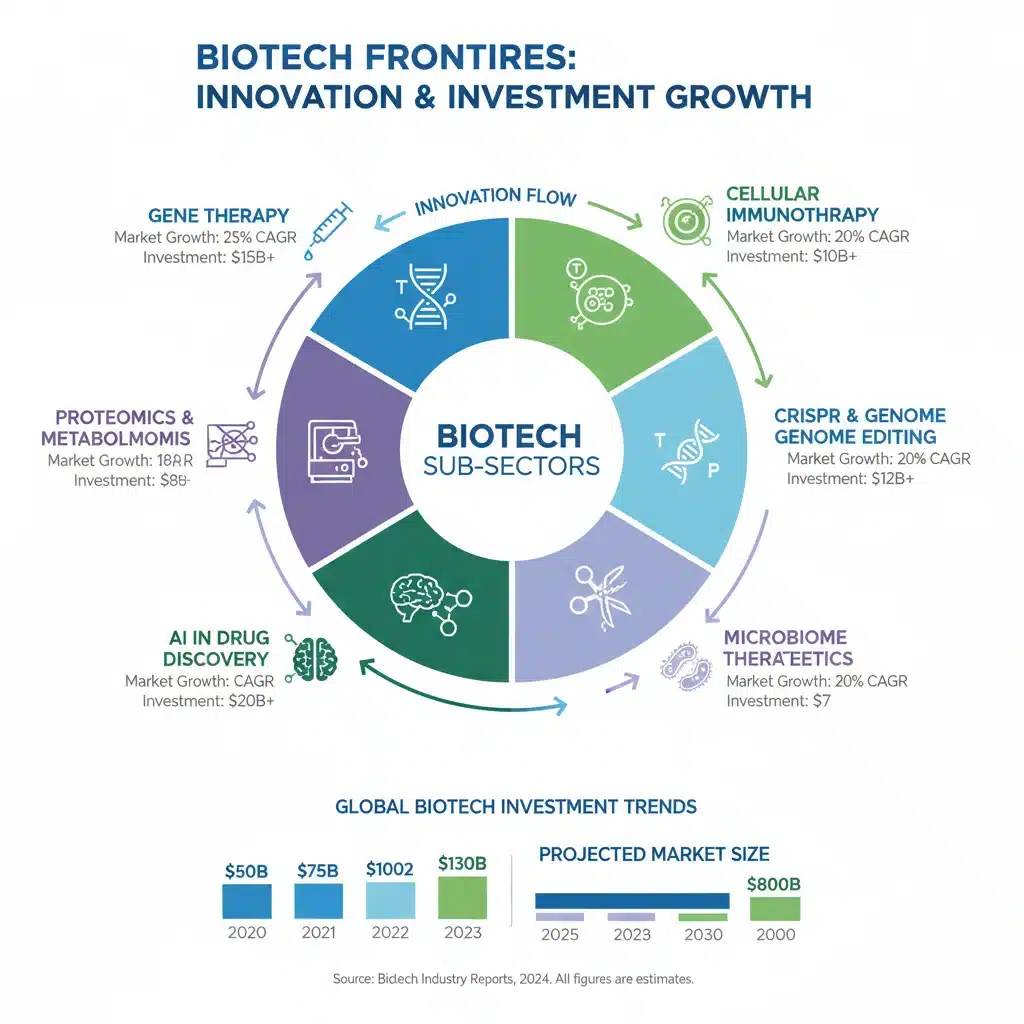
Within the vast biotechnology sector, certain sub-sectors are poised for exceptional growth in Q2 2026, driven by scientific breakthroughs, market demand, and investment trends. Focusing on these areas can significantly enhance your biotech investing strategies.
1. Gene and Cell Therapies
Gene and cell therapies continue to be at the forefront of medical innovation. These therapies, which involve modifying genes or cells to treat or prevent disease, hold immense promise for conditions previously considered untreatable. Q2 2026 is expected to see further advancements in gene editing technologies like CRISPR, as well as an expansion of approved CAR T-cell therapies for various cancers. Companies with strong pipelines in rare genetic disorders, oncology, and neurological conditions are particularly attractive. Investors should look for firms with proprietary platforms, robust clinical data, and strategic partnerships.
2. AI in Drug Discovery and Development
The integration of artificial intelligence and machine learning is transforming every stage of the drug development lifecycle. AI can rapidly analyze vast datasets, identify novel drug targets, optimize compound design, and even predict clinical trial outcomes. This not only accelerates the discovery process but also significantly reduces costs and failure rates. Companies that are successfully leveraging AI to enhance their R&D capabilities are likely to outperform. This sub-sector includes both dedicated AI drug discovery firms and traditional biotech companies that have heavily invested in AI infrastructure and talent.
3. Personalized Medicine and Diagnostics
Personalized medicine, which tailors medical treatment to the individual characteristics of each patient, is gaining significant traction. This approach relies heavily on advanced diagnostics, including genomics, proteomics, and liquid biopsies, to identify biomarkers that predict disease susceptibility, progression, and response to therapy. As our understanding of individual biological differences grows, the demand for targeted therapies and companion diagnostics will surge. Investing in companies developing innovative diagnostic platforms and precision therapeutics can be a key component of effective biotech investing strategies.
4. mRNA Technology Beyond Vaccines
While mRNA technology gained prominence with COVID-19 vaccines, its applications extend far beyond infectious diseases. Researchers are exploring mRNA for cancer immunotherapies, rare diseases, and even cardiovascular conditions. Companies that are innovating in these broader applications of mRNA technology, particularly those developing novel delivery systems or targeting new disease areas, present compelling investment opportunities. The scalability and adaptability of mRNA platforms make them a powerful tool for rapid therapeutic development.
5. Biosimilars and Generics for Biologics
As patents expire for blockbuster biologic drugs, the market for biosimilars is set to expand dramatically. Biosimilars are highly similar versions of approved biologic medicines, offering cost-effective alternatives and increasing patient access. While perhaps less glamorous than novel drug discovery, the biosimilar market offers a more predictable revenue stream and lower R&D risk compared to original drug development. Companies with robust manufacturing capabilities and a strong portfolio of biosimilar candidates can provide stable growth within a diversified biotech investing strategies portfolio.
Essential Biotech Investing Strategies for Risk Mitigation
The biotech sector, while offering high rewards, also comes with inherent risks. Effective biotech investing strategies must incorporate robust risk mitigation techniques to protect capital and ensure sustainable growth. Understanding and managing these risks is just as important as identifying promising opportunities.
1. Diversification Across Sub-Sectors and Stages
Never put all your eggs in one basket. Diversifying your biotech portfolio across different sub-sectors (as discussed above) helps spread risk. Furthermore, consider diversifying by development stage: include some established, revenue-generating companies alongside promising clinical-stage biotechs. Early-stage companies offer higher upside but also higher risk, while late-stage or commercialized companies provide more stability. A balanced approach can smooth out portfolio volatility.
2. Thorough Due Diligence on Science and Management
Investing in biotech requires more than just financial analysis. A deep understanding of the underlying science, the clinical trial data, and the regulatory pathway is crucial. Assess the validity of the scientific approach, the strength of the intellectual property, and the competitive landscape. Equally important is evaluating the management team. Look for experienced leaders with a proven track record in drug development, clinical trials, and commercialization. Strong scientific advisory boards are also a positive indicator.
3. Understanding Clinical Trial Milestones and Catalysts
Biotech stock prices are highly sensitive to clinical trial results and regulatory decisions. Keep a close watch on upcoming data readouts, FDA advisory committee meetings, and regulatory approval dates. These events act as significant catalysts (or detractors) for stock performance. Develop a calendar of these milestones for your portfolio companies and understand the potential impact of their outcomes. This proactive approach is a cornerstone of savvy biotech investing strategies.
4. Monitoring Regulatory and Policy Changes
Government policies and regulatory frameworks can profoundly impact the biotech industry. Changes in drug pricing legislation, reimbursement policies, or expedited approval pathways can create headwinds or tailwinds. Stay informed about legislative developments in key markets (U.S., EU, China, etc.) and consider how they might affect the profitability and market access of your investments. Regulatory expertise within a company’s management team is a significant asset.
5. Capital Allocation and Position Sizing
Given the inherent volatility, careful capital allocation is essential. Avoid over-concentrating your portfolio in a single high-risk biotech stock. Determine appropriate position sizes based on your risk tolerance and the perceived risk profile of each investment. For early-stage biotechs, smaller position sizes may be prudent, reserving larger allocations for more established or de-risked companies. This disciplined approach to position sizing is a vital risk management tool in biotech investing strategies.
Building a Resilient Biotech Portfolio for Q2 2026
Constructing a resilient biotech portfolio involves a blend of strategic selection, meticulous monitoring, and a long-term perspective. The goal is to create a portfolio that can withstand market fluctuations while capturing the substantial growth potential of the sector.
1. Core Holdings vs. Satellite Opportunities
A robust biotech portfolio often consists of ‘core’ holdings and ‘satellite’ opportunities. Core holdings should be larger, more established biotech or pharmaceutical companies with diversified pipelines, stable revenues, and strong financial health. These companies provide a foundation of stability. Satellite opportunities are smaller, clinical-stage biotechs with high-potential drugs or platforms, offering significant upside but also higher risk. A sensible allocation might be 60-70% in core holdings and 30-40% in satellite opportunities, adjusted to your personal risk tolerance.
2. Emphasizing Innovation with Commercial Potential
While scientific innovation is exciting, investors must focus on innovation that has a clear path to commercialization and market adoption. A groundbreaking discovery is only valuable if it can be successfully developed into an approved product that addresses a significant market need and can be reimbursed. Evaluate the market size for a potential therapy, the competitive landscape, and the company’s strategy for commercialization. This pragmatic approach ensures that your biotech investing strategies are grounded in economic reality.
3. Utilizing ETFs and Mutual Funds for Broader Exposure
For investors who prefer a more diversified and less hands-on approach, biotech-focused Exchange Traded Funds (ETFs) and mutual funds can be excellent options. These funds provide exposure to a basket of biotech companies, spreading risk across multiple firms and sub-sectors. They are managed by professionals who conduct the necessary due diligence, making them suitable for those who may not have the time or expertise for individual stock picking. Research funds that align with your investment philosophy and risk profile.

4. Long-Term Horizon and Patience
Biotech investing is not for the faint of heart or those seeking quick returns. Drug development is a lengthy process, often taking 10-15 years from discovery to market. Clinical trials can span several years, and regulatory approvals are never guaranteed. Therefore, a long-term investment horizon is crucial. Patience is a virtue in this sector, as significant returns often materialize over several years as companies advance their pipelines and achieve key milestones. Impulsive decisions based on short-term market noise can be detrimental to your biotech investing strategies.
5. Staying Informed and Adaptive
The biotech landscape is constantly evolving. New scientific discoveries, emerging technologies, regulatory shifts, and competitive dynamics can rapidly alter investment theses. Continuously educate yourself, follow industry news, read scientific publications, and attend investor conferences. Be prepared to adapt your portfolio as new information emerges. Flexibility and a willingness to reassess your investments are key attributes of successful biotech investors.
The Role of Due Diligence in Biotech Investing Strategies
Effective due diligence is the bedrock of successful biotech investing strategies. Given the specialized nature of the industry, this process extends beyond traditional financial analysis. It requires a multidisciplinary approach to truly understand the potential and pitfalls of a biotech investment.
Scientific and Clinical Evaluation
This is arguably the most critical aspect. Investors must evaluate the scientific rationale behind a company’s drug candidates. Is the mechanism of action sound? Is there strong preclinical data? For drugs in clinical trials, a deep dive into trial design, patient population, endpoints, and statistical significance of results is essential. Understand the safety profile and efficacy compared to existing treatments. Look for publications in peer-reviewed journals and presentations at reputable scientific conferences. Consulting with medical professionals or scientific advisors can provide invaluable insights.
Regulatory Pathway Assessment
Understanding the regulatory journey for a drug is paramount. What phase is the drug in? What are the typical requirements for approval in key markets? Has the company engaged with regulatory bodies? Are there any fast-track designations or orphan drug statuses that could expedite approval? A clear understanding of the regulatory hurdles and timelines can significantly de-risk an investment. Companies with experienced regulatory affairs teams are often better positioned for success.
Intellectual Property (IP) Analysis
A biotech company’s intellectual property is its most valuable asset. Thoroughly investigate the strength and breadth of its patent portfolio. Are the patents robust enough to protect the technology from competitors? When do key patents expire? Are there any ongoing patent disputes? A strong IP position provides a competitive moat and can be a significant determinant of long-term value. This is a non-negotiable part of any sound biotech investing strategies.
Management Team and Board Evaluation
The caliber of the management team can make or break a biotech company. Look for executives with a proven track record in drug development, clinical operations, regulatory approvals, and commercialization. A strong scientific founder, experienced CEO, and a board of directors with relevant industry expertise are positive indicators. Assess their ability to raise capital, manage R&D, and navigate complex partnerships. Transparency and clear communication from management are also crucial.
Financial Health and Burn Rate
Biotech companies, especially those in early clinical stages, often operate at a loss for extended periods. It’s vital to assess their cash position, burn rate (how quickly they consume cash), and their ability to raise additional capital. Do they have enough cash to fund operations through key milestones? What are their financing plans? Dilution from future stock offerings is a common risk, so understanding a company’s capital needs is essential for effective biotech investing strategies.
The Future of Biotech Investing: Q2 2026 and Beyond
Looking beyond Q2 2026, the trajectory of biotech investing appears to be one of sustained innovation and increasing complexity. The convergence of biology, technology, and data science will continue to drive unprecedented advancements. Investors who adopt a forward-looking perspective and embrace continuous learning will be best positioned to capitalize on these trends.
We anticipate further integration of AI and machine learning, not just in drug discovery but across the entire healthcare ecosystem, from diagnostics to personalized treatment plans and even patient monitoring. The ethical considerations surrounding these technologies will also become more prominent, requiring careful navigation from both companies and regulators.
Global health challenges, such as emerging infectious diseases and antibiotic resistance, will continue to spur innovation in vaccine development and novel antimicrobial therapies. The lessons learned from recent pandemics will likely lead to more agile and responsive biotech ecosystems.
The trend towards precision medicine will intensify, with genetic and molecular profiling becoming standard practice in many therapeutic areas. This will create a greater demand for highly targeted therapies and advanced companion diagnostics. Companies that can effectively leverage multi-omics data (genomics, proteomics, metabolomics) to identify and treat diseases will be highly valued.
Finally, the importance of environmental, social, and governance (ESG) factors in investing is growing across all sectors, and biotech is no exception. Companies with strong ESG practices, including ethical clinical trials, sustainable manufacturing, and equitable access to medicines, may attract more capital and enjoy better long-term performance. Integrating ESG considerations into your biotech investing strategies can provide an additional layer of due diligence and align investments with broader societal values.
Conclusion: Mastering Biotech Investing Strategies for Long-Term Success
Biotech investing in Q2 2026 offers a landscape rich with opportunity, but it demands diligence, patience, and a well-defined strategy. By understanding the current market dynamics, identifying high-growth sub-sectors like gene therapies and AI in drug discovery, and implementing robust risk mitigation techniques, investors can position themselves for substantial returns. Diversification, thorough scientific and financial due diligence, and a keen eye on regulatory developments are not just recommendations; they are imperatives for success.
The biotechnology sector is a testament to human ingenuity, constantly pushing the boundaries of what’s medically possible. For investors willing to do their homework and adopt a long-term perspective, the rewards can be transformative, both financially and in terms of contributing to advancements that improve global health. Embrace these biotech investing strategies, stay informed, and prepare to navigate the exciting, volatile, and ultimately rewarding world of biotechnology.