2026 Biotech Workforce Trends: A Deep Dive into US Employment Shifts
2026 Biotech Workforce Trends: A Deep Dive into US Employment Shifts
The biotechnology sector in the United States is a dynamic and rapidly evolving industry, constantly pushing the boundaries of scientific discovery and technological innovation. As we look towards 2026, understanding the biotech workforce trends becomes paramount for businesses, job seekers, and educational institutions alike. The landscape of biotech employment is undergoing significant shifts, driven by advancements in genomics, personalized medicine, artificial intelligence, and sustainable biotechnology. This comprehensive analysis will delve into the critical employment shifts, emerging skill demands, and regional growth patterns that will define the US biotech workforce in the coming years.
The biotechnology industry, often hailed as the future of medicine, agriculture, and environmental solutions, continues its impressive growth trajectory. This expansion is not merely in terms of research output or market capitalization but also in its demand for a highly skilled and adaptable workforce. The biotech workforce trends for 2026 indicate a robust demand for specialized talent, but also a transformation in the types of roles and competencies deemed essential. Companies are increasingly seeking individuals who can navigate complex scientific challenges, leverage cutting-edge technologies, and contribute to a collaborative, interdisciplinary environment.
The Current State of the Biotech Workforce: A Foundation for Future Trends
Before we project into 2026, it’s crucial to understand the foundational elements of the current US biotech workforce. The industry is characterized by a high concentration of Ph.D. and Master’s level professionals, particularly in research and development roles. Major hubs like Boston, San Francisco, and San Diego have historically dominated the talent pool, attracting significant investment and fostering innovation ecosystems. However, recent years have seen a broadening of this geographical concentration, with emerging biotech clusters gaining prominence across the nation.
The demand for scientific expertise has been consistently high, with roles in molecular biology, biochemistry, immunology, and pharmacology forming the bedrock of biotech employment. Yet, the rapid pace of technological change means that these traditional roles are being augmented and, in some cases, redefined by new demands. Automation, data science, and computational biology are no longer niche areas but integral components of modern biotech research and development. This ongoing evolution sets the stage for the significant biotech workforce trends we anticipate in 2026.
Key Employment Shifts in the 2026 Biotech Workforce
Looking ahead to 2026, several key employment shifts will reshape the US biotech workforce. These shifts are driven by both internal industry developments and broader macroeconomic factors.
1. The Rise of Data-Driven Biotech Roles
The explosion of ‘omics’ data (genomics, proteomics, metabolomics) and the increasing sophistication of biological assays have created an insatiable demand for professionals who can manage, analyze, and interpret vast datasets. Bioinformatics, computational biology, and data science will be at the forefront of this shift. We expect a significant increase in roles such as bioinformatics scientists, data engineers, machine learning specialists for drug discovery, and biostatisticians. These roles are critical for accelerating research, identifying novel therapeutic targets, and personalizing treatment strategies.
The integration of artificial intelligence (AI) and machine learning (ML) into every stage of the drug discovery and development process will further amplify this trend. AI-driven platforms can rapidly screen compounds, predict drug efficacy, and optimize clinical trials, requiring a workforce adept at both biological sciences and advanced analytical techniques. This fusion of disciplines is a defining characteristic of future biotech workforce trends.
2. Specialization in Gene and Cell Therapies
Gene and cell therapies represent a revolutionary frontier in medicine, offering potential cures for previously untreatable diseases. As more of these therapies move through clinical trials and gain regulatory approval, the demand for specialized talent in their development, manufacturing, and delivery will skyrocket. This includes roles for cell culture scientists, viral vector specialists, gene editing experts, and quality control professionals with specific experience in advanced therapeutic medicinal products (ATMPs).
Manufacturing capabilities for these complex therapies are still maturing, leading to a critical need for process development scientists and manufacturing engineers who can scale up production while adhering to stringent regulatory standards. The specialized nature of these roles means that talent acquisition will be highly competitive, underscoring the importance of targeted training and recruitment strategies.
3. Expansion of Biomanufacturing and Process Development
Beyond gene and cell therapies, the broader biomanufacturing sector is poised for significant growth. As more biologics and biosimilars enter the market, there will be an increased need for skilled professionals in process development, manufacturing operations, quality assurance, and regulatory affairs. This includes roles for fermentation scientists, purification specialists, bioprocess engineers, and quality control analysts.
The push for localized manufacturing and supply chain resilience, intensified by recent global events, will further drive investment in US-based biomanufacturing facilities. This investment translates directly into job creation across various skill levels, from highly specialized engineers to skilled technicians, contributing substantially to the overall biotech workforce trends.
4. The Growing Importance of Digital Health and Diagnostics
The convergence of biotechnology with digital health is creating new employment categories. Wearable sensors, remote monitoring devices, and advanced diagnostic tools are generating vast amounts of patient data. Professionals who can develop, validate, and integrate these technologies, as well as interpret the resulting data for clinical insights, will be in high demand. This includes roles for biomedical engineers, software developers with a biological background, and clinical data scientists.
The rapid expansion of point-of-care diagnostics and companion diagnostics also requires a workforce skilled in assay development, validation, and regulatory compliance. These innovations are making healthcare more accessible and personalized, and the biotech workforce must evolve to support these advancements.
Emerging Skill Demands for the 2026 Biotech Workforce
The shifts in employment naturally lead to changes in the essential skills required for success in the biotech industry. While foundational scientific knowledge remains critical, a new set of competencies is gaining prominence.
1. Interdisciplinary Expertise
The days of siloed scientific disciplines are rapidly fading. The most valuable biotech professionals in 2026 will possess interdisciplinary expertise, bridging biology with engineering, computer science, and even business acumen. A molecular biologist who understands basic coding, or a data scientist with a grasp of biological pathways, will be highly sought after. Educational programs need to adapt to foster this cross-disciplinary thinking.
2. Data Science and Computational Skills
As highlighted earlier, proficiency in data science tools and methodologies is non-negotiable. This includes programming languages like Python and R, experience with big data platforms, statistical modeling, and machine learning algorithms. Understanding how to extract meaningful insights from complex biological data is a core competency for almost every role, from bench scientists to clinical researchers.
3. Automation and Robotics Proficiency
Laboratories are becoming increasingly automated, with robots performing repetitive tasks and handling high-throughput screening. A successful biotech workforce will need individuals who can program, operate, and maintain these sophisticated automated systems. This includes knowledge of laboratory automation platforms, robotics, and process control systems.
4. Regulatory and Quality Assurance Acumen
Given the highly regulated nature of the biotech industry, a deep understanding of regulatory pathways (FDA, EMA, etc.), quality management systems (cGMP, GLP), and compliance standards is crucial. This applies not just to dedicated regulatory affairs professionals but also to scientists and engineers involved in product development and manufacturing. Navigating the complex regulatory landscape is essential for bringing innovative therapies to market.
5. Critical Thinking, Problem-Solving, and Adaptability
Beyond technical skills, soft skills remain incredibly important. The biotech industry is characterized by complex challenges and constant innovation. Professionals must possess strong critical thinking abilities, be adept at problem-solving, and demonstrate a high degree of adaptability to new technologies and scientific paradigms. The ability to learn continuously and embrace change will be a defining trait of successful biotech professionals in 2026.
Regional Growth and Emerging Biotech Hubs
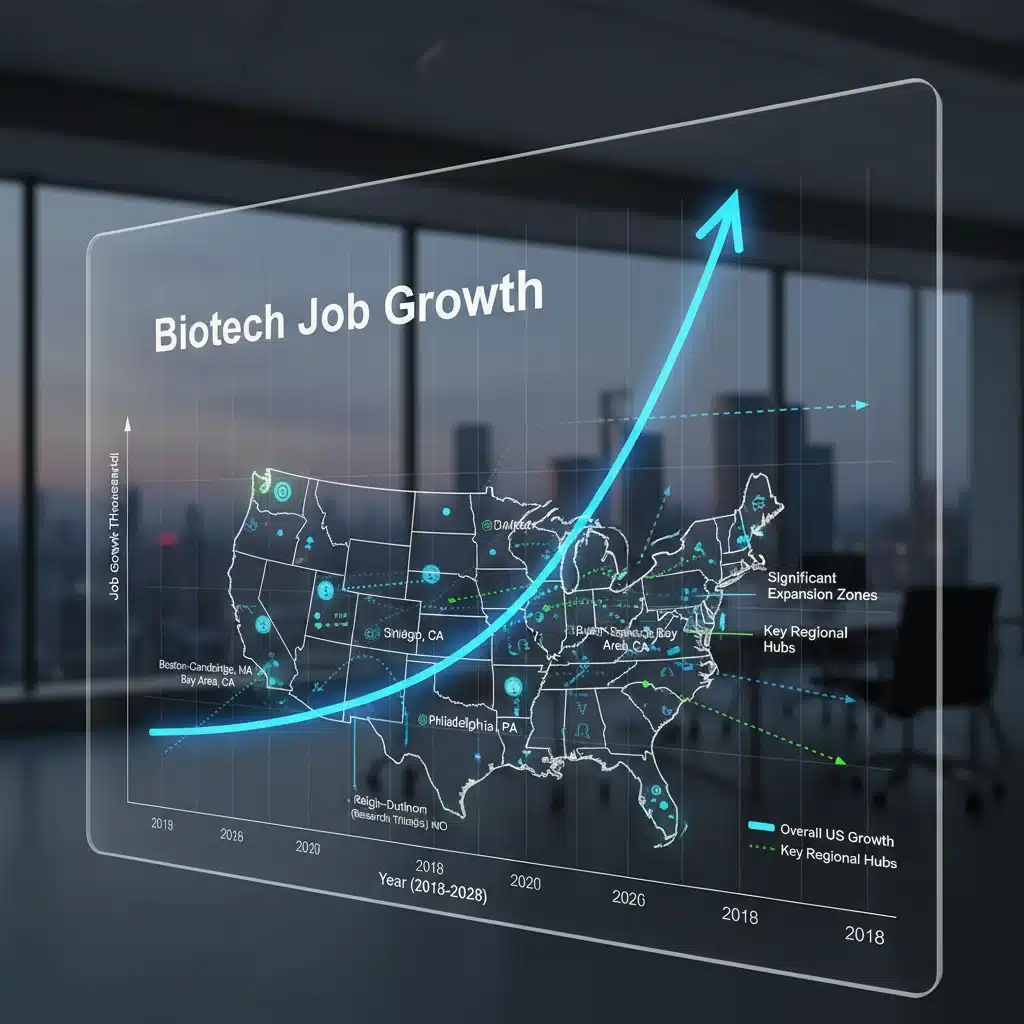
While established biotech hubs like Boston/Cambridge, the San Francisco Bay Area, and San Diego will continue to thrive, biotech workforce trends for 2026 also point to the rise of new and expanding regional clusters across the US.
1. Sustained Growth in Traditional Hubs
Boston/Cambridge remains a global powerhouse, driven by academic research, venture capital, and a dense network of pharmaceutical and biotech companies. The demand for talent here will continue unabated, particularly in cutting-edge areas like gene therapy, CRISPR technology, and AI-driven drug discovery. Similarly, the San Francisco Bay Area, with its strong ties to venture capital and technology, will see continued growth, especially in areas integrating biotech with software and data science.
2. Expansion in the Research Triangle Park (RTP), North Carolina
RTP has solidified its position as a major biotech hub, particularly in biomanufacturing and agricultural biotechnology. Its strong university presence (UNC-Chapel Hill, Duke, NC State) provides a consistent talent pipeline. We anticipate continued expansion in bioprocessing, gene therapy manufacturing, and contract research organizations (CROs) in this region.
3. Emerging Clusters in the Midwest and South
Cities like St. Louis, Missouri (with its focus on plant and agricultural biotechnology), and Houston, Texas (leveraging its medical center and energy sector for bio-energy and medical device innovation), are experiencing significant growth. Philadelphia, Pennsylvania, is also rapidly growing as a hub for cell and gene therapy manufacturing. These regions offer a lower cost of living and a growing ecosystem of startups and established companies, making them increasingly attractive for biotech professionals.
4. The Pacific Northwest’s Niche Strengths
Seattle, Washington, continues to be a strong center for immunology, oncology, and global health, driven by institutions like Fred Hutchinson Cancer Research Center and the University of Washington. The region’s focus on innovative therapeutic platforms will ensure a steady demand for specialized scientific talent.
Challenges and Opportunities in Talent Acquisition
The projected biotech workforce trends for 2026 present both significant opportunities and considerable challenges for talent acquisition.
Challenges:
- Talent Shortages: The demand for highly specialized skills, particularly in bioinformatics, gene/cell therapy manufacturing, and AI, often outpaces the supply of qualified candidates.
- Competitive Compensation: The scarcity of top talent drives up salaries and benefits, putting pressure on smaller companies and startups.
- Retention: High demand means employees have many options, making retention a key challenge for employers.
- Diversity and Inclusion: Ensuring a diverse and inclusive workforce remains a critical challenge, requiring proactive strategies to attract and retain talent from underrepresented groups.
Opportunities:
- Upskilling and Reskilling: Investing in internal training programs can help bridge skill gaps and develop existing employees for new roles.
- Academic-Industry Partnerships: Collaborations with universities and community colleges can create tailored educational programs that align with industry needs, fostering a robust talent pipeline.
- Remote Work and Hybrid Models: While much of biotech requires on-site lab work, certain roles (e.g., bioinformatics, data science, regulatory affairs) can be performed remotely, expanding the talent pool beyond traditional geographic hubs.
- Global Talent Pool: Attracting international talent, particularly for highly specialized scientific and technical roles, can help alleviate domestic shortages.

Strategies for Navigating the 2026 Biotech Workforce Landscape
To thrive amidst these evolving biotech workforce trends, stakeholders must adopt proactive and strategic approaches.
For Biotech Companies:
- Invest in Continuous Learning: Establish robust internal training and development programs to upskill current employees in areas like data science, AI, and advanced biomanufacturing techniques.
- Foster Interdisciplinary Collaboration: Design organizational structures and workflows that encourage collaboration between different scientific and technical disciplines.
- Strengthen Academic Partnerships: Collaborate with universities to shape curricula, offer internships, and sponsor research that aligns with future talent needs.
- Embrace Flexible Work Models: Where feasible, offer remote or hybrid work options to attract a wider pool of talent, especially for roles that don’t require constant lab presence.
- Prioritize DEI: Implement comprehensive diversity, equity, and inclusion initiatives to attract and retain a broader range of perspectives and talent.
- Optimize Employer Branding: Showcase company culture, innovative projects, and career growth opportunities to attract top candidates in a competitive market.
For Job Seekers and Professionals:
- Develop Interdisciplinary Skills: Seek opportunities to gain expertise in complementary fields, such as combining a biology background with data science or engineering.
- Master Data and Computational Tools: Become proficient in programming languages (Python, R), statistical analysis, and machine learning concepts.
- Stay Abreast of New Technologies: Continuously learn about emerging technologies like CRISPR, AI in drug discovery, and advanced biomanufacturing processes.
- Network Actively: Engage with industry professionals, attend conferences, and join professional organizations to stay informed about opportunities and trends.
- Cultivate Soft Skills: Enhance critical thinking, problem-solving, communication, and teamwork abilities, as these are increasingly valued.
For Educational Institutions:
- Revamp Curricula: Design programs that integrate biology, computer science, engineering, and data analytics.
- Offer Specialized Training: Develop certifications and graduate programs focused on high-demand areas like gene therapy manufacturing, bioinformatics, and AI in biotech.
- Facilitate Industry Internships: Create strong internship and co-op programs to provide students with practical, real-world experience.
- Invest in Modern Infrastructure: Equip labs with the latest automation and computational tools to prepare students for modern biotech environments.
The Role of Government and Policy in Shaping the Biotech Workforce
Government policies and funding initiatives play a crucial role in shaping the biotech workforce trends. Continued investment in basic scientific research through agencies like the NIH and NSF is foundational. Furthermore, policies that support STEM education, provide incentives for biomanufacturing within the US, and streamline regulatory processes can significantly impact workforce development.
Immigration policies that attract and retain highly skilled international scientists and engineers are also vital for maintaining the US’s competitive edge in biotechnology. Collaborative efforts between government, industry, and academia are essential to ensure a robust and future-ready biotech workforce.
Conclusion: A Future of Innovation and Opportunity
The biotech workforce trends for 2026 paint a picture of an industry on the cusp of transformative growth, driven by scientific breakthroughs and technological integration. The demand for highly skilled professionals will intensify, with a particular emphasis on interdisciplinary expertise, data science proficiency, and specialized knowledge in areas like gene and cell therapies and advanced biomanufacturing. While challenges in talent acquisition and retention will persist, proactive strategies involving continuous learning, academic-industry partnerships, and a focus on diversity will be crucial for success.
For individuals, this heralds a future rich with career opportunities, provided they are willing to adapt, learn new skills, and embrace the interdisciplinary nature of modern biotechnology. For companies, it necessitates strategic investments in talent development and a commitment to fostering innovative and inclusive work environments. As the US biotech sector continues to lead global innovation, its workforce will be the engine driving progress, shaping the future of health, agriculture, and environmental sustainability for generations to come.