Biotech Startup Success: Incubator vs. Accelerator US 2026

In the dynamic and rapidly evolving landscape of biotechnology, emerging startups face a critical juncture: how to transform groundbreaking scientific discoveries into viable, market-ready solutions. The journey from concept to commercialization is fraught with challenges, from securing initial funding and navigating complex regulatory pathways to building a skilled team and scaling operations. For many, the answer lies in leveraging the specialized support structures offered by the US startup ecosystem: biotech incubators and accelerators. But for a biotech startup aiming for significant growth in 2026, which pathway offers the best opportunities? Understanding the nuanced differences between these programs is paramount to making an informed decision that can profoundly impact a startup’s trajectory.
The United States continues to be a global powerhouse for biotechnology innovation, driven by robust venture capital, world-class research institutions, and a supportive regulatory environment. This fertile ground has led to the proliferation of various support programs designed to nurture early-stage companies. However, the terms ‘incubator’ and ‘accelerator’ are often used interchangeably, leading to confusion among aspiring biotech entrepreneurs. While both aim to foster the growth of new ventures, their methodologies, timelines, resource offerings, and ultimate goals diverge significantly. This comprehensive guide will delve deep into the characteristics of each, providing a clear framework for biotech startups to evaluate their options and choose the program best suited for their unique needs and ambitious goals for 2026 and beyond.
Defining the Landscape: Biotech Incubators Explained
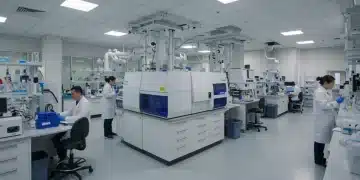
A biotech incubator, at its core, is a nurturing environment designed to support early-stage biotech companies over a longer period, often without a fixed endpoint. Think of it as a scientific greenhouse, providing the optimal conditions for delicate seedlings to take root and grow strong before they are exposed to the harsher realities of the market. The primary focus of a biotech incubator is on providing foundational resources and a stable environment where scientific research and initial product development can thrive. This typically includes access to specialized laboratory facilities, expensive equipment, shared administrative services, and a collaborative community of fellow scientists and entrepreneurs.
Key Characteristics of Biotech Incubators:
- Long-Term Engagement: Unlike accelerators, incubators often have flexible, open-ended programs. Startups might reside in an incubator for several months to several years, depending on their development cycle and specific needs. This extended timeline is particularly beneficial for biotech, where research and development (R&D) phases are inherently lengthy and require significant experimental work.
- Focus on R&D and Validation: The emphasis is heavily on scientific validation, proof-of-concept, and early-stage product development. Incubators provide the infrastructure to conduct experiments, refine methodologies, and generate preliminary data crucial for attracting future funding and partnerships.
- Physical Infrastructure: A defining feature is the provision of wet labs, cleanrooms, specialized bioinformatics tools, and other critical infrastructure that would be prohibitively expensive for individual startups to acquire. This shared resource model significantly reduces overhead costs and accelerates experimental work.
- Community and Collaboration: Incubators foster a strong sense of community among residents. This allows for informal knowledge sharing, peer mentorship, and potential collaborations among companies working on diverse but related scientific problems.
- Limited or No Equity Stake: Many incubators operate on a fee-for-service model (renting lab space, equipment usage fees) or are government-funded/university-affiliated, meaning they often do not take an equity stake in the companies they support. If equity is taken, it is typically a very small percentage compared to accelerators.
- Mentorship and Business Support: While not as intensive or structured as in accelerators, incubators do offer access to mentors, advisors, and business development resources. This support often focuses on scientific strategy, intellectual property (IP) protection, and grant writing.
Who Benefits Most from a Biotech Incubator?
Biotech incubators are ideal for:
- Early-Stage Research Teams: Companies still in the discovery phase, needing extensive lab work to validate their scientific hypotheses or develop a minimum viable product (MVP).
- Academic Spin-offs: University-based research projects looking to commercialize their findings but require significant infrastructure and time to transition from academia to a commercial entity.
- Capital-Constrained Startups: Those with limited initial funding who cannot afford to set up their own state-of-the-art laboratory facilities.
- Deep Tech Ventures: Companies working on highly complex scientific problems that require long R&D cycles before they are ready for rapid scaling.
In essence, a biotech incubator provides the necessary time, space, and tools for a scientific idea to mature into a robust, validated technology, laying a strong foundation for future growth. It’s a place where scientific rigor meets early-stage entrepreneurial ambition, allowing for methodical progress without the immediate pressure of rapid market entry.
Understanding Biotech Accelerators: The Fast Track to Growth
In stark contrast to incubators, biotech accelerators are designed for speed and rapid growth. They are intensive, fixed-term programs that provide a concentrated burst of resources, mentorship, and funding to propel early-stage companies towards significant milestones, typically culminating in a ‘Demo Day’ where startups pitch to investors. Accelerators are like a rocket booster for companies that have already established a foundational technology or proof-of-concept and are ready to execute on a rapid business development and fundraising strategy.
Key Characteristics of Biotech Accelerators:
- Fixed-Term and Intensive: Most accelerator programs run for a specific duration, typically 3 to 6 months. This intense period demands full commitment from the startup team, often requiring them to relocate to the accelerator’s facilities.
- Focus on Business Development and Scaling: The primary goal is to accelerate the business aspects of the startup. This includes refining business models, developing go-to-market strategies, securing intellectual property, building strong teams, and preparing for fundraising.
- Seed Funding and Equity Stake: Accelerators almost always provide a small amount of seed funding (e.g., $50,000 to $200,000) in exchange for an equity stake (typically 5-10%) in the company. This initial capital is crucial for operational expenses during the program.
- Structured Curriculum and Mentorship: Programs feature a highly structured curriculum with workshops on various business topics (finance, marketing, legal, sales), regular one-on-one mentorship from experienced entrepreneurs, industry experts, and investors.
- Network Access: A major draw of accelerators is unparalleled access to a powerful network of investors, corporate partners, industry leaders, and potential customers. This network is invaluable for future partnerships, fundraising, and market penetration.
- Demo Day: The program typically culminates in a Demo Day, where participating startups present their progress and pitch their business to a curated audience of venture capitalists, angel investors, and strategic partners. This is often the primary mechanism for securing follow-on funding.
- Less Emphasis on Physical Labs: While some biotech accelerators may offer access to shared lab space, their core value proposition is not primarily physical infrastructure. They often expect companies to have completed significant lab work before joining.
Who Benefits Most from a Biotech Accelerator?
Biotech accelerators are ideal for:
- Validated Concepts/MVPs: Companies that have already achieved significant scientific milestones, proven their technology’s feasibility, or developed a working prototype/MVP.
- Fundraising-Ready Startups: Those preparing for their seed or Series A funding rounds and need to refine their pitch, build investor relationships, and demonstrate rapid traction.
- Market-Oriented Teams: Companies with a clear vision for commercialization and a team ready to execute aggressively on business development and market entry strategies.
- Teams Seeking Intensive Mentorship: Entrepreneurs looking for hands-on guidance from seasoned professionals and a strong push to refine their business model and strategy.
Accelerators are about intense focus and rapid execution. They are designed to take a promising biotech venture and quickly position it for significant investment and commercial scale-up, often compressing years of organic growth into a few months.
Biotech Startup Incubator vs. Accelerator: A Comparative Analysis for 2026
To help biotech startups make an informed decision for their 2026 growth strategy, let’s directly compare the key aspects of incubators and accelerators:
| Feature | Biotech Incubator | Biotech Accelerator |
|---|---|---|
| Program Duration | Flexible, long-term (months to years) | Fixed-term, intensive (3-6 months) |
| Stage of Startup | Very early-stage, discovery, research, proof-of-concept | Early-stage, validated MVP, pre-seed/seed stage |
| Primary Focus | Scientific R&D, validation, foundational infrastructure | Business development, market strategy, fundraising, scaling |
| Funding Model | Often no equity (fee-for-service), small equity if any | Seed funding in exchange for equity (common: 5-10%) |
| Resources Provided | Lab space, equipment, shared services, scientific community | Mentorship, network access, workshops, business tools, seed capital |
| Mentorship Style | Ad-hoc, scientific/technical focus | Structured, intensive, business/investor focus |
| Outcome | Validated technology, robust scientific data, IP development | Refined business model, investor-ready pitch, funding, market traction |
| Pace | Deliberate, methodical | Rapid, high-pressure |
Choosing between a biotech incubator and an accelerator hinges on the maturity of your biotech startup and its immediate strategic needs. If your company is still heavily engaged in fundamental research, requiring extensive lab time and equipment to validate core scientific tenets, an incubator is likely the more suitable choice. It provides the necessary breathing room and resources to solidify your scientific foundation without the immediate pressure of commercialization. This is crucial for biotech, where scientific integrity and robust data are non-negotiable.
Conversely, if your biotech startup has already achieved significant scientific breakthroughs, possesses a validated technology or a strong proof-of-concept, and is looking to rapidly refine its business model, connect with investors, and prepare for market entry, an accelerator offers the concentrated boost needed. The intensive nature of an accelerator can be incredibly effective for companies ready to pivot from pure science to commercial viability, leveraging a powerful network and structured guidance to navigate the complexities of fundraising and market strategy.
Top US Biotech Incubators and Accelerators to Watch in 2026
The US biotech ecosystem is rich with supportive programs. For 2026, several stand out for their track record, resources, and strategic locations. Here’s a look at some prominent examples:
Leading Biotech Incubators:
- LabCentral (Cambridge, MA): A premier non-profit incubator providing fully equipped lab space for high-potential biotech startups. Located in the heart of Kendall Square, it offers unparalleled access to the Boston/Cambridge biotech cluster, including major pharma companies, academic institutions, and venture capital firms. Its focus is on enabling scientific discovery by removing infrastructural barriers.
- QB3 (California): The California Institute for Quantitative Biosciences (QB3) operates incubators across its UC campuses (Berkeley, San Francisco, Santa Cruz). These incubators provide affordable lab space, equipment, and access to university resources, fostering the translation of academic research into commercial ventures.
- JLABS (Various Locations, US): Johnson & Johnson Innovation JLABS offers a ‘no-strings-attached’ model, providing state-of-the-art lab and office space, equipment, and access to J&J’s scientific and business expertise without taking equity. They have multiple sites across key biotech hubs like San Diego, South San Francisco, Boston, and Houston.
- BioLabs (Various Locations, US): Similar to JLABS, BioLabs provides premium, flexible lab and office space in innovation clusters like Cambridge, San Diego, and Raleigh. They focus on fostering a community of innovators and offer operational support to help startups accelerate their R&D.
Prominent Biotech Accelerators:
- IndieBio (San Francisco, CA & New York, NY): A leading life sciences accelerator by SOSV, IndieBio provides significant seed funding ($250,000 to $500,000+) and an intensive four-month program focused on rapid prototyping, business development, and investor readiness. They have a strong emphasis on synthetic biology, cell-based technologies, and other deep tech biotech sectors. Their Demo Days are highly anticipated events for investors.
- Y Combinator (Mountain View, CA): While not exclusively biotech, Y Combinator (YC) has increasingly invested in and accelerated biotech and health tech companies. Known for its rigorous program, extensive network, and significant influence in the startup world, YC offers seed funding and an intensive three-month program culminating in a highly visible Demo Day.
- MassChallenge (Boston, MA): MassChallenge runs a zero-equity accelerator model, offering substantial prizes, mentorship, and corporate partnerships across various industries, including a strong focus on healthcare and life sciences. Their Boston program is particularly well-connected within the biotech ecosystem.
- Techstars (Various Locations, US): Techstars operates several industry-specific accelerators, including those focused on health tech and biotech in partnership with corporate sponsors. They offer seed funding, intensive mentorship, and access to a global network over a 3-month program.
- Illumina Accelerator (San Francisco Bay Area, CA): Powered by genomics giant Illumina, this accelerator focuses specifically on genomics startups. It provides seed investment, access to Illumina’s sequencing technology and expertise, and a six-month program designed to rapidly advance genomics-based businesses.
When considering these programs for 2026, it’s crucial to research their specific focus areas, application processes, and success rates. Each program has a unique culture and set of resources, so finding the right fit for your specific biotech startup growth needs is key.
Strategic Considerations for Choosing the Right Program
The decision between a biotech incubator and an accelerator should not be taken lightly. It requires a thorough self-assessment of your startup’s current stage, future goals, and team capabilities. Here are strategic considerations:
1. Assess Your Startup’s Maturity Level:
- Early-Stage Research (TRL 1-3 – Basic Research to Experimental Proof-of-Concept): An incubator is almost always the better choice. You need time, lab infrastructure, and scientific validation more than immediate market strategy or investor pitches.
- Validated Technology/MVP (TRL 4-6 – Lab Validation to System Prototype): If you have solid scientific data, a working prototype, or a clear path to an MVP, an accelerator can help you translate that into a compelling business case and attract significant investment.
2. Evaluate Your Resource Needs:
- Lab Space & Equipment: If access to expensive, specialized lab facilities is your primary bottleneck, an incubator is critical.
- Funding & Network: If seed capital, intensive mentorship, and access to investors and strategic partners are your most pressing needs, an accelerator is more appropriate.
3. Understand the Time Commitment and Pace:
- Long-Term R&D: Biotech research often cannot be rushed. If your scientific process requires a longer, more flexible timeline, an incubator provides that environment.
- Rapid Business Development: If your goal is to quickly iterate on your business model, prepare for fundraising, and achieve rapid market traction, an accelerator’s intense, fixed-term structure can be highly effective.
4. Consider Equity vs. Cost:
- Equity Dilution: Accelerators almost always take equity. Be prepared for this dilution in exchange for capital, mentorship, and network access. Incubators typically have lower or no equity requirements, often operating on a rental or membership fee basis.
- Cost-Benefit Analysis: Weigh the direct costs (fees, equity) against the benefits (resources, funding, network, speed to market).
5. Team Readiness and Experience:
- Scientific Founders: Teams primarily composed of scientists who excel in the lab but might lack business experience often benefit from the foundational support of an incubator, gradually building business acumen.
- Entrepreneurial Teams: Teams with a strong entrepreneurial drive, some business experience, and a clear vision for commercialization are well-suited for the fast pace and business-focused nature of an accelerator.
6. Location and Ecosystem Fit:
- Biotech Hubs: Both incubators and accelerators tend to cluster in major biotech hubs (e.g., Boston/Cambridge, San Francisco Bay Area, San Diego). Being in these locations provides access to talent, capital, and a dense network of industry players. Consider how well the program’s location aligns with your long-term strategic needs.

The Hybrid Approach and Future Trends for Biotech Startup Growth in 2026
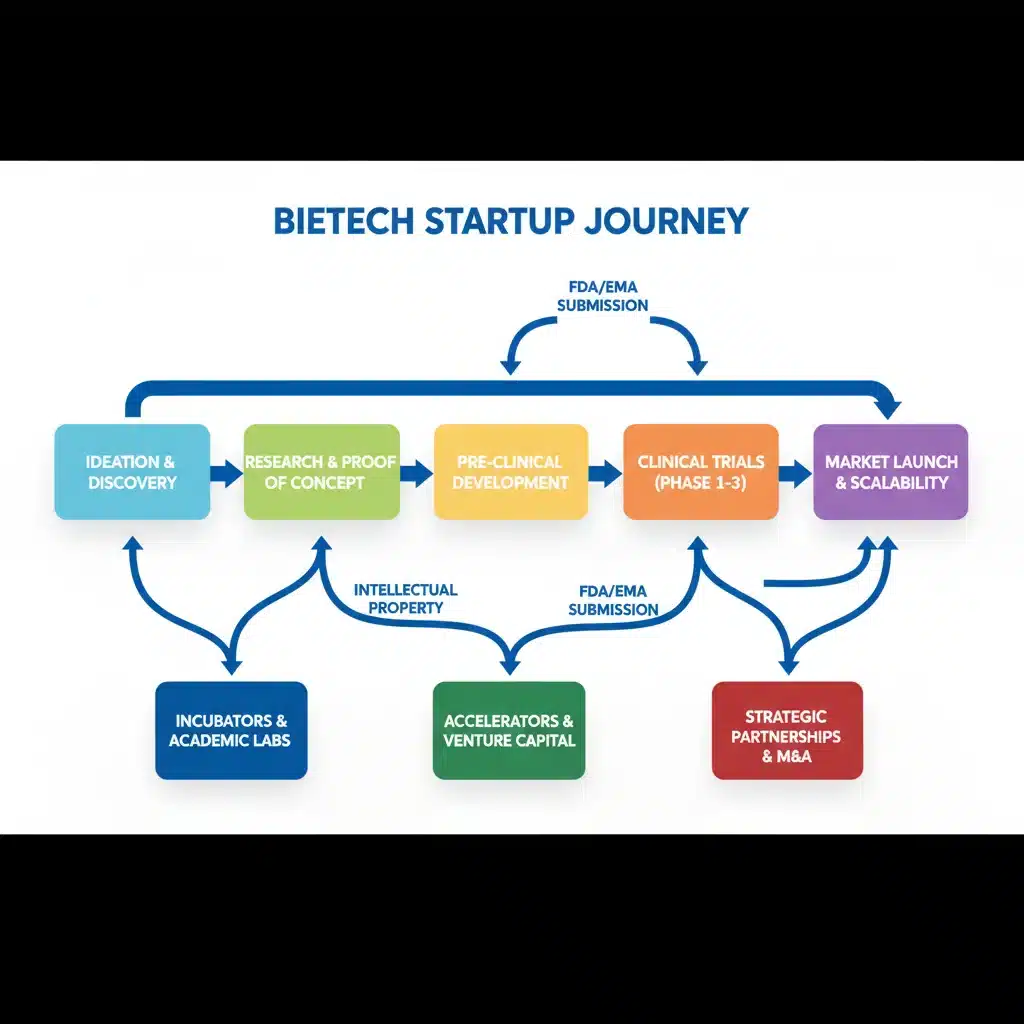
It’s important to note that the lines between incubators and accelerators are sometimes blurring, and a sequential or hybrid approach is increasingly common. A biotech startup might begin its journey in an incubator, leveraging its lab facilities and scientific community to validate its core technology. Once the scientific foundation is solid and a compelling proof-of-concept is established, the startup might then transition to an accelerator program to rapidly scale its business model, secure funding, and prepare for market entry. This phased approach allows companies to maximize the benefits of both models, addressing scientific challenges first, then business scaling.
Looking ahead to 2026, several trends will likely shape the landscape of biotech startup support programs:
- Increased Specialization: Programs will become even more specialized, focusing on niche areas like gene editing, AI in drug discovery, synthetic biology, or personalized medicine, offering highly tailored resources and expert mentorship.
- Global Reach: While the US remains dominant, programs will increasingly offer international perspectives and connections, facilitating global market access for promising biotech ventures.
- Corporate Partnerships: More pharma giants and established biotech companies will launch or partner with accelerators/incubators to scout for innovation, form strategic alliances, and potentially acquire promising startups.
- Data-Driven Mentorship: Leveraging AI and data analytics to provide more personalized and effective mentorship, tracking startup progress, and identifying key areas for improvement.
- Focus on "De-Risking": Programs will intensify efforts to help startups de-risk their technologies and business models earlier, given the high failure rate and capital intensity of biotech.
- Impact Investing: A growing emphasis on biotech solutions that address critical global health challenges and sustainability, attracting impact investors and specialized programs.
For any biotech startup aiming for success in 2026, the choice of a support program is a strategic one that should align with their stage of development, long-term vision, and immediate operational needs. Both incubators and accelerators offer invaluable resources, but their distinct approaches cater to different phases of the entrepreneurial journey. By carefully evaluating these differences and considering the future trends, biotech entrepreneurs can position themselves for optimal growth and impact in the competitive US market.
Conclusion: Charting Your Course for Biotech Startup Growth in 2026
The journey of a biotech startup is an arduous yet incredibly rewarding one, marked by scientific breakthroughs, rigorous validation, and the complex path to commercialization. In the vibrant US ecosystem of 2026, both biotech incubators and accelerators stand as pillars of support, each offering a unique set of advantages tailored to different stages of a company’s development. The critical distinction lies in their core mission: incubators provide the fertile ground and extended timeline necessary for deep scientific research and validation, while accelerators offer the intense, time-bound thrust needed to rapidly scale a validated technology into a market-ready business.
For those biotech ventures still navigating the intricate world of scientific discovery, requiring extensive lab infrastructure, collaborative environments, and a longer runway for R&D, an incubator serves as an indispensable haven. It allows founders to meticulously build their scientific foundation, secure intellectual property, and generate the robust data essential for future success, often with minimal equity dilution.
Conversely, for biotech startups that have moved beyond the initial scientific hurdles, possessing a strong proof-of-concept or a functional MVP, an accelerator can be the catalyst for explosive growth. Its structured curriculum, intensive mentorship, strategic network, and crucial seed funding are designed to rapidly refine business models, attract significant investment, and accelerate market entry. The fast-paced, high-pressure environment of an accelerator is best suited for teams ready to execute aggressively on their commercialization strategy.
Ultimately, the decision rests on a comprehensive assessment of your biotech startup’s current stage, its immediate needs, and its ambitious goals for 2026. There is no one-size-fits-all answer. Some may choose one over the other, while many will find a hybrid approach – starting in an incubator and then transitioning to an accelerator – to be the most effective strategy. By understanding the distinct value propositions of each, biotech entrepreneurs can make a strategic choice that not only secures the necessary resources but also aligns with their vision for creating transformative scientific solutions and achieving sustainable biotech startup growth in the highly competitive US market and beyond.