AI in Biotech Investing: A 2026 Guide to Data-Driven Decisions

The convergence of Artificial Intelligence (AI) and biotechnology is not merely a technological advancement; it’s a profound paradigm shift, particularly within the investment landscape. As we look towards 2026, understanding the intricate role of AI in biotech investing becomes paramount for any astute investor seeking to navigate this rapidly evolving sector. The promise of AI to unlock unprecedented insights from vast biological datasets is transforming every stage of the biotech value chain, from early-stage research to market entry, thereby reshaping investment opportunities and risk profiles. This comprehensive guide will delve into how AI is empowering data-driven decisions, highlighting the critical trends, challenges, and ethical considerations that will define success in AI Biotech Investing over the coming years.
The Dawn of Data-Driven Biotech Investing
For decades, biotech investing has been characterized by high risk and high reward, often relying on expert intuition, lengthy clinical trials, and a degree of inherent unpredictability. The sheer complexity of biological systems, coupled with the traditionally slow pace of drug development, made it a challenging arena for even the most seasoned investors. However, the advent of AI and advanced machine learning algorithms is systematically dismantling these barriers, ushering in an era of data-driven precision.
At its core, AI Biotech Investing is about leveraging computational power to analyze massive, heterogeneous datasets – genomics, proteomics, clinical trial results, real-world evidence, scientific literature, and even patient-generated health data. This analytical capability allows investors to move beyond traditional qualitative assessments and embrace quantitative, evidence-based decision-making. The ability of AI to identify patterns, predict outcomes, and optimize processes gives investors a significant edge, enabling them to spot promising ventures earlier, assess risks more accurately, and allocate capital more efficiently.
Revolutionizing Drug Discovery and Development
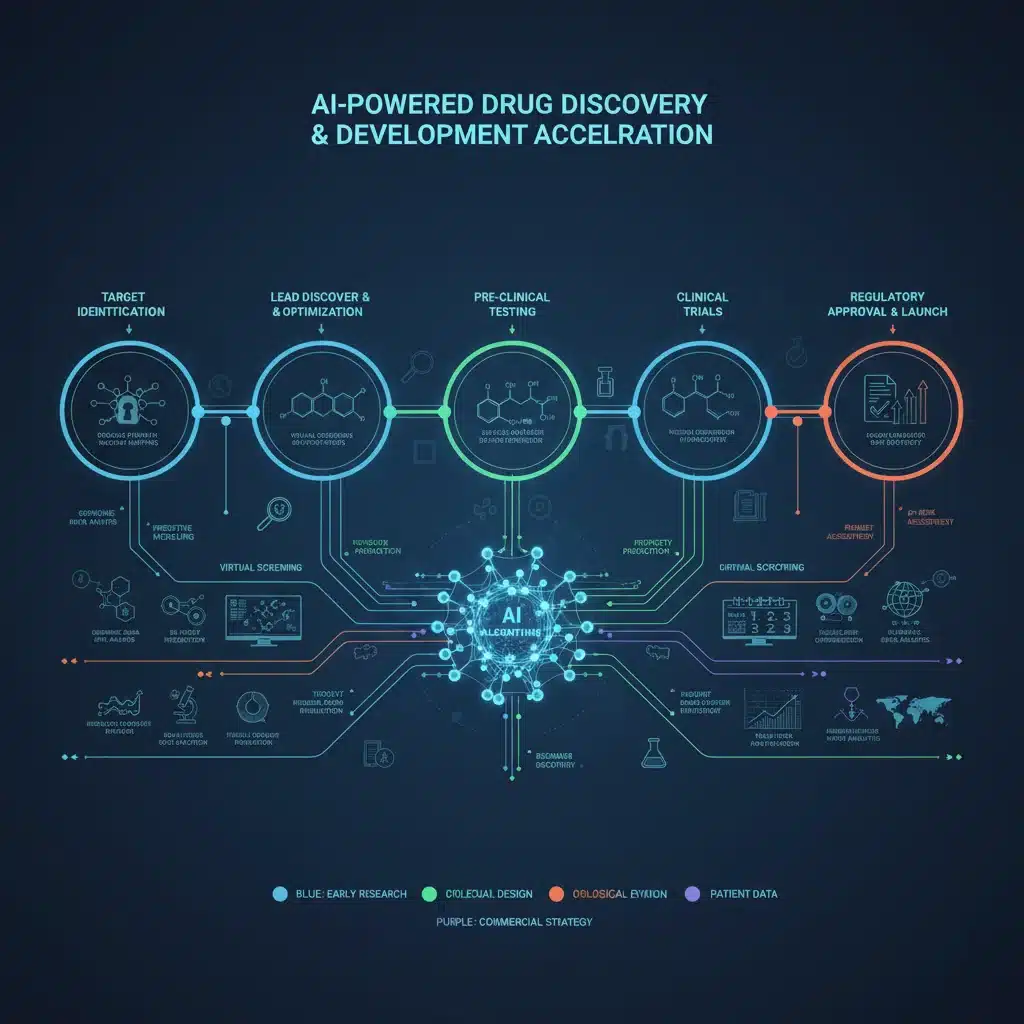
One of the most profound impacts of AI in biotech is its application in drug discovery and development. Traditionally, this process is resource-intensive, time-consuming, and plagued by high failure rates. AI is changing this narrative:
- Target Identification: AI algorithms can sift through vast genomic and proteomic data to identify novel disease targets with higher precision than human researchers. By analyzing molecular interactions and disease pathways, AI can pinpoint the most promising biological targets for therapeutic intervention.
- Molecule Design and Optimization: Machine learning models can predict the properties of millions of potential drug compounds, simulating their interactions with target proteins and optimizing their efficacy, safety, and pharmacokinetics. This significantly reduces the need for costly and time-consuming wet-lab experiments.
- Preclinical Research: AI can accelerate preclinical testing by predicting toxicity and efficacy in animal models, leading to more informed decisions about which compounds to advance to human trials.
- Clinical Trial Optimization: This is a critical area for AI Biotech Investing. AI can optimize trial design by identifying suitable patient cohorts, predicting recruitment rates, and even monitoring patient responses in real-time. This can drastically reduce trial durations and costs, increasing the probability of success for drug candidates.
Predictive Analytics: The Investor’s Crystal Ball
For investors, predictive analytics powered by AI is akin to having a sophisticated crystal ball, offering insights into future market trends, clinical outcomes, and company performance. This capability is transforming how investment decisions are made in the biotech sector.
Forecasting Market Trends and Valuations
AI models can analyze historical market data, regulatory changes, patent landscapes, competitive intelligence, and scientific breakthroughs to forecast market trends for specific therapeutic areas or drug classes. This allows investors to identify emerging opportunities and anticipate shifts in market demand. Furthermore, AI can assist in more accurate company valuations by integrating a wider range of data points than traditional financial models, including the probability of clinical success, intellectual property strength, and market penetration potential.
Assessing Clinical Trial Success Probabilities
Perhaps the most compelling application for AI Biotech Investing is its ability to predict the likelihood of success for clinical trials. By analyzing vast datasets of past trial outcomes, patient demographics, biomarker data, and drug mechanisms, AI can generate probabilities for different trial phases. This significantly de-risks investments by allowing investors to focus on drug candidates with higher statistical chances of reaching the market.
Identifying Undervalued Assets and Emerging Technologies
AI’s capacity to process and understand complex scientific literature, patent filings, and research grants enables it to identify groundbreaking technologies and undervalued companies that might be overlooked by human analysts. This ‘discovery engine’ aspect of AI is crucial for uncovering hidden gems in the competitive biotech landscape.
Key Technologies Driving AI Biotech Investing in 2026
The landscape of AI technologies is constantly evolving, and several key advancements are particularly relevant for biotech investors in 2026:
- Machine Learning (ML) and Deep Learning (DL): These foundational AI technologies are at the heart of most biotech applications. ML algorithms are used for pattern recognition in genomic data, predicting protein structures, and analyzing clinical trial results. Deep learning, with its ability to learn from vast amounts of unstructured data, is particularly powerful for image analysis (e.g., medical imaging, microscopy) and natural language processing (NLP) of scientific literature.
- Natural Language Processing (NLP): NLP is crucial for extracting valuable insights from unstructured text data, including scientific papers, patents, regulatory documents, and electronic health records. This allows AI to synthesize information that would be impossible for humans to process manually, identifying novel connections and accelerating research.
- Computer Vision: In biotech, computer vision is used for analyzing medical images (X-rays, MRIs, pathology slides), high-throughput screening of drug candidates, and even monitoring cell cultures. This automation and precision enhance diagnostic capabilities and drug discovery processes.
- Reinforcement Learning (RL): While still emerging, RL is gaining traction in optimizing complex biological processes, such as designing synthetic biology experiments or fine-tuning drug delivery systems. Its ability to learn optimal strategies through trial and error holds significant promise.
- Quantum Computing (QC): Although still in its nascent stages, quantum computing has the potential to revolutionize drug discovery by performing simulations and calculations that are impossible for classical computers. While not mainstream by 2026, investors should keep an eye on companies making strides in quantum-enhanced drug discovery platforms.
Challenges and Ethical Considerations in AI Biotech Investing
While the opportunities are vast, AI Biotech Investing is not without its challenges and ethical considerations. Investors must be acutely aware of these factors to make responsible and sustainable decisions.
Data Quality and Bias
The effectiveness of any AI model is directly dependent on the quality and representativeness of the data it’s trained on. Biased or incomplete datasets can lead to flawed predictions and perpetuate existing health disparities. Investors need to scrutinize the data sources and methodologies employed by AI-driven biotech companies.
Regulatory Hurdles
The integration of AI into drug discovery and diagnostics presents new regulatory challenges. Agencies like the FDA are still developing frameworks for evaluating AI-powered medical devices and algorithms. Uncertainty in regulatory pathways can impact timelines and market access for biotech innovations.
Intellectual Property and Data Ownership
As AI generates new scientific insights and potentially discovers novel compounds, questions surrounding intellectual property ownership and data rights become complex. Who owns the discoveries made by an AI? How is data sharing regulated? These are critical legal considerations for investors.
Ethical Implications of AI in Healthcare
The use of AI in healthcare raises profound ethical questions, including patient privacy, algorithmic transparency, and the potential for job displacement. Investors should prioritize companies that demonstrate a strong commitment to ethical AI development and responsible data governance.
Strategies for Successful AI Biotech Investing in 2026
To succeed in the rapidly evolving landscape of AI Biotech Investing, investors need to adopt sophisticated strategies that account for both technological innovation and market dynamics.
Focus on Platform Companies
Instead of betting solely on individual drug candidates, consider investing in companies that develop robust AI platforms for drug discovery and development. These platform companies often have diversified pipelines and can generate value across multiple therapeutic areas, offering a more resilient investment profile.
Evaluate Data Infrastructure and Expertise
The strength of a biotech company’s AI capabilities hinges on its data infrastructure and the expertise of its data science teams. Investors should assess the quality of their data collection, curation, and analysis pipelines, as well as the talent pool driving their AI initiatives.
Understand Regulatory Strategy
Given the evolving regulatory landscape, a clear and proactive regulatory strategy is crucial for AI-driven biotech companies. Investors should look for companies that are actively engaging with regulatory bodies and demonstrating a clear path to market for their AI-powered solutions.
Long-Term Vision and Patience
Despite AI’s ability to accelerate processes, biotech remains a long-term investment. Clinical trials still take time, and market adoption can be gradual. Investors in AI Biotech Investing need a long-term vision and the patience to weather the inherent volatility of the sector.
Diversification and Portfolio Approach
As with any high-growth sector, diversification is key. Building a portfolio that includes a mix of early-stage AI-powered startups, established biotech firms adopting AI, and companies focusing on different therapeutic areas can mitigate risk and capitalize on diverse opportunities.

The Future Outlook for AI Biotech Investing
Looking beyond 2026, the synergy between AI and biotechnology is only set to deepen. We can anticipate several transformative trends:
- Hyper-Personalized Medicine: AI will enable unprecedented levels of personalized medicine, tailoring treatments based on an individual’s unique genetic makeup, lifestyle, and environment. This will create new markets for highly targeted therapies and diagnostics.
- AI-Driven Biomarker Discovery: The ability of AI to identify novel biomarkers will revolutionize diagnostics, allowing for earlier disease detection, more precise prognoses, and better monitoring of treatment efficacy.
- Autonomous Labs and Robotic Experimentation: AI will increasingly power autonomous laboratories, where robots conduct experiments, collect data, and learn from outcomes with minimal human intervention, further accelerating research cycles.
- Ethical AI Frameworks: As AI becomes more integrated into healthcare, robust ethical AI frameworks and governance structures will be essential to ensure equitable access, patient trust, and responsible innovation.
- Convergence with Other Technologies: AI in biotech will increasingly converge with other cutting-edge technologies like synthetic biology, gene editing (CRISPR), and nanotechnology, opening up entirely new frontiers for therapeutic development and investment.
The landscape of healthcare and medicine is on the cusp of a profound transformation, with AI acting as a primary catalyst. For investors, this presents a unique opportunity to be part of a revolution that promises not only financial returns but also significant societal impact through the development of life-saving and life-improving therapies.
Conclusion: Seizing the Opportunity in AI Biotech Investing
The year 2026 marks a critical juncture in the evolution of AI Biotech Investing. The days of purely speculative biotech investments are giving way to an era where data, advanced analytics, and predictive modeling drive decision-making. AI’s ability to accelerate drug discovery, optimize clinical trials, and provide deeper market insights is fundamentally reshaping the risk-reward profile of the biotech sector.
For investors, success will hinge on a keen understanding of AI’s capabilities, a critical evaluation of data quality, an awareness of emerging regulatory and ethical landscapes, and a strategic approach that prioritizes long-term growth and diversification. By embracing the power of AI, investors can not only identify and capitalize on the most promising biotech innovations but also contribute to a future where medical breakthroughs are achieved faster, more efficiently, and with greater precision than ever before. The future of health is data-driven, and AI is the engine powering this transformative journey.