FDA Fast-Track 2026: Biotech Startup Guide for 4-Month Approval

The landscape of drug development is perpetually evolving, driven by scientific breakthroughs and an urgent global demand for innovative therapies. For biotech startups, the journey from concept to market can be daunting, fraught with regulatory complexities and significant financial investment. However, the U.S. Food and Drug Administration (FDA) offers a beacon of hope for promising new treatments: the Fast-Track designation. As we look towards 2026, understanding and strategically leveraging the FDA Fast-Track program is not just an advantage; it’s a necessity for biotech startups aiming for rapid market entry and patient impact. This comprehensive guide will delve into the intricacies of the 2026 FDA Fast-Track program, offering biotech startups a detailed roadmap to potentially accelerate their drug approval process to an impressive four months.
Navigating the 2026 FDA Fast-Track Program: A Biotech Startup’s Guide to 4-Month Approval Acceleration
In the highly competitive and capital-intensive world of biotechnology, time is truly of the essence. Every month saved in the drug development and approval process translates into reduced costs, earlier patient access to life-saving treatments, and a stronger competitive position. The FDA Fast-Track designation, initially established under the FDA Modernization Act of 1997, is designed to facilitate the development and expedite the review of drugs to treat serious conditions and fill an unmet medical need. For biotech startups, this program represents a golden opportunity to bypass some of the traditional bottlenecks, potentially shaving years off the typical approval timeline. Our focus here is on how biotech startups can strategically position themselves to not only qualify for but also maximize the benefits of the Fast-Track program, aiming for an ambitious four-month approval acceleration in 2026.
Understanding the FDA Fast-Track Designation
Before diving into the strategic elements, it’s crucial to grasp the core tenets of the FDA Fast-Track program. This designation is granted to drugs that:
- Treat a serious condition.
- Demonstrate the potential to address an unmet medical need.
A serious condition is generally defined as a disease or condition that has a substantial impact on day-to-day functioning. This can include conditions that are life-threatening, result in hospitalization, or impair a patient’s ability to conduct daily activities. Examples range from cancer and AIDS to Alzheimer’s disease and cystic fibrosis. An unmet medical need refers to a condition for which there is no available therapy, or where the existing therapies are suboptimal. This could mean a therapy that offers significant advantages over current treatments, such as improved efficacy, reduced toxicity, or a more convenient dosing regimen.
The benefits of FDA Fast-Track designation are substantial:
- Frequent Interactions with FDA: This includes opportunities for meetings and written communication with FDA review staff to discuss all aspects of the development plan, from preclinical studies to clinical trial design and marketing application content. This enhanced communication helps to resolve issues early and ensure that the development program is aligned with FDA expectations, significantly reducing the likelihood of late-stage surprises.
- Eligibility for Accelerated Approval and Priority Review: While Fast Track itself doesn’t guarantee these, it makes a drug eligible. Accelerated Approval allows approval based on a surrogate endpoint that is reasonably likely to predict clinical benefit. Priority Review shortens the FDA review clock from the standard 10 months to 6 months.
- Rolling Review: A drug company can submit completed sections of its Biologic License Application (BLA) or New Drug Application (NDA) for review by the FDA, rather than waiting until all sections are completed. This allows the FDA to begin reviewing portions of the application earlier, potentially leading to a faster overall review time.
For biotech startups, these benefits collectively contribute to a significantly streamlined and potentially faster approval pathway. The goal of a four-month approval acceleration is ambitious but achievable through meticulous planning and execution, especially when considering the cumulative impact of these Fast-Track advantages.
Eligibility Criteria for Biotech Startups in 2026
To successfully leverage the FDA Fast-Track program, biotech startups must meticulously assess their drug candidate against the eligibility criteria. While the core definitions of ‘serious condition’ and ‘unmet medical need’ remain constant, the interpretation and evidence required can evolve. For 2026, emphasis will likely continue to be placed on robust preclinical data and early clinical evidence demonstrating a clear potential for benefit. Biotech startups should focus on:
- Strong Scientific Rationale: Is there compelling scientific evidence, perhaps from in vitro studies, animal models, or early human data, that your drug targets a serious condition effectively and offers a significant advantage over existing treatments?
- Addressing a Clearly Defined Unmet Need: Articulate precisely how your therapy addresses a medical need that is currently inadequately met. This requires thorough market research and a deep understanding of the current treatment landscape.
- Robust Preclinical Data: High-quality preclinical studies are paramount. These studies should not only demonstrate efficacy in relevant models but also provide a strong safety profile to support early human trials.
- Early Clinical Evidence (if available): Even preliminary Phase 1 or early Phase 2 data showing positive trends in efficacy or safety can significantly strengthen a Fast-Track application. This might include biomarker data or early signs of clinical improvement.
The FDA’s decision to grant Fast-Track designation is based on a careful evaluation of the submitted evidence. For biotech startups, preparing a compelling and comprehensive submission package is critical. This process often begins even before a formal Investigational New Drug (IND) application is submitted, highlighting the importance of early strategic planning.
Key Strategies for 4-Month Approval Acceleration
Achieving a four-month approval acceleration within the FDA Fast-Track framework requires more than just meeting the basic eligibility. It demands a proactive, integrated, and highly efficient approach to drug development and regulatory affairs. Here are key strategies biotech startups should implement:
1. Early and Consistent Engagement with the FDA
The Fast-Track program’s greatest asset is the opportunity for frequent FDA interaction. Biotech startups should initiate these discussions as early as possible, ideally even before filing an IND. A Pre-IND meeting is an invaluable opportunity to:
- Introduce your drug candidate and its potential.
- Discuss your proposed development plan, including clinical trial design.
- Seek feedback on non-clinical studies and manufacturing plans.
- Signal your intention to seek Fast-Track designation and discuss the supporting data.
Once Fast-Track is granted, maintain open and consistent communication. Schedule regular meetings, utilize written correspondence efficiently, and be responsive to FDA inquiries. This continuous dialogue helps anticipate and address potential issues, ensuring your development path remains aligned with regulatory expectations. Proactive communication can prevent delays that often arise from misunderstandings or misinterpretations of regulatory guidance.
2. Building a Robust and Streamlined Development Plan
A clear, well-defined, and efficient development plan is paramount. This includes:
- Optimized Clinical Trial Design: Design trials that are not only scientifically sound but also generate data efficiently. Consider adaptive trial designs, master protocols, or trials with clear interim analyses that can support early decision-making or even accelerated approval. Focus on endpoints that are clinically meaningful and can be rapidly assessed.
- Biomarker Strategy: Identify and validate relevant biomarkers early in development. Biomarkers can serve as surrogate endpoints for accelerated approval, provide early indications of efficacy, and help stratify patient populations, making trials more efficient.
- Manufacturing and Quality Control (CMC): Do not underestimate the importance of Chemistry, Manufacturing, and Controls (CMC) data. Develop a scalable and robust manufacturing process early. CMC issues are a common cause of delays in FDA approval. Ensure your CMC strategy supports not only clinical trials but also commercial production.
- Non-Clinical Program: Ensure your non-clinical studies (pharmacology, toxicology, ADME) are comprehensive and meet regulatory requirements. Any gaps or deficiencies here can halt progress.
The goal is to generate high-quality, unambiguous data that can withstand rigorous FDA scrutiny, minimizing the need for additional studies or data requests. This meticulous planning is the bedrock of accelerated approval.
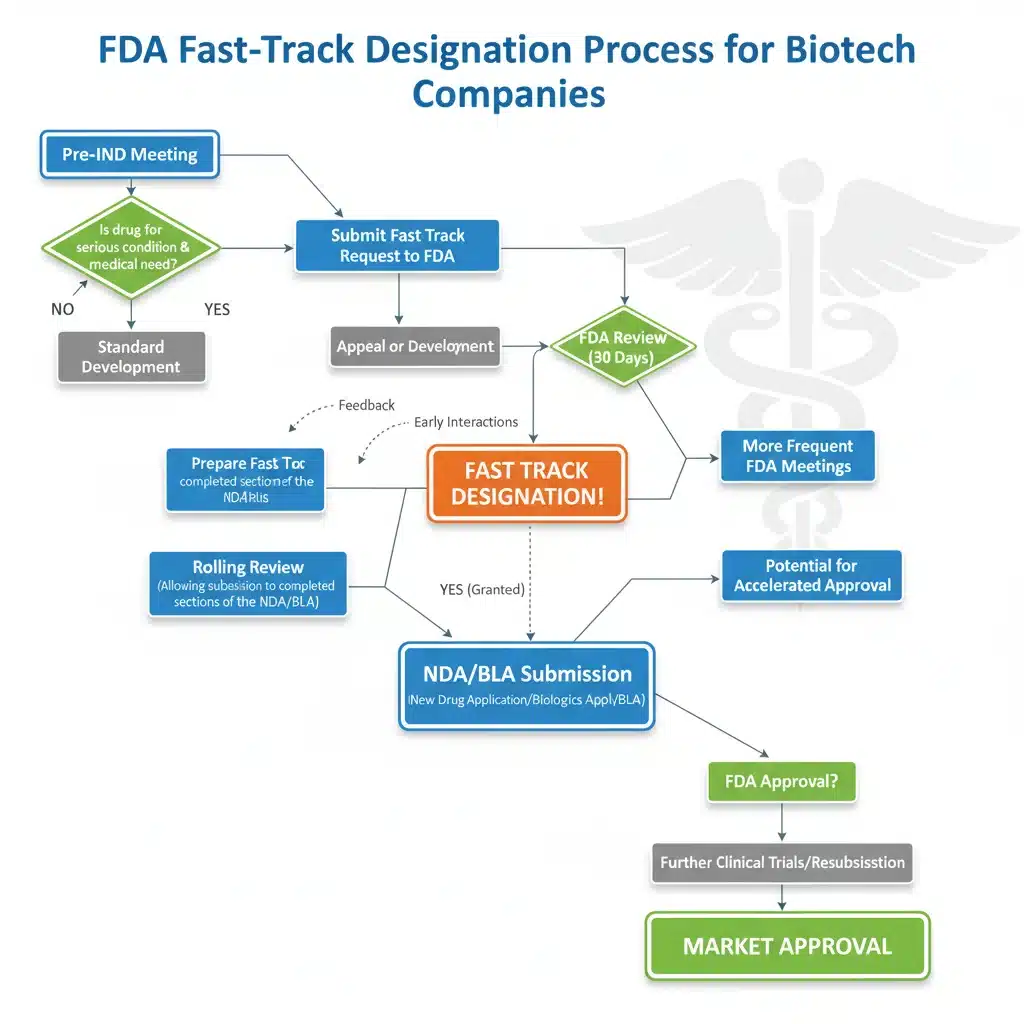
3. Leveraging Rolling Review Effectively
Rolling Review is a cornerstone of Fast-Track acceleration. Instead of waiting for a complete BLA/NDA, you can submit sections as they are finished. To maximize this benefit:
- Modular Submission Strategy: Plan your BLA/NDA submission as a series of well-organized modules. Work with the FDA to determine the optimal sequence and content for these submissions.
- Early Preparation of Modules: Begin preparing sections of the application long before your pivotal trials are complete. For instance, CMC, non-clinical, and administrative sections can often be drafted and even submitted while clinical trials are ongoing.
- Consistent Data Generation: Ensure a continuous flow of high-quality data to populate these modules. Any delays in data generation will negate the benefits of rolling review.
Effective utilization of rolling review demands exceptional project management and seamless coordination between R&D, regulatory, and manufacturing teams. It allows for concurrent review, significantly compressing the overall review timeline.
4. Assembling a World-Class Regulatory and Development Team
The success of navigating the FDA Fast-Track program hinges on the expertise of your team. Biotech startups, often lean, must strategically build or outsource capabilities in:
- Regulatory Affairs: Experienced regulatory professionals who understand FDA processes, can effectively communicate with the agency, and strategize submissions are invaluable. They can interpret guidance documents, anticipate FDA questions, and ensure compliance.
- Clinical Development: Clinicians and clinical operations experts skilled in designing and executing efficient trials, managing data, and ensuring patient safety are critical. They must be adept at working within an accelerated timeline.
- Biostatistics and Data Management: Robust statistical analysis and impeccable data management are foundational. Flawed data or analyses can lead to significant delays or even rejection.
- CMC Expertise: Specialists in process development, analytical methods, and quality assurance are essential to avoid manufacturing-related setbacks.
Consider engaging experienced consultants or contract research organizations (CROs) if in-house expertise is limited. The investment in top-tier talent and resources is a differentiator for achieving rapid approval.
5. Data Integrity and Quality
In an accelerated review environment, there is no room for error regarding data integrity and quality. The FDA will scrutinize all submitted data with intense rigor. Biotech startups must implement:
- Robust Quality Management Systems (QMS): Ensure all preclinical and clinical studies are conducted under appropriate Good Laboratory Practices (GLP) and Good Clinical Practices (GCP).
- Data Audits and Verification: Conduct internal and external audits to verify data accuracy and completeness throughout the development process.
- Electronic Data Capture (EDC) Systems: Utilize advanced EDC systems to streamline data collection, ensure data quality, and facilitate rapid analysis.
Any concerns about data reliability can trigger extensive FDA queries, site inspections, and substantial delays, undermining the very purpose of Fast-Track. A proactive approach to data quality is a time-saver in the long run.
Challenges and Mitigation for Biotech Startups
While the prospect of a four-month approval acceleration is enticing, biotech startups must be prepared for potential challenges:
- Resource Constraints: Small startups often operate with limited budgets and personnel. Mitigate this by prioritizing activities, outsourcing non-core functions to specialized vendors, and seeking strategic partnerships or additional funding.
- Lack of Regulatory Experience: Many biotech founders are scientists, not regulatory experts. This gap can be filled by hiring seasoned regulatory professionals or engaging consultants with a proven track record in FDA interactions.
- Unforeseen Clinical or Manufacturing Issues: Despite best efforts, unexpected problems can arise. Build contingency plans into your development timeline. For clinical issues, consider adaptive trial designs. For manufacturing, have backup suppliers or processes.
- Evolving Regulatory Landscape: The FDA’s guidance and priorities can shift. Stay abreast of the latest regulatory updates through industry conferences, publications, and direct communication with the agency.
Proactive identification and mitigation of these challenges are essential for maintaining momentum towards accelerated approval. A flexible yet focused approach is key.

The Future of FDA Fast-Track in 2026 and Beyond
As we approach 2026, the FDA Fast-Track program is likely to continue its evolution, potentially with an even greater emphasis on areas of significant unmet need, such as rare diseases, oncology, and neurological disorders. Advancements in precision medicine, gene therapies, and cell therapies will also likely see continued prioritization. Biotech startups working in these cutting-edge fields may find themselves particularly well-positioned for Fast-Track designation.
Furthermore, the FDA is continuously exploring ways to modernize and streamline the drug review process. This could include increased use of real-world evidence (RWE) in regulatory decision-making, advancements in digital health technologies for data collection, and even more tailored guidance for specific novel therapeutic modalities. Staying informed about these evolving trends will be crucial for biotech startups to adapt their strategies and continue to capitalize on accelerated pathways.
The commitment to patient-centric drug development will also likely deepen. Biotech startups that can demonstrate a clear understanding of patient needs, incorporate patient perspectives into trial design, and show meaningful clinical benefits for patients will likely find a more receptive audience at the FDA. This aligns perfectly with the Fast-Track program’s core mission to bring important new therapies to patients suffering from serious conditions as quickly as possible.
Conclusion: Seizing the Fast-Track Opportunity
For biotech startups, the FDA Fast-Track program offers an unparalleled opportunity to accelerate the development and approval of critically needed therapies. While the goal of a four-month approval acceleration is ambitious, it is not an insurmountable feat. It demands a convergence of scientific excellence, strategic regulatory planning, meticulous execution, and unwavering commitment.
By understanding the eligibility criteria, engaging early and consistently with the FDA, building a robust development plan, leveraging rolling review, assembling an expert team, and maintaining impeccable data quality, biotech startups can significantly enhance their chances of success. The 2026 landscape will continue to reward innovation and efficiency, and the FDA Fast-Track program remains a powerful tool for those ready to navigate its demands with precision and foresight. Embrace the challenge, optimize your strategy, and prepare to make a rapid and profound impact on patient lives through the FDA Fast-Track Biotech pathway.
The journey is rigorous, but the rewards – bringing transformative medicines to patients faster – are immeasurable. Biotech startups that master the art and science of FDA Fast-Track navigation will not only achieve commercial success but, more importantly, will fulfill their mission of advancing human health.